‘The EU has repeatedly stated that Mr Maduro lacks legitimacy and has defended a peaceful transition,’ EU foreign policy chief said.
World leaders reacted to the United States capturing Venezuelan President Nicolás Maduro and his wife after a strike on Jan. 3.
Leaders in Argentina and Ecuador backed the U.S. operation.
“The Government of the Argentine Republic values the decision and determination shown by the President of the United States of America and his Government in the recent actions taken in Venezuela that resulted in the capture of dictator Nicolás Maduro, leader of the Cartel of the Suns, declared a terrorist organization by the Argentine Government on August 26,” according to a government statement shared by Argentinian President Javier Milei.
“Argentina trusts that these events represent a decisive step forward against the narco-terrorism affecting the region and, at the same time, open a new chapter that will allow the Venezuelan people to fully recover democracy.”
Ecuadorian President Daniel Noboa wrote an open statement to the Venezuelan people on X, saying, “It’s time to reclaim your country,” and added, “You have an ally in Ecuador.”
The United States’ relatively quick strike could have long-lasting implications for the region and geopolitical order. Some of the United States’ top rivals—Russia, China, and Iran—responded with condemnation.
“Those who argued that the solution to the country’s problems was in negotiating with the US have seen what happened,” Iran’s Supreme Leader Ayatollah Khamenei said in a statement after the strike in Venezuela.
The economic fallout remains to be seen for the United States and China, which has heavily invested in Latin America and been a dominant recipient of Venezuela’s oil exports.
U.S. President Donald Trump said during a press conference that the United States would temporarily run Venezuela, after its vice president purportedly agreed to cooperate with Washington. In remarks to the press, Trump previewed heavy U.S. investment in the Venezuelan oil industry.
He said that the United States would “be selling oil, probably in much higher doses,” and that countries like China would be customers.
If the immediate aftermath was any indication, the path forward for the international community will likely include greater scrutiny by leaders such as United Nations Secretary General António Guterres. Along with Latin American leaders, Guterres raised concerns about the United States’ potential violations of international law.
Multiple foreign nations have called for an emergency session of the U.N. Security Council. Colombia, which just joined the security council as a non-permanent member, condemned the attack.
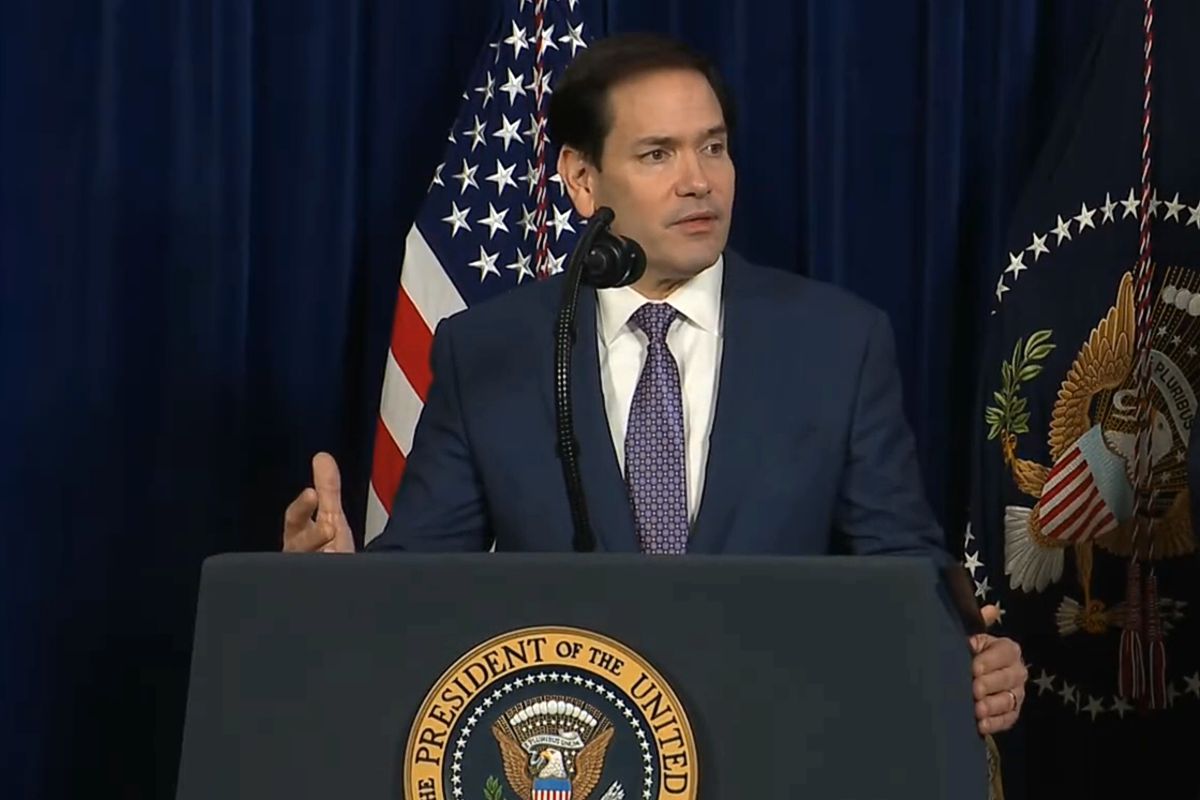
Following the strikes, Trump said Colombian President Gustavo Petro should tread lightly, while U.S. Secretary of State Marco Rubio hinted Cuba was next after Venezuela. “If I lived in Havana and I was in the government, I’d be concerned at least a little bit,” he said.
British Prime Minister Keir Starmer stated that the UK was not involved in the strikes and expressed his desire to speak with Trump.
“It’s obviously a fast-moving situation, and we need to establish all the facts,” Starmer said in a statement to the British press.
“I want to speak to President Trump. I want to speak to allies. I can be absolutely clear that we were not involved … and I always say and believe we should all uphold international law.”
By Jacki Thrapp and Sam Dorman