

Part 1: Series on Devolving Power to the States
Read Part 2: National Debt Will Force Devolution of Power to the States
Read Part 3: Enacting Devolution of Federal Power to the States
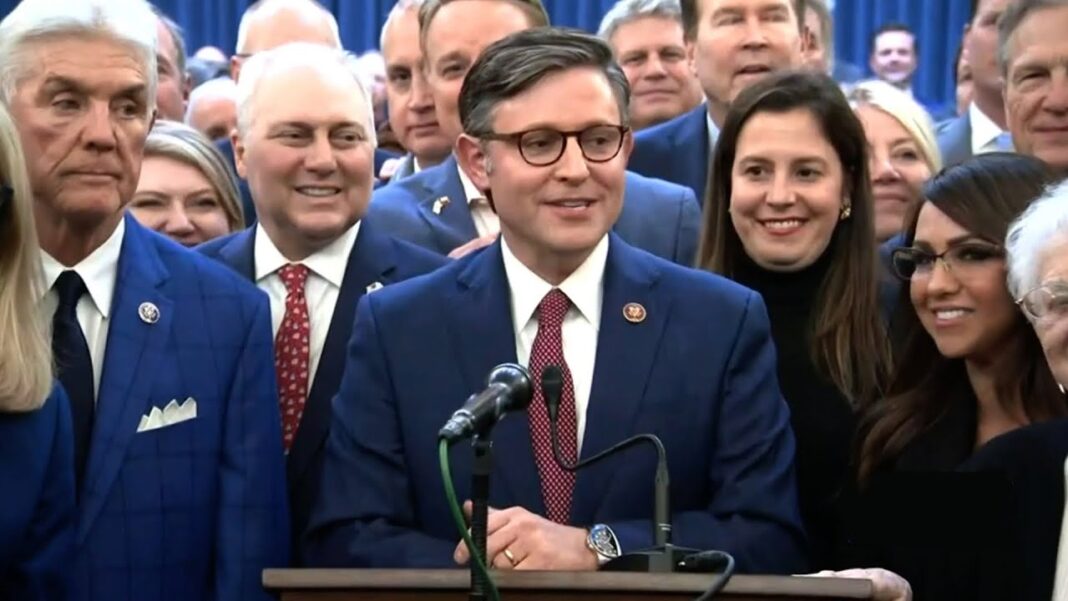
For the last several weeks, Congress has been unable to function because of its inability to elect a Speaker of the House of Representatives. Before that, it was an inability to deal with the debt ceiling and the nation’s massive national debt that has been growing for decades. The U.S. Southern border had been opened to drug cartels and terrorists for years. We are depleting our military arsenal, draining our Strategic Petroleum Reserves for political gain at the ballot box, and now the U.S. faces the possibility of wars in Ukraine, Israel, and perhaps the entire Middle East and Taiwan. Most challenging to the U.S. is the formation of a new form of Axis power consisting of Russia, China, Iran, North Korea, and likely some associate members designated as terrorists. Our national defense is so distracted it cannot even identify a Chinese spy balloon traveling over all its top-security military bases.
The list of potential disasters facing the federal government seems to be never-ending. Why does our federal government continuously have so many problems? The answer might be more obvious than most think. Our political friends in Washington have created a government that is too big to govern. By trying to control every aspect of life, the federal government is putting the entire nation at risk. Perhaps it’s time to devolve many of the domestic powers the federal government accumulated over the last century to the states. Call it a power-sharing arrangement to better manage the nation.
Taking on this topic will be a series of articles that discuss how the federal government has been allowed to grow without any constitutional changes and how the federal government can shrink the monster it has created. But first, is the devolution of power a path worth considering?
While I would argue yes, there are likely very, very few elected officials that would ever support losing the control over citizens they fought so hard to acquire. This first article will explain what devolution of power is and its benefits.
Our Constitution is structured to foster a strong economy while protecting the nation from harm. Until the Great Depression, the respective states had a major role in the domestic affairs of the nation. Unfortunately, the massive accumulation of federal regulatory and taxing power transformed the respective states into mere administrators of federal rule. If the federal government does not allow the country to return to a viable structure of federalism in which states have a serious role in shaping domestic policy, the U.S. is likely to join the many nations that now hold the status of a “once-great power.”
What is Devolution of Power?
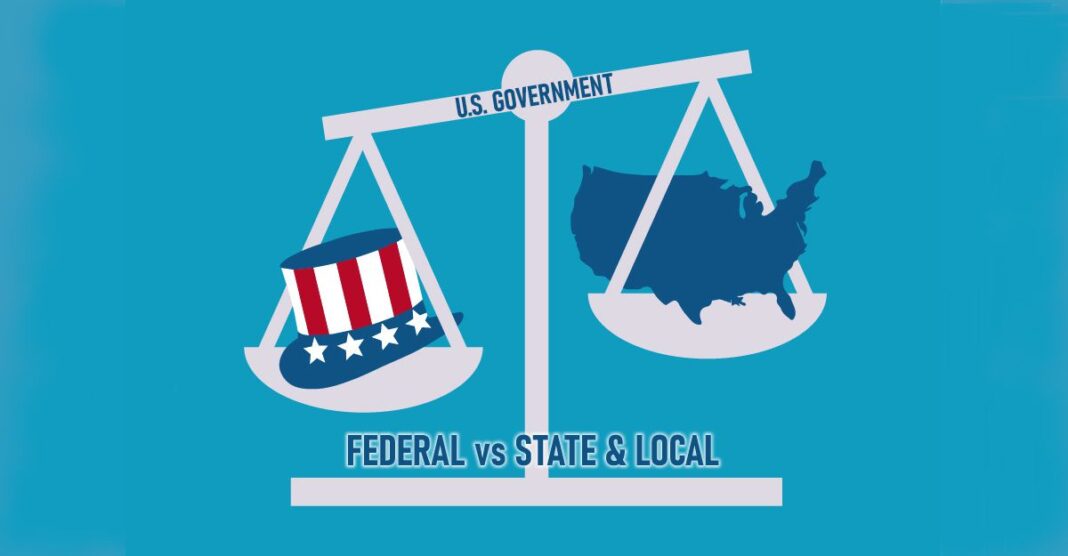
Devolution transfers substantial power and authority from the federal government to state and local governments. Devolution differs from decentralization, which merely transfers certain functions from a central location to several locations. Decentralization would be a relevant concept if the federal government were to move its workforce out of Washington, DC.
Making devolution work and its benefits.
For devolution to work, the federal powers transferred to the states must include all powers necessary to implement the policies transferred, including decision-making authority, managerial control of the legal framework for the policies to be managed, and the ability to tax and spend. After the transfer of power to the states, the federal government would cease regulating those activities. .
By assuming such powers, the states will have the capacity to implement all of the programs transferred to them by the federal government or to eliminate current federal domestic programs unneeded or unwanted by its citizens. Moreover, by clearly identifying the powers transferred, devolution allows the nation to operate as a unitary country that legally divides the management of issues between the federal government and the states for efficiency and practical implementation of programs sought by citizens of the respective states. Devolving federal power to the states brings the domestic programs of government closer to the people it serves. It also eliminates an entire level of bureaucracy.
Greater program efficiency.
The programs administered by a state will be smaller in size and administered by government that is closer to those it serves. By having more knowledge of the area and people served, the government administering the programs will be better able to achieve program goals. Greater efficiency results in more government accountability.
Enhances democracy.
In smaller communities, there is less bureaucracy. Participating in decision-making and running for office is more accessible and less costly. Greater participation in democracy builds trust in government. People of ordinary means can seek elected office.
Fosters innovation and trust.
With less bureaucracy to block innovative ideas, there is more focus on solutions and getting the job done than protecting the status quo. Since citizens are more trusting of and familiar with state and local government, they can better evaluate how the government manages the issues of most concern to them, such as health care, crime, taxes, and the economy. Significant citizen participation cannot happen when a distant central government lacks knowledge of the local issues yet controls the process for the resolution of disputes.
Limits bureaucratic power.
Sharing power between different authorities at different levels of government is an effective mechanism for deterring the ability of any government to become too powerful.
Assists with resolving conflicts.
Solutions are easier to achieve when there is an ability of citizens and government to exchange views.
Denationalizes controversial issues.
National governments nationalize all matters before them, from abortion and education to local permitting and economic development issues. When the federal government deals with state and local issues, the national lobbying organizations control the outcome to fit their national objective. For example, it is the national environmental groups that block oil drilling and mineral mining in Alaska, not Alaskans. The same is true for oil and gas pipelines and forest management. National environmental groups control local development across the nation by capturing the federal bureaucracy. By allowing states to control controversial issues, each state will take a different path that is usually more satisfactory to the locals than the advocacy of the national groups. This approach allows citizens the ultimate right to live as they want and to vote with their feet.
By having fewer responsibilities, the federal government will be able to focus on the nation’s defense and national issues. The states can very competently manage most domestic matters. Only through a system of genuine federalism can the U.S. prevent authoritarian rule, a civil war, or a wholly weakened, unstable nation in a world of enemies.
The states can’t afford the programs is a myth.
That answer as to what level of government can afford what will come very soon as the federal government is crushed by its own debt and the surge in interest payments on it. The federal government funds well over 1,000 state programs. Keep in mind, however, that many of these programs are the brainchild of the federal government, and the state is given grants to implement them. Since the federal grants rarely cover the state’s costs, the states end up subsidizing the federal programs.
Most significant, however, is that many unwanted federal programs displace programs important to the states. Also, every dollar the federal government pays the states to implement federal programs is a dollar the federal government took from a citizen of the states. Washington merely collects the tax dollars and returns them to the states, minus its commission.
The question is not who is going to pay. The taxpayer always pays. The real question is, who decides and implements the programs that citizens must pay for?
William L. Kovacs has served as senior vice president for the U.S. Chamber of Commerce, chief counsel to a congressional committee, and a partner in law D.C. law firms. His book Reform the Kakistocracy is the winner of the 2021 Independent Press Award for Political/Social Change. He can be contacted at wlk@ReformTheKakistocracy.com
Part 2: National Debt Will Force Devolution of Power to the States
Part 3: Enacting Devolution of Federal Power to the States