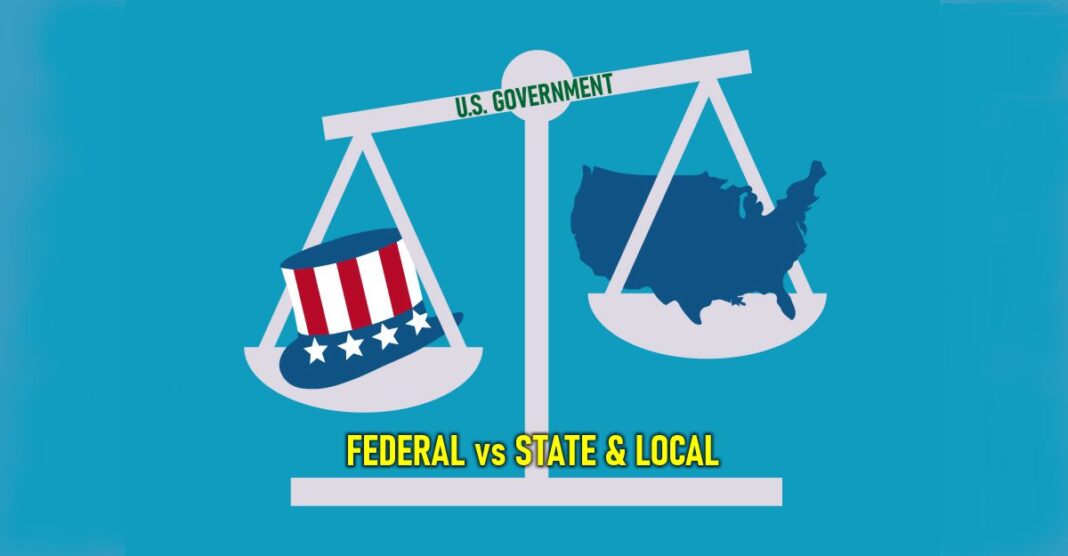


A few days ago, President Trump admitted, “It’s not possible for us [federal government] to take care of daycare, Medicaid, Medicare,” since we are fighting wars. He then notes that the states will have to raise their taxes to pay for childcare, and the federal government can lower its taxes. This federal-state trade-off is termed “Devolution off Power.”
Welcome, President Trump, to the idea of devolving federal power to the states. You rightly seek new solutions to federal mismanagement, especially with a $38 trillion national debt that cannot realistically be paid off. Devolving federal programs to the states would place responsibility for them in the hands of states that are better suited to manage them, since they already manage many of them through federal grants.
Before1940, states and local governments funded and provided most government services. States have solid managerial experience. This level of government is trusted because it’s closer to the people it serves. Unfortunately, the federal government expanded its powers by taxing citizens and returning a portion of the revenue to states only if they implemented federal, not state, priorities.
What the federal government should know before embarking on this excellent idea.
Before the federal government attempts to shift program responsibilities to the states, it should consider several key factors involved in reallocating power between federal and state governments. Addressing these matters is essential, since the federal government has no mechanism for earning money other than taxing its citizens and businesses or borrowing money that future generations will have to repay.
Reality check number 1.
There are currently 1,183 federal grant programs administered by states. Many of these programs are programs that the federal government wants undertaken but does not have the authority or resources to administer. They include education, transportation, rental assistance, child nutrition, day care, income security, and Medicaid, the largest of the grant programs. When the federal government stops funding those programs, it will lose control over those issues since the states will stop implementing them. That tradeoff is acceptable to those who want a smaller, more competent government.
In FY 2023, the federal government distributed $1.1 trillion in specific grants to state and local governments, approximately 36.7 % of their budgets. Overall, USA Facts finds “In FY 2024, the federal government collected around $5.07 trillion from states by taxing their residents and businesses. The federal government then redistributed about $4.87 trillion back to states.” Most of the money was for Social Security and Medicare. The federal government borrowed an additional $2 trillion in FY 2024 to pay for its $7.07 trillion in spending. The federal government would lose money if it stopped collecting money from the states.
Reality check number 2.
The central question is whether the federal government would reduce the amount of taxes it imposes on taxpayers by the amount of the programs it stopped supporting? Members of Congress facing reelection would likely demand spending reductions equal to the amounts collected from the states but not returned to them. This situation will require the federal government to determine how to reduce taxes on the states and for the states to increase taxes on their citizens to fund the federal programs they would continue to implement.
If the states must pay for the programs they want implemented, they will determine which programs those are. To be certain, many federal programs will be eliminated. Moreover, for all programs the federal government wants implemented, it will have to pay the full cost, including all necessary staffing, and it will not be able to commandeer state resources to fill in gaps in federal staffing. Under this scenario, the federal government will lose control over most major domestic issues, such as health care, transportation, police, and environment, in addition to the issues of little concern to Trump, such as day care. The upside is that the federal government and Congress can concentrate on national defense, international affairs, and the overall economy. The upside for the states is that they will be relieved of federal pressure to administer programs the federal government wants.
The transition.
The federal government is, in effect, bankrupt regardless of who pays for specific programs. Because the federal government is incapable of managing or financing most domestic programs, and since states already administer them, most domestic programs should be returned to the states. In addition, federal taxes should be reduced by the full amount of the programs it no longer funds. The respective states would then determine which programs their citizens want and pay for them with funds their citizens no longer send to Washington. The states will have more money in their accounts by eliminating federal grants for programs its citizens don’t want.
There is no single process to make the transition easy, but there is one essential requirement: States must be involved in negotiations with the federal government before any programs are transferred to them. In Devolution of Power: Rolling Back the Federal State to Preserve the Republic, chapters 20 – 22 are devoted to alternative processes that can help achieve a workable arrangement for states to assume the implementation of federal programs they want to continue, and the federal government can rid itself of most of the domestic programs it can no longer afford or wants to fund.
In the final analysis the federal mandates that citizens do not want or need will be eliminated. That will cause government to rightsize to fit the needs of the people. Before rightsizing government can occur, the federal government will actually have to give up power.
William L. Kovacs served as senior vice president for the U.S. Chamber of Commerce and chief counsel to a congressional committee. His books include: Congress: An Irrelevant Institution or Guardian of the Republic which received three-five star editorial reviews, Reform the Kakistocracy, the recipient of the 2021 Independent Press Award for Social/Political Change, and Devolution of Power: Rolling Back the Federal State to Preserve the Republic received five stars from Readers’ Favorite. He can be contacted at wlk@ReformTheKakistocracy.com
Key word: Devolution of Power
Tags: Congress, States, Trump, Federal Government, Federal Grants
Meta Description: Trump proposes federal devolution of power to the states. The federal government would lower its taxes, and state taxes would increase for desired programs.