Much has been made about what Donald J. Trump did and did not say in his second inaugural address. To be specific, President Trump highlighted a 180-year-old, history-laden idea of the United States – which for him, defines America.
In his address, President Trump vowed, “We will pursue our Manifest Destiny into the stars,” promising to send astronauts to plant the “Stars and Stripes” on our planetary neighbor — Mars.
But there was also something deeper in the president’s message, something most of his critics missed – an implied allusion to the “idea” of “manifest destiny” – an idea Trump embodies – and he was not the first.
This quintessential American idea envisions a future in which the US stretches across the entire North American continent – including Canada.
The notion is essentially grounded in God, a sense of American exceptionalism and its entrepreneurial spirit, implying the ineluctable spread of the republican form of governance.
This expansion was seen to reach its peak under President James K. Polk’s administration, who famously declared that it is “the fulfilment of our manifest destiny to overspread the continent allotted by Providence for the free development of our yearly multiplying millions.”
In 1844, James K. Polk, an unknown but shrewd strategist from Tennessee, ran for president. He tapped into the public mood and realized that “Manifest Destiny” was in the hearts of many Americans. Polk called for expansion that included Texas, California, and the entire Oregon Territory – an area spanning the modern states of Oregon, Idaho, Washington, and western Canada. Both Britain and America claimed the territory.
Polk, an ardent proponent of Manifest Destiny, had won election with the slogan “54˚ 40’ or fight!” (a reference to the potential northern boundary of Oregon as latitude 54˚ 40’) and called U.S. claims to Oregon “clear and unquestionable” in his inaugural address.
Although Polk blustered about obtaining the entire territory from Britain, he was privately willing to compromise. Polk boldly declared to Great Britain that joint occupation would end within one year. The British were cautious about another conflict in North America, and by 1846 they proposed splitting Oregon at the 49th parallel. Polk agreed to the compromise – the conflict was avoided. America became a transcontinental nation and a force with which to reckon.
Donald J. Trump, 47th President of the United States, personifies the same idea and spirit as did America’s 11th president, the shrewd anti-elitist, anti-corruption, Jacksonian strategist – James K. Polk.
The bluster of annexing Canada, buying Greenland and taking back the “Canal” is a stratagem designed to obfuscate what is really behind the political theatre of Trump. Number 47 actually wants access to the Arctic via Canada and Greenland. If annexation of the former (and purchase of the latter) come with it so much the better, but that is not his realistic aim. The Arctic will be a pivotal region in the balance of the 21st century – and it will be heavily contested, especially by China and Russia. Trump is seeking a strategic advantage for America.
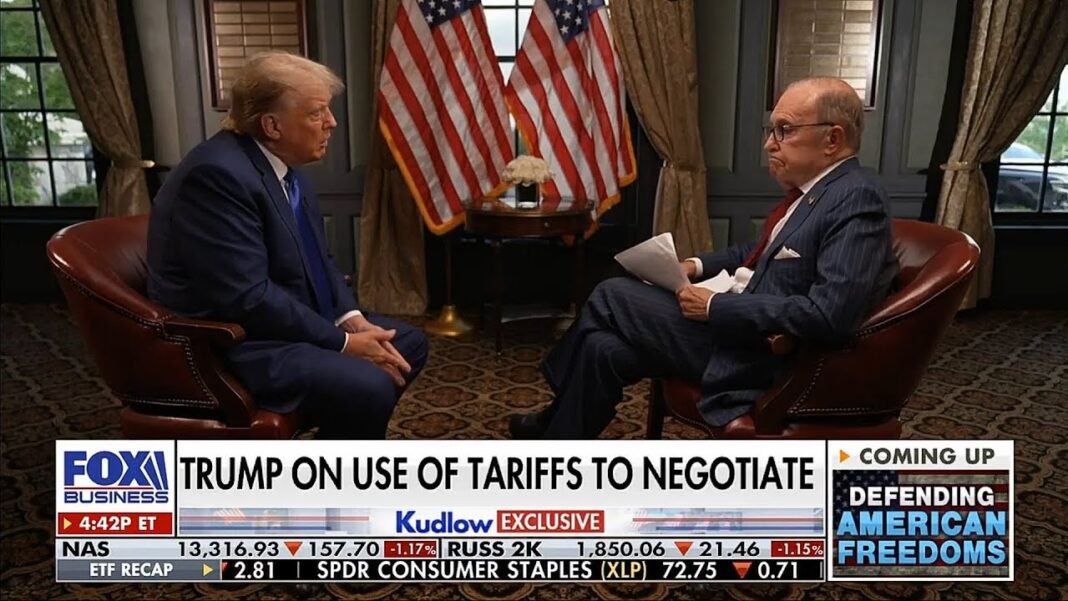
The president also promised to “overhaul” America’s trade system to protect American workers with trade barriers. Canada and Mexico have merely been placed on notice – trade with the US must be fair or there will be economic consequences. But Trump and his advisors know that in trade wars everybody loses. Eventually, a solution is found that could have occurred much earlier before the losses begin to erode public confidence in and political capital of the administration.
In Panama he wants fairer treatment, and through negotiation more control over the “Canal.” Using military force against a sovereign to take back its major income-producing asset is politically untenable, and the new president understands that. The rhetoric is about destabilization in a bid to reach the negotiation table – to get what he really wants for America.
Irrespective of one’s feelings about Trump, it cannot be denied that what he wants is for America to be the undisputed economic and political hegemon in the world – safe and secure with a military beyond anyone else’s capacity or thought of challenging it. It is not about America becoming insular in its engagement with the world. It is about America no longer being taken advantage of, given the global contributions it has made since the First World War and continue to contribute inordinately, today.
There are those in America who would take issue with what President Trump says – even if his recitation was the Gettysburg Address.
Some are quick to comment disparagingly about his inaugural remarks. The Bulwark retorts:
“…even as he promised to rename the Gulf of Mexico and Mount Denali, and said he would designate drug cartels as “terrorist” targets of the U.S. military, he left off the most ambitious items on his revived romantic nationalist agenda.”
Such critique misses the point, entirely; while this is unfortunate, it is not surprising.
There is a line in the movie, The American President (1995), in which the US president refers to people who “claim to love America but clearly can’t stand Americans.” What irks his opposition is that Donald J. Trump is one of those Americans – and he is – the American president.