

End the ‘Nationwide’ Injunction Racket Once and for All

5Mind. The Meme Platform
Newsweek Header
Newsweek Header

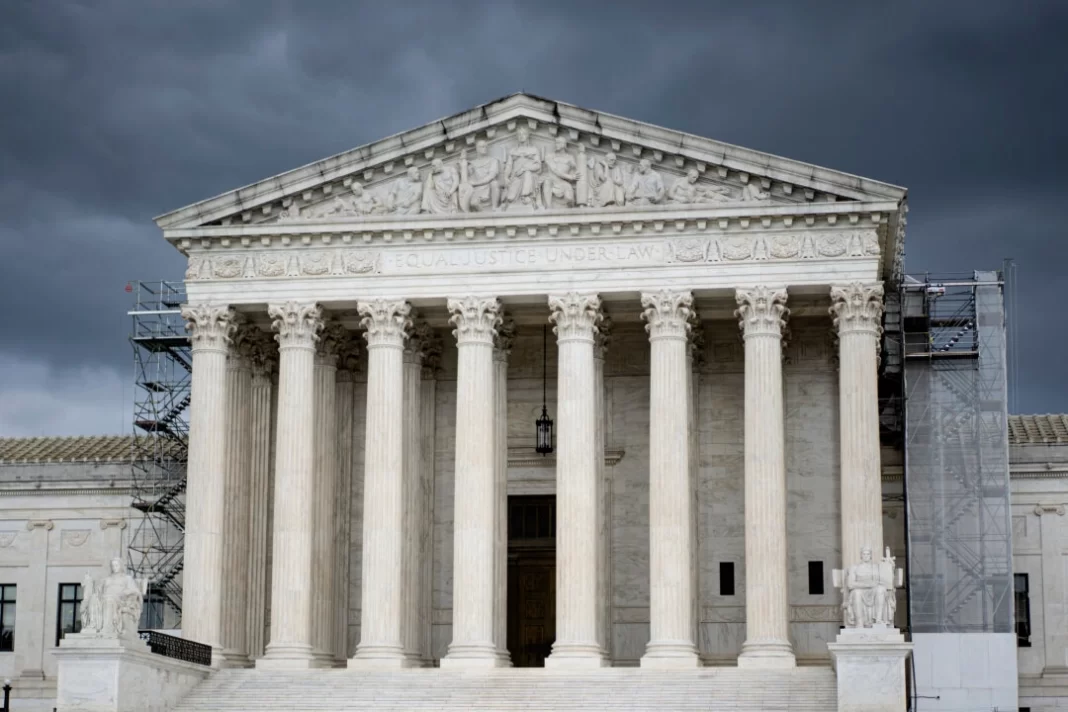
On Thursday, the U.S. Supreme Court heard oral argument in the case of Trump v. CASA, Inc. Though the case arises out of President Donald Trump‘s January executive order on birthright citizenship and the 14th Amendment, Thursday’s oral argument had very little to do with the hotly contested substantive issue of whether the children of illegal aliens born on U.S. soil must automatically be conferred American citizenship. Instead, the argument mostly focused on a procedural legal issue that is just as important as the underlying substantive issue itself: whether lower-court federal judges possess the legitimate power to issue ‘nationwide’ injunctions to bring laws or executive orders to a halt throughout the entire republic.

There is a very straightforward answer to this question: No, they don’t. And it is imperative for American constitutionalism and republican self-governance that the justices clearly affirm that.

Let’s start with the text. Article III of the Constitution establishes the “judicial Power” of the United States, which the University of Chicago Law School professor William Baude argued in a 2008 law review article is “the power to issue binding judgments and to settle legal disputes within the court’s jurisdiction.” If the federal courts can bind certain parties, the crucial question is thus: Who? In other words, what is the legitimate “jurisdiction” of who is strictly bound by a federal court issuing an injunction?

In our system of governance, it is only the named parties to a given lawsuit that can truly be bound by court’s judgment. As the brilliant then-Stanford Law School professor Jonathan Mitchell put it in an influential 2018 law review article, an “injunction is nothing more than a judicially imposed non-enforcement policy” that “forbids the named defendants to enforce the statute”—or executive order—”while the court’s order remains in place.” Fundamentally, as Samuel L. Bray observed in another significant 2017 law review article, a federal court’s injunction only binds “the defendant’s conduct … with respect to the plaintiff.” If other courts in other districts face a similar case, those judges might consider their peer’s decision and follow it, but they are not strictly required to do so. (For truly nationwide legal issues, the proper recourse is filing a class-action lawsuit, as authorized by Rule 23 of the Federal Rules of Civil Procedure.)

By Josh Hammer

Read Full Article on Newsweek.com

Contact Your Elected Officials
Newsweek
Newsweekhttps://www.newsweek.com/
Newsweek is a news magazine and website providing latest news, in-depth analysis and ideas about international issues, technology, business, culture and politics.
00:02:04

Forged on the frontier

George Washington is widely known as a general and president, but his early life remains obscured by myth, legend, and misunderstanding.
00:02:52

A bobblehead too far

The Orioles did not just hand out a bobblehead. They sent a message that the legacy of their own players is not enough to draw.

Congress fumbles college sports

College sports landscape is a dumpster fire and every sports reporter, broadcaster and fan believes Congress needs to stay out of it.

The Hating Game

The Democrat Party game show should be titled "The Hating Game", played by pitting one class, race, or identity against another for political power.
00:09:50

The Invasion Of The Ballot Snatchers

As election results loom, California faces ballot controversies in a real-life political drama that raises concerns about election integrity.

AI Reshaping US Jobs but Not Yet Triggering Mass Unemployment, Says European Central Bank

AI has begun shifting American workers away from occupations most vulnerable to automation, but its overall effect on U.S. employment and wages still remains “muted,”
00:04:41

US Energy Secretary Forecasts Oil, Gas Prices to Drop as Strait Traffic ‘Back to Normal’

U.S. Secretary of Energy Chris Wright said on June 21 that commercial shipping traffic through the Strait of Hormuz is “back to normal”.

FBI, DOJ Announce Arrest of Most Wanted Fraudster Herbert Leon Kimble

One of the FBI’s Most Wanted Fraudsters, Herbert Leon Kimble, who is accused of a $1.2 billion Medicare fraud, was captured in the Philippines on June 11.
00:03:31

California Declares State of Emergency Over Los Angeles Warehouse Fire, Smoke

California Gov. Gavin Newsom declared an emergency as a massive Los Angeles warehouse fire burns for a fourth day, prompting aid.

Banning Hospitals’ Certain Contracts Could Save Americans $45 Billion, Report Finds

A ban on certain contracts between hospital systems and health insurers could save Americans around $45 billion, according to a report.
00:01:33

Trump Unveils New Air Force One Plane

President Trump unveiled the plane that will serve as the new Air Force One, a Boeing 747-8 luxury jet that was gifted to the US by the Qatari government in 2025.
00:01:27

Trump Threatens 100 Percent Tariff on French Wines Over Digital Services Tax

Trump threatened to impose a 100% tariff on French wines and champagne unless France eliminates its digital services tax on large American tech companies.

Trump Heads to G7 Summit in France: Here’s What to Expect

U.S. President Donald Trump is en route to France on June 15 to attend the annual G7 summit, just hours after announcing a deal with Iran.
spot_img

Related Articles

Popular Categories

MAGA Business Central