

End the ‘Nationwide’ Injunction Racket Once and for All

5Mind. The Meme Platform
Newsweek Header
Newsweek Header

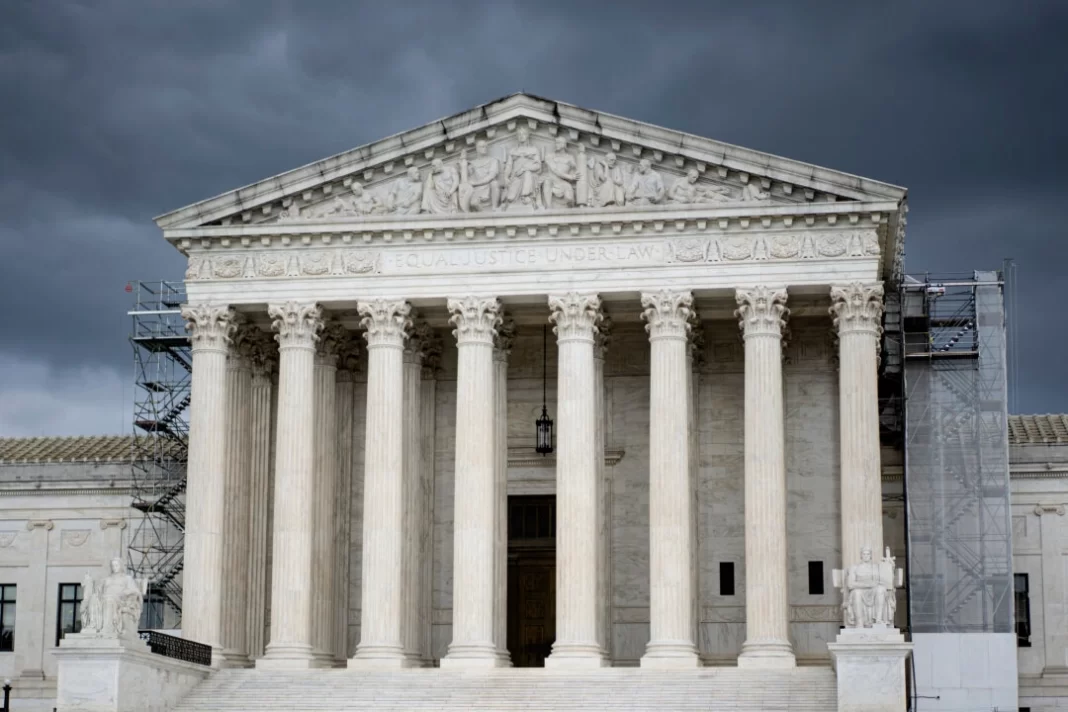
On Thursday, the U.S. Supreme Court heard oral argument in the case of Trump v. CASA, Inc. Though the case arises out of President Donald Trump‘s January executive order on birthright citizenship and the 14th Amendment, Thursday’s oral argument had very little to do with the hotly contested substantive issue of whether the children of illegal aliens born on U.S. soil must automatically be conferred American citizenship. Instead, the argument mostly focused on a procedural legal issue that is just as important as the underlying substantive issue itself: whether lower-court federal judges possess the legitimate power to issue ‘nationwide’ injunctions to bring laws or executive orders to a halt throughout the entire republic.

There is a very straightforward answer to this question: No, they don’t. And it is imperative for American constitutionalism and republican self-governance that the justices clearly affirm that.

Let’s start with the text. Article III of the Constitution establishes the “judicial Power” of the United States, which the University of Chicago Law School professor William Baude argued in a 2008 law review article is “the power to issue binding judgments and to settle legal disputes within the court’s jurisdiction.” If the federal courts can bind certain parties, the crucial question is thus: Who? In other words, what is the legitimate “jurisdiction” of who is strictly bound by a federal court issuing an injunction?

In our system of governance, it is only the named parties to a given lawsuit that can truly be bound by court’s judgment. As the brilliant then-Stanford Law School professor Jonathan Mitchell put it in an influential 2018 law review article, an “injunction is nothing more than a judicially imposed non-enforcement policy” that “forbids the named defendants to enforce the statute”—or executive order—”while the court’s order remains in place.” Fundamentally, as Samuel L. Bray observed in another significant 2017 law review article, a federal court’s injunction only binds “the defendant’s conduct … with respect to the plaintiff.” If other courts in other districts face a similar case, those judges might consider their peer’s decision and follow it, but they are not strictly required to do so. (For truly nationwide legal issues, the proper recourse is filing a class-action lawsuit, as authorized by Rule 23 of the Federal Rules of Civil Procedure.)

By Josh Hammer

Read Full Article on Newsweek.com

Contact Your Elected Officials
Newsweek
Newsweekhttps://www.newsweek.com/
Newsweek is a news magazine and website providing latest news, in-depth analysis and ideas about international issues, technology, business, culture and politics.

 ‘Quality Learing’ Knucklehead

Politicians have an uncanny knack for stating the obvious, lying with sincerity and relentlessly taking credit for things in which they played no role.

The USPS is Going Broke!   

The USPS Postmaster General warned that without lifting its $15B borrowing cap, the agency could struggle to pay workers and vendors by 2027.

Comey and Morens Indicted? Color Me Skeptical

The Justice Department has announced respective prosecutions of former FBI Director and Russiagate architect James Comey and Fauci capo Peter Morens.

Questions Remain After the WHCD Assassination Attempt   

Americans have a hunger to know and understand what happened during the White House Correspondents Dinner (WHCD) assassination attempt.

Direct Election of U.S. Senators: Reform or Mistake?

The direct election of U.S. Senators diminished federalism, stripped states of checking federal power and greatly expanded federal power.

Trump Says Agent Shot at Correspondents’ Dinner Was Not Hit by Friendly Fire

The federal agent that was injured during an alleged assassination attempt at the White House Correspondents’ Dinner was not shot via friendly fire.

Department of Education: New Student Loan Restrictions Take Effect Within 2 Months

Loan limits and other “commonsense” measures for financing higher education and protecting families and taxpayers should be in place within two months.

New Video Released of Cole Allen, Alleged Shooter at White House Correspondents Dinner

U.S. Attorney Jeanine Pirro on April 30 released a new video of Cole Allen, the alleged shooter at the White House Correspondents’ Dinner.

DOJ Releases Report Alleging Anti-Christian Bias Under Biden

The DOJ on April 30 released a 500-page report detailing alleged anti-Christian bias on the part of the Biden administration.

King Charles, Queen Camilla Greeted by President Trump, First Lady

President Donald Trump and First Lady Melania Trump welcomed King Charles III and Queen Camilla of the UK at the South Porticos of the White House on April 27.

Treasury Sanctions Iran-Linked Chinese Oil Refinery, 40 Vessels

The Treasury Department sanctioned a Chinese refinery and 40 shipping firms and vessels found to be providing a lifeline to the Iranian oil economy.

Trump Admin Begins Process to Downgrade Marijuana Classification

The Trump administration announced plans to reclassify approved marijuana products as a less dangerous drug under federal law.

Gas Prices Will Return to Low Levels After Iran Conflict Ends, Bessent Says

Treasury Sec. Scott Bessent said relatively high gas prices will not last long but any change is contingent on when the US and Iran cease hostilities.
spot_img

Related Articles

Popular Categories

MAGA Business Central