

The move was applauded by many critics of the ESG industry, who claim that the net-zero movement has reduced living standards.
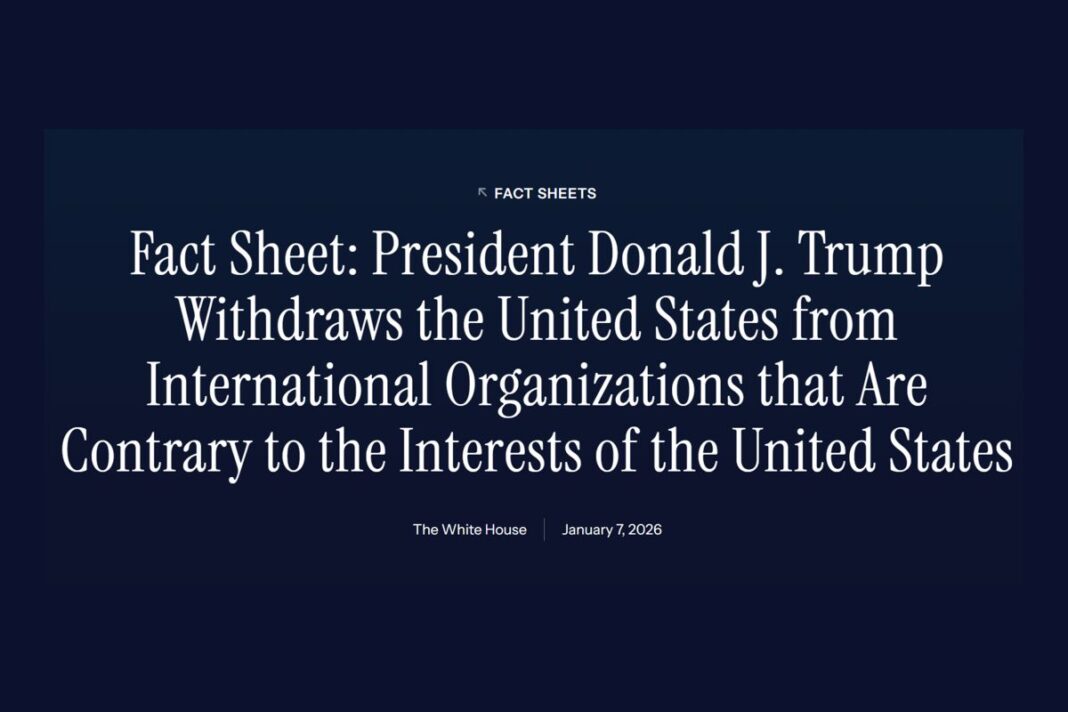
President Donald Trump put another dent in the environmental, social, and governance (ESG) movement, withdrawing the United States from the U.N. Framework Convention on Climate Change (UNFCCC) and 65 other international organizations dedicated to climate and social justice.
Trump’s order caps a recent trend in which many corporations have also canceled their decades-long commitments to left-wing global alliances, undermining what had been a highly influential worldwide movement that once included the world’s largest nations and companies.
According to a White House statement, Trump’s Jan. 7 executive order directs “all Executive Departments and Agencies to cease participating in and funding 35 non-United Nations [U.N.] organizations and 31 [U.N.] entities that operate contrary to U.S. national interests, security, economic prosperity, or sovereignty.”
On Jan. 8, the U.S. Treasury Department announced it would no longer provide funding to the Green Climate Fund, which financed many of the United Nations’ climate initiatives. The United States originally joined more than 190 other nations in the UNFCCC in 1992, when the U.S. Senate ratified the treaty.
This was followed by the 1997 Kyoto Protocol, in which countries committed to carbon dioxide limits and reduction targets, and the 2015 Paris Agreement, which accelerated national governments’ commitments and spending to reduce global temperatures. The U.S. Senate did not ratify either of these subsequent accords.
Corporate Alliances Proliferate
Thereafter, a number of net-zero corporate alliances emerged to align the private sector with climate initiatives. At its peak, this network included financial and corporate alliances, such as the Net-Zero Banking Alliance, the Net-Zero Insurance Alliance, and the Net Zero Asset Managers initiative.
These alliances operated under the umbrella of the Glasgow Financial Alliance for Net Zero, a U.N.-backed multitrillion-dollar coalition. The alliance focused on financial institutions because they were not only financiers but also dominant shareholders of publicly traded corporations and thus a critical means of leverage over the private sector.
Net Zero Asset Managers members, for example, included BlackRock, Vanguard, and State Street, the world’s largest asset managers. These three firms alone are collectively the largest shareholders in more than 40 percent of publicly traded U.S. firms and 88 percent of the S&P 500, according to a study by George Mason University business professors Sebahattin Demirkan and Ted Polat.
Over the past several years, however, members have begun to exit these organizations amid conservative backlash and allegations of conflicts of interest and collusion. Much of this backlash occurred in conservative U.S. states, where Republican lawmakers, treasurers, and attorneys general launched boycotts and antitrust investigations of banks and fund managers accused of colluding against oil, gas, and coal companies and of violating their fiduciary duties to investors.
Vanguard quit Net Zero Asset Managers in 2022, and BlackRock quit in January 2025, after which the initiative announced it was suspending activities. In 2023, half of the Net Zero Insurance Alliance’s members quit en masse, facing risks of antitrust prosecution.