

Changes to the public charge rule aim to reduce incentives to illegal immigration and discourage immigrants from relying on public benefits.
The Department of Homeland Security (DHS) is seeking to change a rule that determines eligibility for permanent residency—commonly known as a green card—based on whether an applicant is considered a “public charge,” someone who is likely to depend primarily on public benefits.
That rule—known as the public charge ground of inadmissibility—generally applies to green card applicants, with the exception of certain categories such as refugees and asylum seekers.
In 2022, 54 percent of households headed by immigrants—naturalized, legal, and illegal—used one or more major welfare programs. That’s compared to 39 percent of U.S.-born households, according to Census Bureau data.
In November 2025, DHS issued a proposal to repeal existing public charge regulations and institute a broader, discretionary standard.
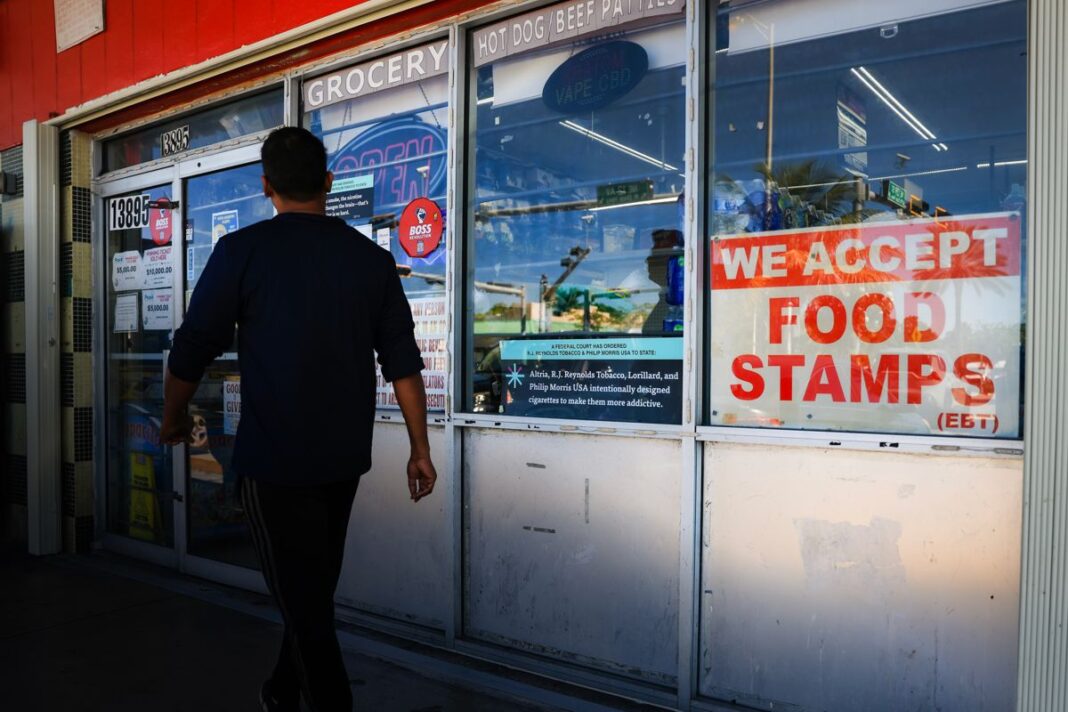
The proposed policy change would allow immigration officials to take into account the use of a wider range of public benefits—including food stamps, Medicaid, and housing assistance—to determine whether a green card applicant will become a public charge.
In its notice of proposed rulemaking, DHS states its goal is to encourage self-reliance and prevent public benefits from becoming an incentive for immigration.
Critics say the proposed policy change will lead to confusion and “decreased participation in public benefit programs” by people who need them.
The mandatory public comment period for the proposed rule ended on Dec. 19, 2025, drawing more than 8,800 comments, including a letter of objection signed by the attorneys general of 20 states. DHS has now entered a mandatory review phase in which it must read and address the substantive points raised by the public.
Once this review is complete, which can take months, the government may modify the rule based on the feedback received before a final rule is published and officially takes effect.
Here’s what we know about the proposed changes.
Key Changes
The changes are designed to undo what the proposal calls “unduly restrictive” public charge rules. Under the old rules, put in place under the Biden administration in 2022, officers couldn’t consider whether green card applicants used benefits such as food stamps (SNAP), the Children’s Health Insurance Program, Medicaid, or housing assistance.
By Sylvia Xu