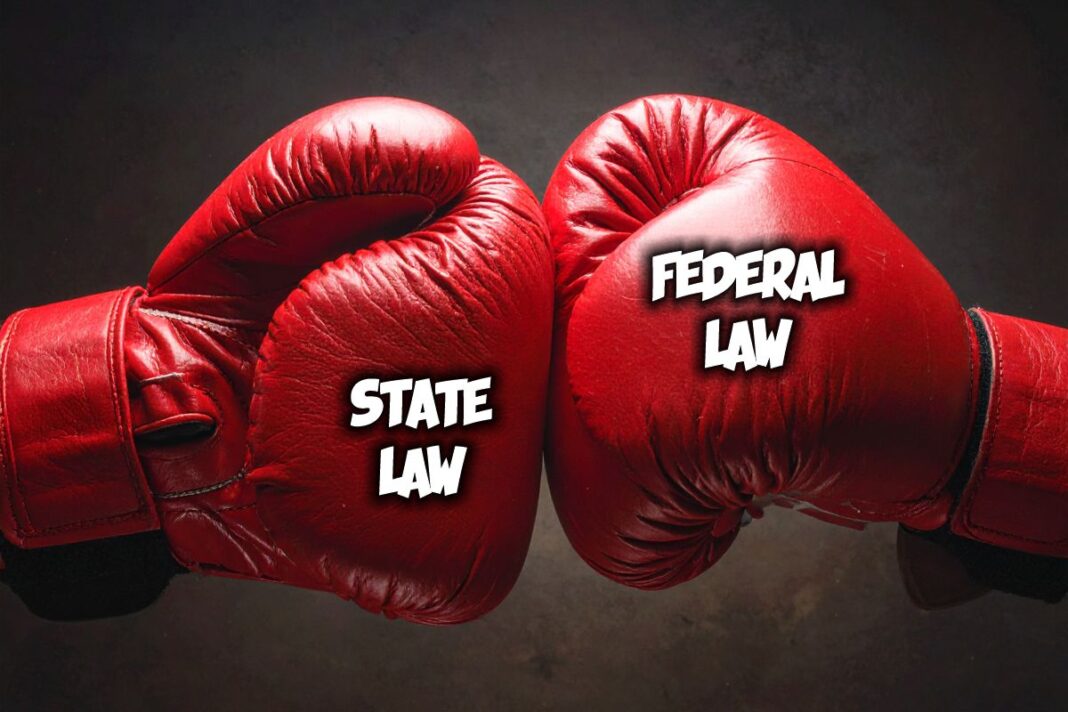


Federal law is known as the law of the land for a reason. It occupies the highest position in the American legal hierarchy and overrides state and local laws when conflicts arise. This is not a political theory or a partisan talking point. It is the structural reality of constitutional governance in the United States.
No state has the authority to ignore federal law. No city has the authority to nullify state law. And no elected official has the right to decide which laws they will enforce based on personal belief, political pressure, or ideological alignment. When officials do that, they are not reforming the system. They are dismantling it.
Every elected official, law enforcement officer, and judge swears an oath to uphold and enforce the law. That oath does not include exemptions for discomfort or disagreement. It applies to all laws, equally. Refusing to enforce laws that remain on the books is a direct violation of that oath. If a law exists, it must be enforced. That is why the law exists.
Selective Enforcement Is Government Lawbreaking
When an official or agency deliberately chooses not to enforce an existing law, they are not exercising discretion. They are breaking the law under the color of authority. They are substituting personal judgment for the legal framework they were trusted to uphold.
This behavior is not harmless. Selective enforcement creates a legal gray zone where citizens are left guessing which laws matter and which do not. Once government officials openly choose which laws apply, citizens can reasonably ask why they should feel obligated to follow laws that are inconvenient to them. That is the moment order begins to erode. A functioning society depends on consistent enforcement. Once enforcement becomes optional, fairness disappears and arbitrariness takes its place.
Judges Are Not Policy Makers
Judges play a critical role in preserving the rule of law, but only when they stay within their proper lane. Judges are not legislators. They are not activists. Their responsibility is to interpret and apply the law as written.
When judges rule based on personal opinion rather than statutory law, they abandon neutrality and turn the courtroom into an ideological arena. Justice becomes subjective. Outcomes become inconsistent. Confidence in the system collapses. The law must govern judicial decisions, not personal belief.
When Officials Cross the Line
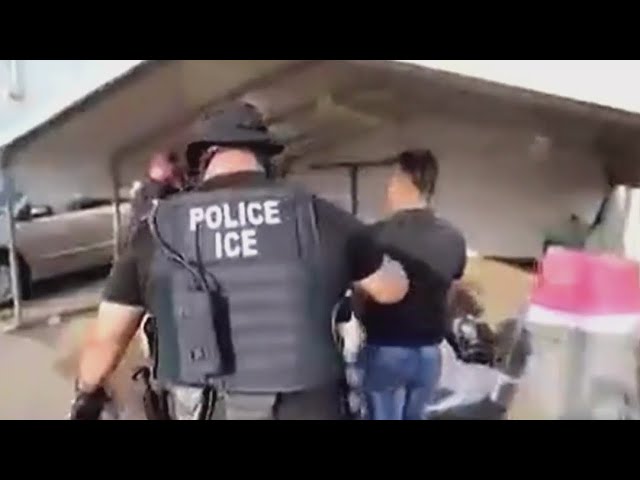
Recent history provides several clear examples of what happens when officials confuse authority with immunity. In Wisconsin, Hannah Dugan, a county judge, was charged after allegedly interfering with a lawful immigration enforcement operation inside her courthouse. Prosecutors say she attempted to help a suspect evade federal authorities. This was not symbolic resistance. It was alleged obstruction of an active law enforcement action. The result was criminal charges, because even judges are bound by the law.
In Texas, Kim Ogg, a district attorney, publicly acknowledged internal conflicts stemming from prosecutors refusing to pursue entire categories of cases based on ideology rather than evidence or statute. While not every instance resulted in charges, the consequences were real. Case backlogs exploded, victims were left without justice, and public trust deteriorated. Several prosecutors resigned or were removed after refusing to fulfill their prosecutorial duties.
In New York, multiple elected officials have faced investigations and disciplinary actions for directing law enforcement agencies to ignore or deprioritize entire classes of crimes. While some attempts were framed as reform, courts repeatedly reaffirmed that executive officials do not have the authority to nullify statutes through policy memos. The pattern is clear. When officials stop enforcing the law, chaos follows. When accountability is applied, the system begins to correct itself.
Sanctuary Policies Are a Direct Assault on the Rule of Law
Sanctuary cities and sanctuary states represent one of the most overt examples of selective enforcement in modern America. These policies instruct law enforcement officers to ignore certain laws, often related to immigration, despite those laws remaining valid and enforceable at the federal level. This is not compassion. It is defiance.
Elected officials do not possess the authority to tell police officers, “These laws exist, but we are choosing not to enforce them.” That directive places officers in an impossible position, forcing them to choose between their oath and political pressure to defy that oath.
Sanctuary policies fracture the legal system. A law that is enforced in one jurisdiction but ignored in another is no longer a law. It becomes a suggestion dependent on geography and ideology. That undermines equal protection and creates unequal justice.
These policies also have real-world consequences. Cooperation between local law enforcement and federal agencies such as Immigration and Customs Enforcement exists to remove known criminals, not random individuals. When jurisdictions refuse cooperation, repeat offenders are released back into unsuspecting communities that are told the system is working, even when it clearly is not.
Sanctuary policies do not eliminate federal law. They obstruct it. And obstruction of law enforcement is not a political statement. It is a prosecutable offense. No state, city, or mayor has the authority to nullify federal law through refusal. That power does not exist in the Constitution.
Accountability Is Not Optional
If an official refuses to enforce the law, they should be removed from office. If they actively obstruct enforcement, they should be prosecuted. Accountability is the only mechanism that prevents power from turning into lawlessness. Personal preference does not override statutory law. Ideology does not cancel sworn duty. Personal feelings do not invalidate legal obligation.
Laws are laws. Not suggestions.
And the moment we accept selective enforcement as normal is the moment we surrender the very foundation that holds a free society together.