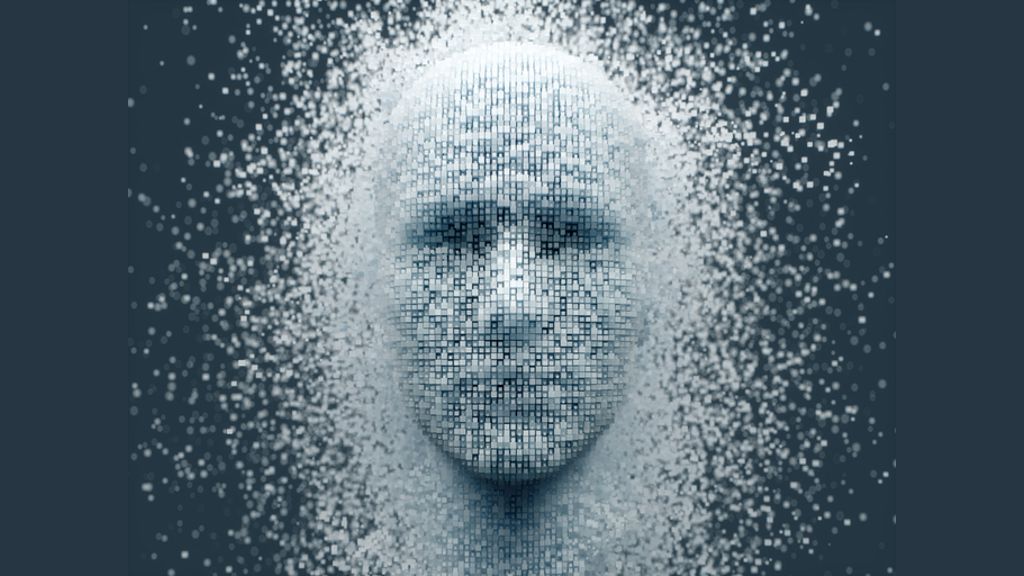


If AI is used as a substitute for creativity, critical thinking, imagination, discipline, and effort, it may become one of the greatest enablers of human decline.
There is a tendency among human beings to view every new technology through the lens of its immediate benefits while largely ignoring its long-term consequences. We have done it throughout history. The automobile gave us unprecedented freedom of movement, but few people stopped to consider how completely dependent entire societies would eventually become upon roads, fuel, traffic systems, and personal transportation. Television brought information and entertainment into every living room in America, but few people anticipated how profoundly it would alter family interactions, attention spans, and the way people consumed information. The internet connected the world in ways that previous generations could scarcely imagine, yet it also introduced entirely new challenges involving privacy, misinformation, addiction, and social division. In every case, the technology itself was neither good nor evil. The real issue was not the tool. The real issue was the people using it and the fact that human beings have a remarkable tendency to focus on what they gain while paying far less attention to what they may eventually lose.
Ironically, when it comes to a developing human, the opposite is true. There is an old saying, “The fear of loss is greater than the promise of gain.” Children might be the best example of this. Parents learned a long time ago that promising something for good behavior is a far less effective strategy than threatening to take something away for bad behavior. Positive reinforcement is great, but rules that create a fear of loss, those are effective. Be good and you’ll get a new toy. This will only last until the idea of the new toy is outweighed by the idea of breaking a rule. If you’re bad, you’re losing your video game for a month. That has weight. The consequences have been spelled out. More importantly, there is no gray area. A new toy could really mean anything, and that vagueness is what can lead the child astray. But taking away something they already have, now they have envisioned what that looks like, feels like and it is those very feelings that reside in their heads and help guide their decisions. Yet, for some reason, when it comes to things like technology, we seem to toss out what has worked for so well during human development.
Artificial Intelligence is the latest example of this phenomenon, and perhaps the most significant one yet. Unfortunately, much of the current discussion surrounding AI falls into one of two extremes. On one side are those who view AI as some sort of existential threat that will inevitably destroy humanity. On the other side are those who view it as a technological miracle that can do no wrong and whose benefits vastly outweigh any potential concerns. As is often the case, I believe the truth lies somewhere in the middle. AI is not inherently dangerous. It is not inherently evil. It is not something that should be feared simply because it exists. In fact, I use AI. I appreciate AI. I believe AI has the potential to become one of the most useful tools ever created. However, I also believe that many people are so captivated by what AI can do that they are failing to consider what widespread dependence upon it may eventually do to us.
The problem is not artificial intelligence. The problem is not human intelligence. The problem may be as simple as human nature. More specifically, the problem is the human tendency to pursue the path of least resistance.
For thousands of years, humanity has searched for ways to make difficult tasks easier. In many respects, that desire is responsible for civilization itself. We developed machinery because physical labor was exhausting. We developed computers because calculations were time-consuming. We developed countless tools because tools allowed us to accomplish more with less effort. There is nothing inherently wrong with that process. In fact, much of human progress depends upon it. The problem emerges when we begin confusing assistance with replacement. There is a significant difference between using a tool to enhance our abilities and using a tool as an excuse to stop developing those abilities altogether.
Consider something as simple as a calculator. Most people would agree that calculators are incredibly useful. Yet if a student never learns basic mathematics because a calculator is always available, something important has been lost. The issue is not the calculator itself. The issue is that the individual never developed the underlying skill or all the other skills that would have emerged from the foundation. The same principle applies to GPS systems. GPS technology is undeniably useful, but many people have become so dependent upon it that they struggle to navigate even familiar areas without assistance. Again, the problem is not the technology. The problem is the dependency that develops when the technology begins replacing a skill rather than supporting it. Spellcheck provides another example. It can be a valuable tool for catching mistakes, but if a person never learns proper spelling, grammar, sentence structure, and communication because software automatically fixes every error, the technology has not merely assisted the individual. It has quietly replaced a portion of their development. It has stifled some of the most important parts of the development of their intellect and, ultimately, their capabilities.
Artificial Intelligence takes this concept to an entirely different level because it has the potential to influence not just what we do, but how we think. Unlike a calculator, AI does not merely solve equations. Unlike GPS, it does not merely provide directions. Unlike spellcheck, it does not merely correct mistakes. AI can generate ideas, write content, create artwork, compose music, develop marketing campaigns, produce videos, and perform countless other functions that have traditionally required human creativity. That is both its greatest strength and, potentially, its greatest danger.
The concern is not that AI will become too intelligent.
The concern is that people will become less willing to think for themselves.
This brings me to what I believe will be one of the first major consequences of the AI revolution: the coming tsunami of AI-generated entertainment. Over the next few years, we are going to witness an unprecedented flood of books, songs, videos, animations, movies, advertisements, social media content, and creative projects. The quantity will be staggering. Every day, millions of people will have the ability to generate content that would have required entire teams of professionals only a decade ago. Many people see this as an exciting development. In some respects, it is. However, I believe we are about to discover something that technology alone cannot solve.
The ability to create something is not the same as having something worth creating. Big difference!
For decades, one of the greatest barriers to entering the entertainment industry was the simple fact that entertainment was difficult to produce. Writing a novel required writing ability. Producing music required musical talent. Creating animation required artists, animators, writers, and technicians. Whether people liked those barriers or not, they served a purpose. They forced individuals to develop skills. They forced creators to refine their ideas. They forced people to become students of their craft before presenting themselves as masters of it. Today, many of those barriers are rapidly disappearing, and society is celebrating their removal without fully considering what those barriers may have been protecting us from in the first place.
What happens when millions of people who possess little artistic ability suddenly gain access to tools capable of producing artwork? What happens when individuals with little understanding of storytelling suddenly gain the ability to generate movies? What happens when people who have never learned how to communicate emotion suddenly gain the ability to generate songs? These are not hypothetical questions. They are questions we are about to answer in real time, and I suspect many people are not going to like the results.
The reason I believe many people are not going to like the results is because what makes entertainment meaningful has never been the technology used to create it. Entertainment has always been about people. It has always been about shared experiences, emotions, observations, triumphs, failures, fears, hopes, dreams, and the countless moments that make up the human condition. The greatest songs ever written did not become great because of the microphones used to record them. The greatest books ever written did not become classics because of the typewriters, word processors, or printing presses used to produce them. The greatest films in history were not made memorable by the cameras that captured the footage. In every case, the technology was simply a vehicle. The true value resided within the minds of the people who created the content. The tools helped bring the vision to life, but the vision itself was born from something far deeper than technology. It was born from human experience.
Consider something as simple as watching a sunrise over the ocean. Most people have experienced moments in life that are difficult to explain to others. The horizon slowly begins to glow. The darkness gives way to color. Shades of orange, gold, and pink gradually emerge where moments before there was only blackness. The air is cool. The waves move rhythmically toward the shore. The warmth of the rising sun slowly begins to replace the chill of the night. For reasons that are often impossible to articulate, something happens inside us. Perhaps we begin reflecting on our lives. Perhaps we remember someone we love. Perhaps we become inspired by an idea. Perhaps we simply experience a feeling of peace that cannot adequately be described with words. Whatever the reaction may be, the experience becomes part of who we are.
Years later, that same sunrise may influence a story we write, a song we compose, a painting we create, or a lesson we pass along to someone else. The event itself may only last a few minutes, but the emotional impact can remain for decades. Human beings are constantly collecting these experiences. They become part of our memories, our perspectives, our personalities, and ultimately our creativity. They shape how we see the world and how we communicate that vision to others.
An artificial intelligence can describe a sunrise. It can analyze millions of photographs of sunrises. It can examine billions of words written by people describing sunrises. It can produce beautiful paragraphs about colors, sounds, sensations, and emotions associated with the experience. What it cannot do is experience the sunrise itself. It cannot feel the warmth on its face. It cannot experience the comfort of the morning breeze. It cannot remember standing on that beach twenty years later because it was never actually there. It can simulate understanding. It can replicate descriptions. It can mimic emotion. What it cannot do is live a human life. That distinction is not a criticism of AI. It is simply an acknowledgement of reality. An important acknowledgement.
This is why I believe many people are dramatically overestimating what AI can contribute to entertainment while simultaneously underestimating what human beings contribute. Human creativity does not emerge from data alone. It emerges from living. It emerges from success and failure. It emerges from heartbreak and joy. It emerges from disappointment, hope, love, sacrifice, courage, and perseverance. AI may eventually become exceptionally good at reproducing patterns associated with those experiences, but reproducing a pattern and experiencing a life are not the same thing. One comes from observation. The other comes from existence.
This brings us to what may become the most misunderstood aspect of the AI entertainment boom. Many people assume that because AI can create impressive output, the person operating the AI deserves the same level of recognition as someone who spent years mastering a craft. I believe this is where we are beginning to lose sight of an important distinction. There is a difference between using a tool and possessing the skill that the tool is replacing.
Imagine someone purchasing a paintbrush and standing in front of a blank canvas. The paintbrush itself possesses no artistic ability. It is simply a tool. The beauty of the finished painting comes from the vision, skill, imagination, and talent of the artist holding it. Now imagine someone assembling a puzzle that reproduces a masterpiece painted by Michelangelo. When the final piece is placed, the image may be stunning. It may even be worthy of framing. Yet no reasonable person would conclude that the individual who assembled the puzzle is now a master painter. The finished product may resemble great art, but the process that produced it is fundamentally different.
That is the distinction society is beginning to blur. We are increasingly giving credit to the operator of the tool while overlooking the fact that the tool itself performed the overwhelming majority of the work. This does not mean the user contributed nothing. It does mean that we should be careful about confusing operation with mastery. A person who uses AI to generate a song is not necessarily a musician or a song writer. A person who uses AI to generate a screenplay is not necessarily a screenwriter. A person who uses AI to generate artwork is not necessarily an artist. They may eventually become those things, but access to a powerful tool does not automatically confer expertise.
The larger issue is not that AI is making untalented people appear talented. The larger issue is that many people seem perfectly comfortable with that arrangement. In fact, some actively prefer it because it eliminates the need to endure the difficult process of learning, practicing, failing, improving, and ultimately mastering a skill. Once again, we find ourselves facing the path of least resistance. Why spend ten years learning how to paint when software can generate a painting in ten seconds? Why spend years studying music theory when software can compose a song instantly? Why spend decades becoming a storyteller when software can generate a screenplay with a few prompts?
These questions sound reasonable on the surface, but they completely miss the point. The value was never found solely in the final product. The value was also found in the journey required to create it in the first place. The process of learning a craft changes the individual. The aspiring musician becomes disciplined. The writer becomes observant. The artist becomes imaginative. The storyteller develops empathy and understanding. The skills acquired along the way often become more valuable than the finished work itself because they transform the person doing the work. It also extends well beyond the work itself, it bleeds into other important aspects of life.
This is why I believe the coming flood of AI-generated entertainment will eventually expose a problem that many people have yet to recognize. We are about to discover that the primary obstacle preventing many people from creating great entertainment was never access to technology. The primary obstacle was the absence of meaningful ideas, meaningful experiences, meaningful perspectives, and meaningful talent. AI can help people express an idea. What it cannot do is provide a worthwhile idea where none existed to begin with.
As millions of people gain access to these increasingly powerful tools, we are likely to see an explosion of content unlike anything in history. There will be more books, more songs, more videos, more animations, more podcasts, more films, and more creative projects than ever before. At first, this abundance may seem exciting. Eventually, however, people will begin noticing something. Much of the content will feel hollow. Much of it will feel repetitive. Much of it will feel interchangeable. It may look professional. It may sound impressive. It may even appear polished and sophisticated. Yet beneath the surface, much of it will lack the one ingredient that has always separated great entertainment from mediocre entertainment: authentic human insight.
Ironically, this may force society to revisit a concept that has become deeply unpopular over the last several decades: gatekeepers. For years, many people have viewed publishers, producers, studio executives, editors, and other industry decision-makers as obstacles standing in the way of creativity. In some cases, that criticism was justified. Gatekeepers have undoubtedly made poor decisions and overlooked talented people. Yet gatekeepers also served another purpose that is often ignored. They filtered content. They acted as a quality-control mechanism. Not every idea deserved a movie. Not every song deserved a record deal. Not every manuscript deserved publication. Not every creator deserved an audience.
Harsh as that reality may sound, quality control exists for a reason. When quality control disappears, quantity rushes in to fill the void. We may soon find ourselves overwhelmed by such an enormous volume of content that people begin longing for someone, anyone, to separate the exceptional from the ordinary. In that moment, society may finally understand that while gatekeepers sometimes kept good ideas out, they also kept an enormous amount of garbage from flooding in.
Perhaps the most troubling aspect of our growing dependence on technology is not what happens when everything works perfectly. It is what happens when it doesn’t. Human beings often assume that the systems they rely upon today will always be available tomorrow. History suggests otherwise. Natural disasters, infrastructure failures, cyberattacks, wars, economic collapses, and countless other events have repeatedly demonstrated how fragile even the most advanced societies can be. The more dependent we become upon technology for our thinking, our creativity, our communication, and our daily decision-making, the more vulnerable we become when those systems fail.
Many people argue that losing advanced technology would simply set society back a few decades. I am not convinced the situation would be that simple. Previous generations possessed the knowledge and skills necessary to rebuild because they understood the foundations upon which their societies were constructed. They knew how to navigate without GPS. They knew how to perform calculations without calculators. They knew how to communicate effectively without software correcting every mistake. They knew how to solve problems because they had spent their lives exercising the mental muscles required to do so. If future generations become increasingly dependent upon technology for every aspect of thinking, creating, remembering, and problem-solving, we may eventually discover that the greater danger is not the loss of the technology itself, but the loss of the human capabilities that once existed independently of it.
The debate surrounding artificial intelligence often focuses on what machines may become someday. In my view, that is the wrong question. Machines will continue to improve because that is what machines are designed to do. The more important question is what human beings will become in response.
If AI is used as a tool, it may become one of the greatest advancements in human history. If it is used as a substitute for creativity, critical thinking, imagination, discipline, and effort, it may become one of the greatest enablers of human decline. The difference will not be determined by the technology. It will be determined by the choices we make. A hammer can build a home or destroy one. The hammer is not responsible. The person holding it is.
The coming tsunami of AI-generated entertainment is merely the first wave. What concerns me is not the quality of the movies, songs, books, and videos that will emerge from it. What concerns me is what those creations may reveal about the people creating them. A society that continually chooses convenience over capability, shortcuts over mastery, and dependency over self-reliance eventually pays a price for those choices. The bill may not arrive today. It may not arrive tomorrow. History suggests that eventually it always arrives and we, as society, will be the ones on the hook for that bill.
Artificial intelligence is not the villain of this story. Human nature is. We have always been tempted by the path of least resistance. The challenge before us is not whether we can build better machines. It is whether we can resist becoming less capable because of them. Use the tool. Learn from the tool. Benefit from the tool. Improve the tool. But never forget that the value was never in the paintbrush. The real value was always in the painter.
We cannot allow that part of our humanity to die.