

Permitting delays and litigation lock up U.S.-based critical minerals and rare earth elements as China corners the market, prospectors said.
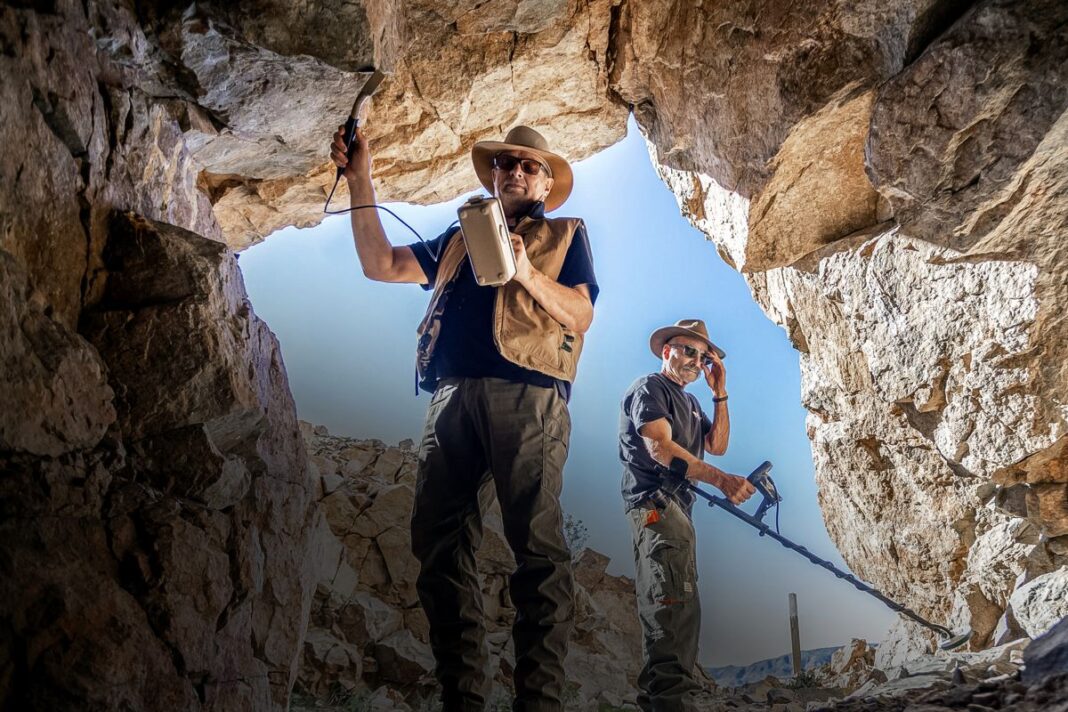
SAN BERNARDINO COUNTY, Calif.—With their four-wheel-drive trucks hugging the mountainside, prospectors Ron Kliewer and Sean Hart dodge tire-puncturing rocks jutting out of the narrow and steep road to their inactive uranium and rare earth mineral mines in the Mojave Desert.
Aside from a large uranium deposit, their square mile of mining claims is rich in 14 other critical minerals, including many rare earth elements. The uranium there was first discovered more than 70 years ago, during the uranium boom after World War II and the dawn of the nuclear age.
But the price of uranium dropped, and the family that owned the claim never mined it. In 2017, the family officially released the claim, and one of Kliewer’s partners at Sundown Resources obtained the mining rights.
While edging his way up the trail, Kliewer talks about his disappointment with the expense and the sometimes decades-long permitting process to get mining operations approved, despite the high demand for uranium and rare earth elements in the United States.
“We’re importing rare earth minerals from unstable regions and even countries that are not U.S. allies while ignoring viable shovel-ready deposits right here in California and other places in the U.S.,” Kliewer said. “It makes no sense.”
Relying on imports from foreign nations, especially adversaries, “is a national vulnerability [the United States] can’t afford,” according to Kliewer.
“Energy security starts with mining our own uranium and rare earth minerals,” he said.
According to the Center for Strategic and International Studies, permitting delays and discontinuity in U.S. policies are two of the greatest challenges to overcome in achieving mineral security, especially amid China’s relentless efforts to dominate the markets and manipulate prices of rare earth minerals.
Back at the mine, a wooden post marks the claim near the entrance, and a metal cap on the ground outside conceals a 1,000-foot-deep drill hole where uranium ore samples were taken.
Once inside, the uranium hidden in the tunnel walls reveals itself in fluorescent green under the beam of a blacklight, while the frenetic cacophony of Geiger counter clicks announces the radioactive metal’s presence and the squawking of a metal detector indicates other minerals.
As he hikes toward the back of the 300-foot tunnel, careful not to kick up radioactive dust, Kliewer points to blast holes where explosives were used in past excavations.
Resting at a small plateau overlooking the valley, they spot a suspected claim jumper carrying what looks like a sample bag approaching an ATV. However, by the time they prepare to head down the hill, the suspected mineral thief and a likely accomplice are already marking their escape with a long trail of dust along the desert floor.
From there, the rare earth elements mine is an arduous hike higher up the mountain, so Kliewer and Hart tuck some water bottles into their backpacks and begin the trek hundreds of feet skyward with the desert sun—unusually hot for mid-December—beating down on their backs.
By Brad Jones