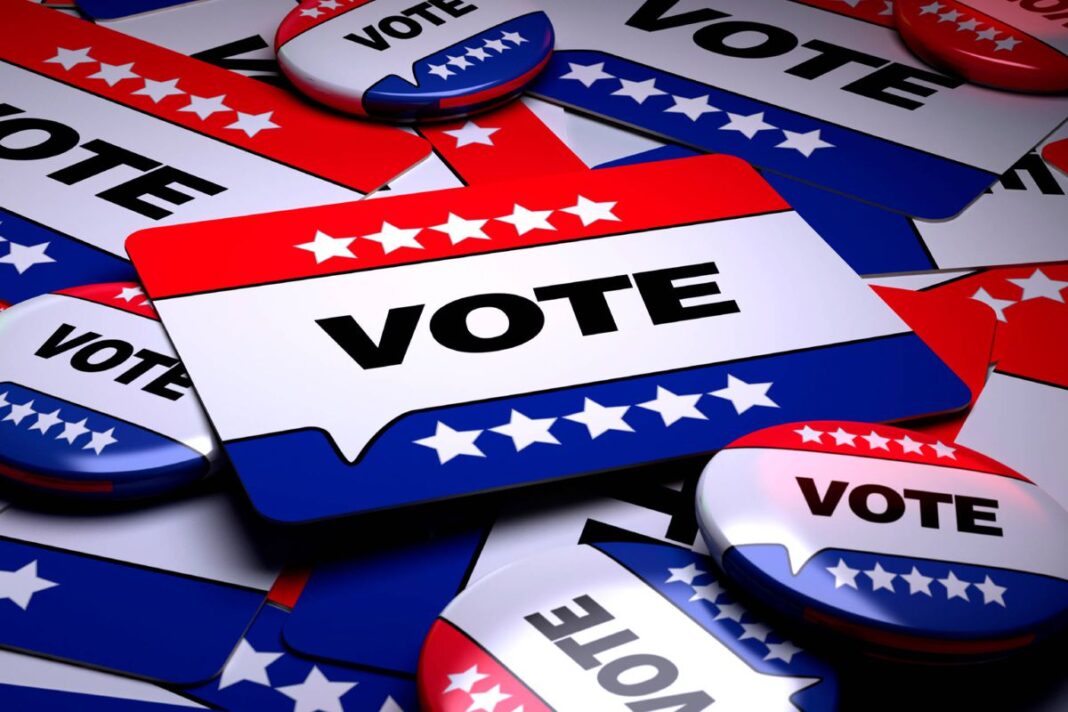


If you are an American citizen, it is imperative that you understand that the right to vote is the most important right you possess. Some may argue that the First Amendment is paramount because it protects speech. Others may argue that the Second Amendment is supreme because it protects the right to defend oneself against tyranny. Those rights are essential. But neither exists independently of political power. Both ultimately depend on who holds office.
The American Revolution was fought to free this nation from a monarchy where the will of a king was law. Authority flowed downward from a single ruler. The colonists rejected that system not merely because they disliked taxation, but because they rejected the idea that unaccountable power should determine their fate. When independence was secured in 1776, there were those who suggested that George Washington should simply become America’s king. Washington and the other founders refused. They understood that replacing one monarch with another was not freedom. It was simply a cosmetic change to the same system.
What emerged instead was an unprecedented experiment. A system where the people would not be ruled, but led. A system where authority would originate from the consent of the governed. That consent would be expressed through a mechanism called the vote.
That mechanism is the hinge upon which all other rights swing.
The Constitution can be amended. Rights can be reinterpreted. Courts can be reshaped. Laws can be rewritten. All of those outcomes are influenced by elections. The vote determines who appoints judges. The vote determines who writes legislation. The vote determines who enforces the laws. If the wrong people are placed in positions of power, the very protections many claim to value can be eroded from within the system itself. This is not a hypothetical situation either.
We have already seen how swiftly power can be used to marginalize opposition. During the COVID-19 pandemic, extraordinary authority was exercised at every level of government. Vaccine mandates were imposed across federal agencies and large private employers. In many cities and states, individuals were required to present proof of vaccination to enter restaurants, attend events, or in some cases keep their employment. Documentation was demanded as a condition of participation in society.
At the same time, questioning certain pandemic policies or expressing opposing views about lockdowns, vaccine efficacy, or origin theories often carried negative professional and social consequences. Social media platforms removed posts, suspended accounts, and labeled alternative viewpoints as misinformation. In the aftermath of the 2020 election and throughout the pandemic years, high-profile accounts were permanently banned, including that of Donald Trump from major social media platforms. If banning the account of a former President, motivated by influence coming from the current presidential administration, is not proof of suppression and silencing of a political rival, I don’t know what is.
In the years following the pandemic, disclosures and litigation revealed that federal officials were in regular communication with major social media platforms regarding content moderation. Court cases such as Missouri v. Biden examined whether government interaction with technology companies crossed constitutional lines. Internal communications released through litigation and investigative reporting showed federal agencies flagging posts and accounts for review.
Meta CEO Mark Zuckerberg has publicly acknowledged that officials within the Biden administration expressed significant pressure on Facebook to remove certain COVID-related content during the height of the pandemic. He described the administration as strongly urging the company to take down posts it considered misinformation. This is not conjecture. These communications were revealed through litigation and public reporting. Supporters argue that such engagement was necessary during a public health crisis. Critics argue that when the federal government pressures private platforms to restrict speech, it raises serious First Amendment concerns, and rightfully so.
Regardless of one’s position on pandemic policy, the larger point remains. When those in power are able to influence what information is amplified and what information is suppressed, the stakes of elections become unmistakably clear. Elections matter because power matters.
That is why the right to vote is not simply one right among many. It is the right that safeguards all others.
Because of its magnitude, it must be treated as sacred.
Federal law restricts voting in federal elections to United States citizens. That principle reflects a simple truth. The direction of this country should be decided by those who are legally and fully part of it. Yet in recent years, certain municipalities such as New York City, San Francisco, and Washington, D.C. have allowed non-citizens to participate in local elections.
Supporters of non-citizen voting in local elections often frame it as limited and harmless. They argue that it applies only to school board or city council matters and therefore poses no threat to national sovereignty. But history teaches a consistent lesson. Cultural and legal shifts rarely begin with sweeping transformation. They begin with incremental normalization. An inch is granted. The principle is softened. The resistance fades. Then the boundary moves again. When allowed to go unchecked, that given inch can quickly become a mile or even more.
When a society becomes accustomed to something that once would have been considered unacceptable, the debate changes. What was once unthinkable becomes ordinary. What was once extraordinary becomes routine. The question is no longer whether the change should have occurred at all. The question becomes how far it should go.
If citizenship is the defining line between member and non-member of the national body, then eroding that line at any level weakens the concept itself. Today it may be school board elections. Tomorrow it may be county commissions. Eventually the argument will be that participation has already been normalized and therefore expanding it further is simply the next logical step.
This is not conspiracy thinking. It is pattern recognition. Major institutional changes in American history have followed this very model. They begin at the margins, framed as limited exceptions. Once accepted, they become precedent. Once precedent is established, expansion becomes easier to justify. Political movements operate through goals, strategy, and incremental progress. Evaluating outcomes and asking whether they align with a broader objective is not paranoia. It is responsible citizenship.
The proposed Safeguard American Voter Eligibility Act would require documentary proof of citizenship when registering to vote in federal elections, along with a state or federally recognized photo identification when casting a ballot. These are not radical expectations. These are common sense requirements for such a right with so much significance and importance. Identification is required to board an airplane. It is required to open a bank account. It is required to purchase certain medications. It was required to participate in many areas of society during the pandemic. In some places, identification is required just to catch a fish. Yet when identification is required to vote in a national election, it is described by some as discriminatory. A racist demand.
Opponents argue that voter ID laws disproportionately impact minority communities and low-income individuals. Some public commentary has implied that certain racial groups face such difficulty obtaining identification that requiring it is inherently suppressive. That claim raises a serious question. If obtaining a government-issued ID is portrayed as an insurmountable obstacle for specific racial groups, what exactly is being implied? That they lack the ability to navigate basic administrative processes? That they are uniquely incapable of securing documentation that millions of Americans across all demographics obtain every year?
That argument is not empowering. It is patronizing. It is insulting. But it is also telling.
What it should clearly indicate to everyone how the Democratic party actually feels about their base, or at least how they public portray those feelings. I find it ironic that the Democrats say that people of color are incapable of doing something and that makes Republicans racist. I’m still trying to figure that one out, but unless I am mistaken, if you are the party saying that the color of a person’s skin is the deciding factor of their abilities, well, doesn’t that make you the racist?
But it doesn’t end with race. The new argument is that married women, who have taken their husband’s last name, are too incapable to be able to provide a birth certificate and a marriage license when registering to vote. While these documents are necessary for so many other things, like adjusting a bank account or getting a new driver’s license, when it comes to being required to vote, then it becomes an unreasonable request. Again, I find the arguments of the Democrats ironic. They firmly believe, so they say, that people of color and married women and not capable of simple, administrative actions. Can they get more insulting than that?
If documentation is acceptable, and actually required, when regulating daily life, why is documentation unacceptable when protecting the integrity of a national election? If the vote determines who shapes the Constitution, commands the military, regulates the economy, and influences speech itself, then proving who you are and proving you are a citizen is the least that should be required.
It is my firm opinion that anyone who is comfortable with unsecured elections does not fully grasp the gravity of what is at stake. In my view, tolerating a compromised electoral system is a betrayal of the principles upon which this country was built. The word traitor is tossed around quite a bit these days, usually in a context that makes no sense, but in this case, in the case of allowing our elections to be influenced by non-citizens, especially if it is by an elected official, if a person engages in those activities, I feel that using the term “traitor” is appropriate. And not just use of the term, but also enforcement of the act. That is not hyperbole. It is an acknowledgment of how foundational elections are vital to the survival of a constitutional republic.
We have drifted from treating elections as solemn civic responsibilities. The right to vote was earned through sacrifice. Generations before us endured war, hardship, and struggle to create and preserve this system. None of us placed ourselves here. We inherited this republic and it is our job to preserve it.
Gratitude is not outdated. Respect is not oppressive. The American flag represents sacrifice, growth, strength, and opportunity. When the national anthem plays, standing in silence is not blind allegiance. It is acknowledgment that countless lives were given so that you could argue freely, vote freely, and live freely. For those who have chosen to “take a knee” to show their displeasure with the country that made that very act possible, I say perhaps they don’t need to take a knee, but a walk. A walk to another country, so they can actually see just how good they have it here. In fact, since they probably won’t take that walk of discovery, then they should not take a knee, but be on both knees, thanking God for the good fortune of being an American and being able to enjoy all the rights that other people died to provide.
Respect is not difficult. Indifference is.
The right to vote carries immense power. With that power comes responsibility. It must be protected with vigilance, guarded with seriousness, and exercised with understanding.
Because once that right is compromised, every other right stands on unstable ground.