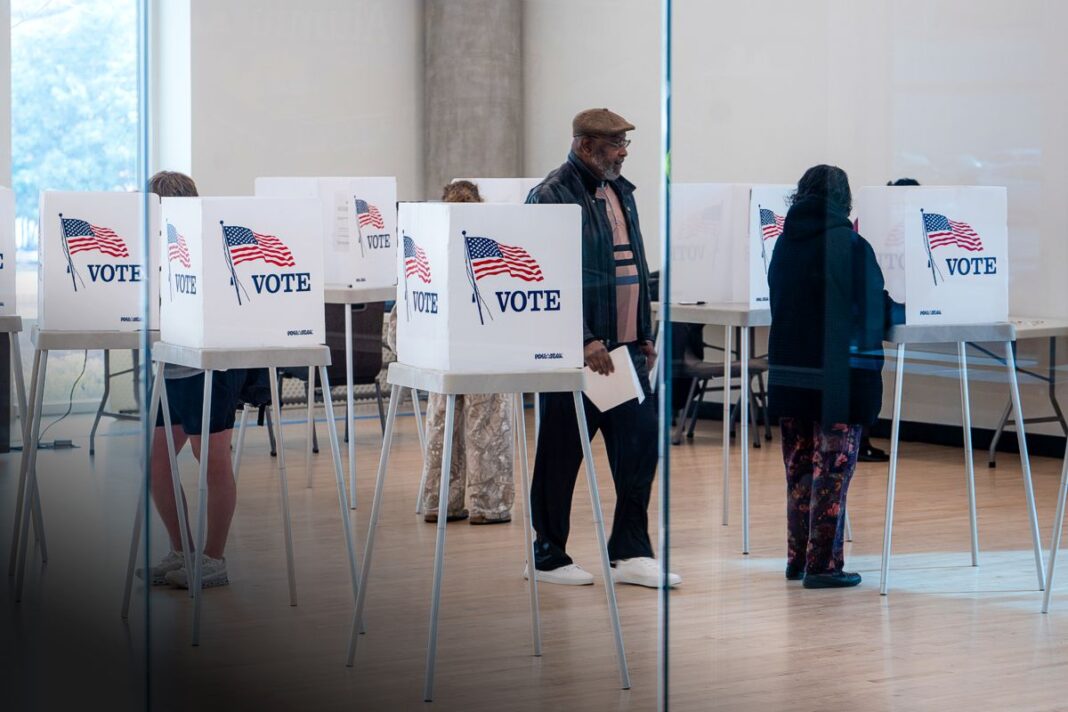


Priorities ranging from illegal immigration to the meaning of Christianity motivated early voters in the two states.
WASHINGTON—The border. Health care. The Trump administration. Christianity.
During early voting for primaries in Texas and North Carolina, politically engaged locals weighed in on those and other top issues in interviews with The Epoch Times.
People across the Lone Star State shared their perspectives in the midst of the U.S. Senate primaries—now the most expensive on record, according to AdImpact. The interviews were conducted the week before the primary election on March 3, and before the United States and Israel attacked Iran.
On the Republican side, Sen. John Cornyn (R-Texas) is defending his seat against Texas Attorney General Ken Paxton and Rep. Wesley Hunt (R-Texas). Meanwhile, Rep. Jasmine Crockett (D-Texas) is sparring with state Rep. James Talarico for the Democratic nomination.
Voters in North Carolina’s First Congressional District offered their thoughts to The Epoch Times as Rep. Don Davis (D-N.C.) prepares to defend his seat in the territory, which is more Republican-friendly after redistricting.
The GOP primary contenders include former Trump Pentagon official Laurie Buckhout, Carteret County Sheriff Asa Buck, state Sen. Bobby Hanig, Lenoir County Commissioner Eric Rouse, and family law attorney Ashley Nicole-Russell.
Davis is not facing a primary challenger.
Huntsville
Huntsville, Texas, population 49,500, is nicknamed Prison City, USA.
The Walls Unit, located near the center of the city, hosts the country’s most active execution chamber. Other penal facilities dot the East Texas landscape.
On Feb. 19, early voters were few and far between at a voting site next door to the Texas Prison Museum. The grounds of the HEARTS Veterans Museum, part of the same complex as the voting site, were lined with military aircraft.
Joan Baxter was sitting and reading a book in the parking lot outside, next to a pickup truck advertising a Walker County commissioner candidate, Troy Walker. She was campaigning, albeit quietly, for Walker.
Baxter said she taught at a prison for 12 years.
“I got the cream of the crop—and they took care of me,” she said.
As a voter, her top concerns are agricultural issues, property taxes, and the effect of gender ideology on children.
“It’s just awful,” she said of the latter. “I don’t know where to draw the line. Parents are not always on top of the situation.”