

Republicans say that funding the department is urgent amid the war in Iran and the risk of retaliatory terrorist attacks.
WASHINGTON—Senate Democrats on March 5 again blocked a vote on legislation to fund the Department of Homeland Security, extending the 19-day partial shutdown of the agency.
The tally was 51–45.
A March 5 procedural vote to advance a full-year DHS spending bill failed to reach the 60-vote threshold it needed to move forward. A previous attempt was blocked on Feb. 24, though it garnered the support of Sen. John Fetterman (D-Penn.).
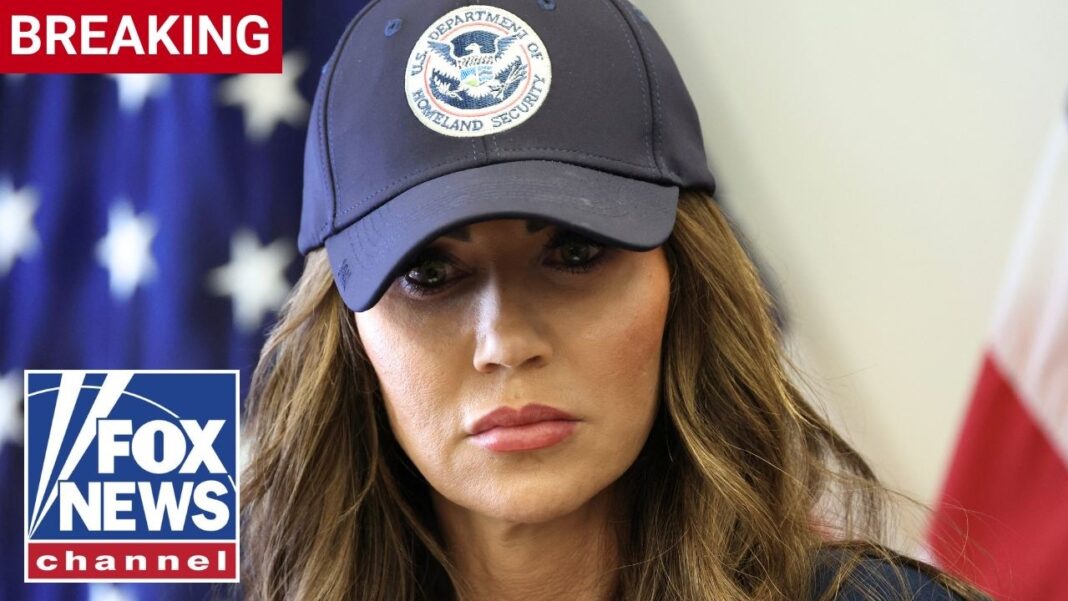
The vote comes as President Donald Trump announced on Thursday that he is replacing Homeland Security Secretary Kristi Noem with Sen. Markwayne Mullin (R-Okla.). Noem is set to fill a newly created position called special envoy of the shield of the Americas. The president released the news shortly before the vote concluded.
Republicans have said that funding the department is urgent amid the war in Iran and the risk of retaliatory terrorist attacks. Law enforcement is investigating whether a recent shooting at a bar in Austin, Texas, that killed three people was such an attack.
The shutdown affects only part of the DHS because Immigration and Customs Enforcement (ICE) and Customs and Border Protection are funded through 2029 under Trump’s sweeping reconciliation package passed last year. Congress has approved the remaining 11 appropriations bills, funding roughly 96 percent of the federal government.
Agencies affected include the Transportation Security Administration (TSA), the Federal Emergency Management Agency (FEMA), and the Coast Guard.
According to figures released by House Speaker Mike Johnson (R-La.), roughly 120,000 DHS employees are currently working without pay. About 95 percent of TSA employees are working without pay during the shutdown, while roughly two-thirds of the Cybersecurity and Infrastructure Security Agency’s (CISA) workforce has been furloughed.
The bill would provide $5.7 billion for FEMA, an $873 million increase over fiscal 2025 levels, excluding $26.367 billion for the Disaster Relief Fund.
It allocates $3.25 billion to the U.S. Secret Service, including $44 million for security planning related to major upcoming events such as the 2026 FIFA World Cup, America250 celebrations, and the 2028 Summer Olympics and Paralympics.
The legislation would also provide $7.96 billion for the TSA, including $300 million for checkpoint screening systems, funding for exit-lane staffing, law enforcement officer and canine reimbursement programs, and $13.9 million to reimburse airports for installing explosive detection systems.
The bill includes $2.6 billion for CISA, including $40 million to continue election security activities funded in fiscal 2024, and $122.9 million for U.S. Citizenship and Immigration Services, with $112 million for E-Verify and $10 million to reduce application backlogs.