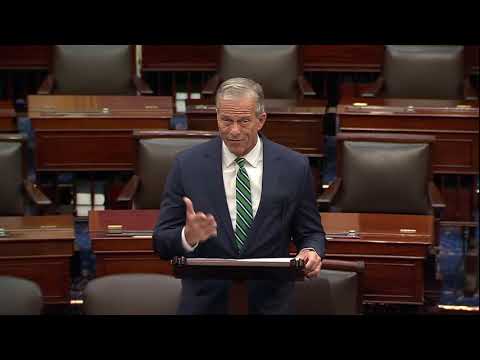


The bill seeks to rein in corporate landlords and ensure that families, rather than corporations, buy homes in the country.
The Senate advanced a bipartisan bill on March 10 that aims to lower home prices and make housing more affordable for Americans.
The Senate voted 89–9 to invoke cloture on H.R.6644, the Housing for the 21st Century Act, meaning debate on the measure has been limited. The bill now has a clear path for a vote, which could likely take place on March 12.
The bill package is being led by Sen. Tim Scott (R-S.C.) and Sen. Elizabeth Warren (D-Mass.), and combines the Senate’s ROAD to Housing Act of 2025 with provisions from the House of Representatives’ Housing for the 21st Century Act, according to a March 10 statement from the Senate Committee on Banking, Housing, and Urban Affairs.
The combined 21st Century ROAD to Housing Act is expected to “help boost housing supply and bring down costs,” the committee said. “The bill also takes a first step towards reining in corporate landlords and ensuring families, not corporations, can buy homes across the country—a goal that is overwhelmingly popular with the American people across party lines.”
According to a Senate Committee document, the 21st Century ROAD to Housing Act contains several provisions to improve housing conditions in the United States.
The act’s provisions aim to cut red tape in environmental reviews and to authorize a pilot program offering competitive grants to assist state, local, and tribal governments with regional housing planning.
Other provisions include one that requires the Federal Housing Administration to increase loan limits for multifamily properties, while banning large institutional investors from buying certain single-family homes, a measure aimed at promoting home ownership opportunities for American families.
It permanently excludes disability compensation received by veterans when calculating their annual income under the Department of Housing and Urban Development’s (HUD) Veterans Affairs Supportive Housing program, a move aimed at helping more homeless veterans access housing.
The “Revitalizing Empty Structures into Desirable Environments” provision authorizes a pilot program to convert vacant and abandoned buildings into housing units, and the “Rental Assistance Demonstration” provision codifies tenant protections in rental properties.
The act seeks to raise the Public Welfare Investment cap on banks from 15 to 20 percent, which will “enhance banks’ capacity to make private investments in affordable housing,” according to the Senate document.