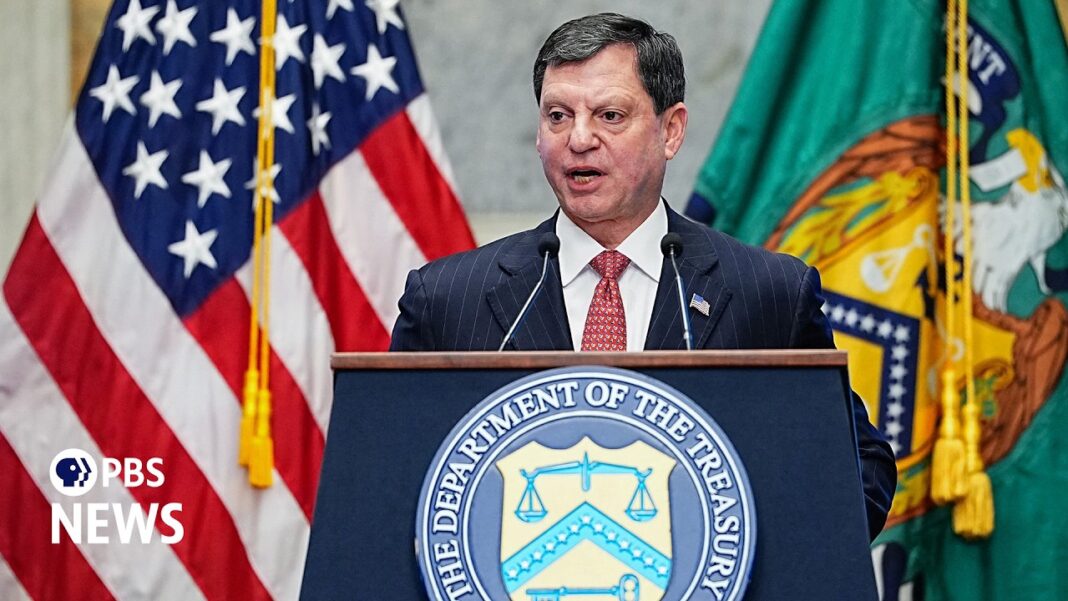
Three Republican panel members—Reps. Ralph Norman (R-S.C.), Chip Roy (R-Texas), and Morgan Griffith (R-Va.)—abstained from the 6–4 vote.
The House Rules Committee on April 14 advanced a bill to reauthorize Section 702 of the Foreign Intelligence Surveillance Act (FISA), a power that has long drawn bipartisan criticism since its inception in 2008.
A measure to reauthorize the controversial power passed the committee in a 6–4 vote, from which three Republican panel members—Reps. Ralph Norman (R-S.C.), Chip Roy (R-Texas), and Morgan Griffith (R-Va.)—abstained.
Those same three had delayed the planned consideration of the bill for hours, threatening to join the Democratic minority in voting it down.
The measure under consideration would extend Section 702 powers for 18 months.
Although the April 14 impasse was ultimately broken, paving the way for a late-night vote after 11 p.m. local time, it reveals that long-running GOP discontent with Section 702—which was used against then-candidate Donald Trump in the 2016 Crossfire Hurricane Russia collusion investigation—has not been soothed by Trump’s calls for a “clean” reauthorization of the power.
Trump noted his experience with the law in the past, describing it as “the worst and most illegal abuse of FISA in [U.S.] History,” referencing disclosures that revealed that the FBI had used Section 702 of FISA to spy on Trump’s 2016 presidential campaign as part of the Crossfire Hurricane operation.
Nevertheless, Trump said, “When used properly, FISA is an effective tool to keep Americans safe.”
However, several House Republicans remain unconvinced. Of the 24 amendments offered, only one came from a Democratic member. Several of the amendments put forward were sponsored or co-sponsored by Roy.
Section 702 targets intelligence from foreign nationals thought to be outside the United States. Yet it also enables intelligence agencies to gather “incidental” information from Americans who are in contact with targeted non-U.S. persons—all without a warrant.
Although intelligence officials must obtain a warrant to access Americans’ data directly, Section 702 has long caused bipartisan discomfort on Capitol Hill and beyond.
By Joseph Lord