

I’ve lost count of the times people have asked me, “You were homeschooled, right?” And though it’s now been years since I’ve graduated, there’s apparently some sort of badge that homeschoolers will always carry. Yes, I was homeschooled. I’m proud of it, thankful for it, and count it a blessing that my parents chose to persevere through teaching me at home. This article aims to extoll the virtues of a homeschool education from a Christian perspective; yet I respect each parent’s decision regarding the schooling of his or her child. Although many parents agree that it can be challenging to teach their kids at home, they also agree that the benefits far outweigh those hurdles.
Homeschool Story
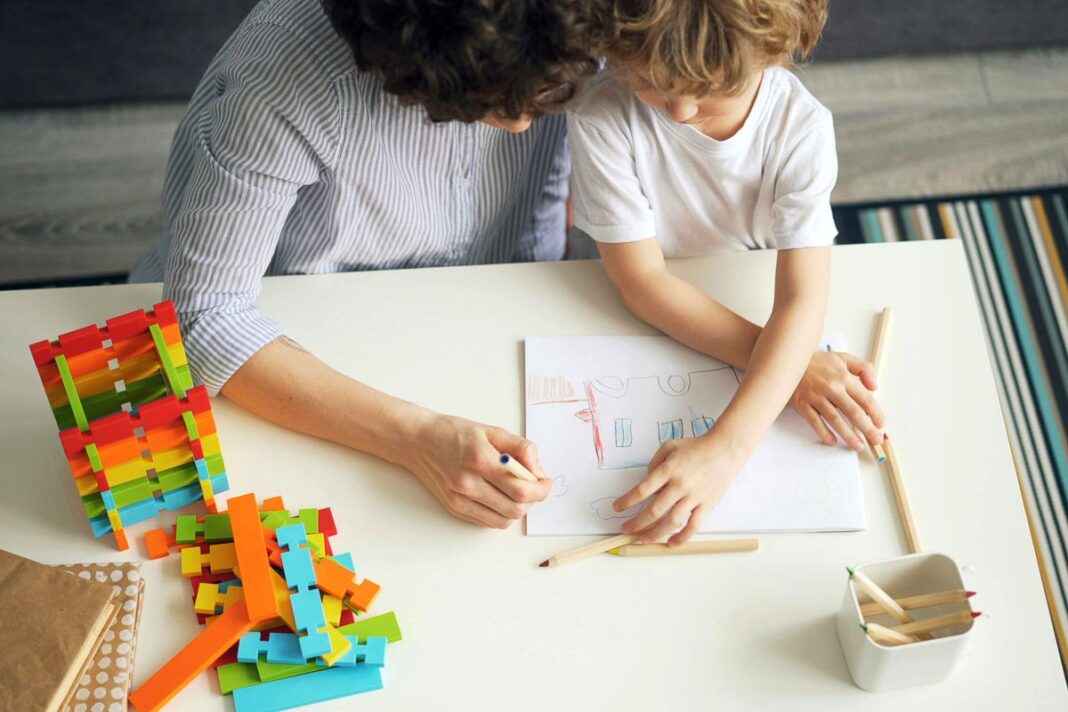
First off, let’s be clear: Homeschooling doesn’t assure you that you’ll get to eat a stack of pancakes in your PJs at nine every morning. More realistically, in a homeschooling household you might find the kids loudly reciting the US Presidents to Mom as she assembles peanut-butter sandwiches for lunch at the kitchen table strewn with yesterday’s science project and need-to-be-graded-sooner-than-later papers.
Growing up as a homeschooler, the elementary grades saw me saying the pledge of allegiance to the flag each morning followed by Scripture memory. In middle school, Mom read aloud missionary biographies. Sometimes we’d watch educational documentaries on subjects such as castles, the money-printing process, WW2 heroes, or Mount Rushmore. Moving into high school, I was given stiff writing exercises such as paraphrasing and taking dictation.
The education I received naturally flowed into my entertainment and literature choices. Instead of Hannah Montana, I watched Anne of Green Gables. (And to this day, I’ve never met a homeschooled student who hasn’t seen the movie The Princess Bride.) In place of Harry Potter, I’d curl up with The Chronicles of Narnia. Since my parents frowned on the Nancy Drew mysteries, I was introduced to Dickens and Austen, and read Little Women multiple times.
Digging Deeper
There are countless favorable aspects of a homeschool education. There’s parental control over what’s going into your children’s minds. There’s no peer pressure or bullying. There’s discipline and direction. What’s more, there’s something classic and lasting about an education in which both the parent and the child must work hard in order to excel. As one homeschooling mom says, “Homeschooling doesn’t mean ‘Mama gives me an A+ just because I’m cute’.”
Homeschoolers have a great respect for tradition and the family unit, and learn to interact well with siblings. They’re bright and respectful, creative, hard workers, and (often) voracious readers. Homeschooling is commendable because students are provided with a high-quality education more tailored to strengthening their weaknesses and building on their strengths.
Yet homeschoolers are occasionally written off as overly-isolated, socially awkward, or weird. This analysis mainly comes from those who haven’t been homeschooled, and stems from the fact that homeschoolers spend a lot of time at home and might not have good exposure to public. However, there’s no reason why homeschoolers should struggle with social skills if they participate in co-ops and field trips – an important part of the homeschooler’s agenda.
Four Million-Dollar Questions
I’ve asked several homeschooling moms and students a few questions designed to draw out the reasons why an education at home is important, why it’s rewarding both for the parents and children, and yes, why it’s not always easy. Let’s dive in!
Q 1: What is the most noticeable difference between the homeschooled student vs. the public-schooled student?
“The first thing I notice about homeschoolers”, homeschool grad Hope says, “is really just how willing they are to talk to people outside their age range. Homeschoolers also make a LOT more eye contact.” Another grad comments on “the difference in their manners, character, attention span, and interest in learning.” Others add courtesy, the ability to think and process logic, and proficiency in life skills to the list of noticeable differences between home- and public- schooled students.
One mom boils it down to this: “They have more respect for adults and more unique interests.” Another mom, Megan, answers the question in this way: “I think the difference would be their perspective on culture and use of social media. My boys scoff at annoyances like ‘6-7’ and they are becoming independent thinkers. I’m able to put boundaries on their screen time. Thankfully they’re all avid readers.”
Elizabeth Estelle, from ChristianHomeschoolMom.com, notes her children were safe from “bullying, peer pressure to try illegal substances, and pressure from woke ideologies. This doesn’t mean that they had no knowledge of these practices – just that we were able to discuss these ideas at age-appropriate levels.”
Michelle offers yet another perspective. “Most noticeable difference? The ability of homeschoolers to interact comfortably with people of all ages. Homeschooling allowed for intergenerational connections for my kids as they interacted with grandparents and younger family members.”
Q 2: What are the pros?
Even if it involves a lot of focus and sacrificial labor on the part of the parents, everyone is ready and willing to praise the benefits of the homeschooling world. First and foremost, the biggest asset is being able to teach your kids in a Christ-centered, God-glorifying way, instilling in them a biblical worldview.
“Learning challenging subjects that have been selected by those who know me well – my parents – is great,” says Gloria, another grad. She shares that she’s learned to have a self-disciplined schedule and to overcome the fear of learning “extremely challenging things”. Another former student mentions that “a definite pro is the ability to take days off school so the family can practice hospitality or serve at church”. Homeschool mom Megan adds that “I love the flexibility, the relationships, and the freedom to choose what we want to learn.”
Another mom, Michelle, gave me a long and glowing list of pros related to homeschooling, including being able to have ample family time, choosing the curriculum and tailoring it to specific needs of her kids, and the ability to personally address child-training matters. She also highlights the importance of being able to start the day with Bible time or Scripture memory. Michelle continues on a more personal level: “We were able to support each of our kids in unique ways to pursue their dreams: Our oldest wanted to be a lawyer, so we joined several other moms to form a debate team. Our second loved engineering, so we did dual enrollment for him at a community college to learn engineering concepts, doing the rest of his subjects at home. Since our daughters were musically inclined, we emphasized serious study of piano, voice and theater, allowing for adjustments in their academic load when they were about to perform or had judged piano events.”
Q 3: The cons?
On the flip side, homeschooling has its cons. Homeschool mom Elizabeth admits, “It’s a lot of work. There’s legwork in the summer with planning, and then more work teaching and correcting during the school year.”
Michelle echoes that it can be labor-intensive. “It requires a lot of both mom and dad to faithfully school their children. The quality of the education is directly proportionate to the motivation of the parents and the students involved. If both the parents and the kids aren’t reaching for excellence, then the kids will get a mediocre education.” She points out that some people might not do well with homeschooling if they’re too unstructured or don’t have an administrative bent. “It can be too much for some moms to teach all those subjects at once. Eventually we had to farm out some of the more complex subjects to online schooling sources to adequately cover the required subjects so our kids could apply to the colleges they wanted to go to. It’s important to recognize when a subject (such as Chemistry) might be better taught to your children by someone else!”
And there’s the isolation, which might be the biggest enemy of the homeschooler. A lack of social skills is brought up by several. One mom notes how isolating it can be in high school for the student to be at home behind a laptop. But this can be remedied with participation in homeschool co-ops, recreational activities, music lessons, sports, field trips, and actively serving in your local church body.
Q 4: In what ways is it rewarding?
Now a graduate, Bridget agrees that being homeschooled has its rewards. “Parents are able to tailor the education to their child’s personal and spiritual needs,” she says. “We homeschoolers get a high-quality education. And we have character and heart issues addressed at the same time.”
One mom adds, “Homeschooling was great because I learned too! I was able to revisit each subject and see it through an adult perspective. Now I have a love for grammar, for beautifully crafted sentences, for great literature, and for periods of history that were only brief chapters in a boring textbook taught poorly by a burned-out public-school teacher when I was school-aged.”
Megan discusses just what’s so good about teaching her children at home: “Now that one son has graduated (he’s in his freshman year at college studying digital media and journalism), it’s a relief to see that in spite of my imperfect homeschooling efforts, he is becoming a fine, thoughtful young man. He once mentioned that if he had gone to public school, he wouldn’t have the relationship with me that he does – and that’s really priceless. With my younger boys, we enjoy life together, however imperfectly. The sweetest benefit to me is knowing each of them individually and watching their unique talents develop.”
Elizabeth is glad for the fact that “I can control to a large degree what is going into my children’s minds, control curriculum content, and what will affect them. I have an active role in their education and am with my children all day. There are no pressures and good focus. Talents can be drawn out and encouraged.” She cites Deuteronomy which states “Therefore you shall lay up these words of Mine in your heart and in your soul . . . . You shall teach them to your children, speaking of them when you sit in your house, when you walk by the way, when you lie down, and when you rise up.”
Kristen dovetails onto this: “For the student, perhaps one of the greatest rewards is the gift of separation from trends and mainstream culture, especially if they have limited screen time. To grow and develop character in real situations, with real relationships, in a real world, is a stunning advantage that will only become more apparent with time, as we are only beginning to see now how generations of children raised in virtual worlds are so poorly equipped in every possible respect for the real one.”
Keeping Christ the Focus
Again, we’re looking at homeschooling through a Christian lens. One of the best reminders of this comes from one mom who reminds us that “there are no guarantees with homeschooling that children will become Christians. But it’s a tool to train and disciple their children. Parents must put their trust in the Lord, rather than in homeschooling.”
In speaking of the challenges encountered in homeschooling, one mom shared that she and her husband have (in written form) purposed before the Lord why they are homeschooling, noting that on the hard school days this can help parents to keep their focus. “Parents need to guard their hearts and marriages as they desire to take on the holy task of training and educating their children,” she adds.
Each of the homeschooling moms I’ve interviewed feels that while teaching your kids at home can be challenging at times, the quality education they can receive is well worth it in the end, both for the parents and the child. Yet these Christian moms direct the glory to God, several mentioning God’s grace and how sanctifying it can be. One mom acknowledges that her homeschooling years were “governed by a responsibility to teach faithfully before God so that we could say – without a shadow of a doubt – that we were giving our children all they needed to fulfill their God-given callings. I didn’t take this responsibility lightly.” May none of us, whether parents or students, take homeschooling lightly; but rather may we look upon it as a blessing, a privilege, and an honor.
A vast thank you to all of the homeschooling moms and students who graciously took the time to bear with my plethora of emails, answer my list of questions, and happily share their thoughts with me. To everyone who allowed me to quote them in this article, please know that your feedback has been a blessing to me personally, and I know it will be to others also. Special thanks to homeschooling moms Amy, Elizabeth Estelle, Elizabeth M., Kristen, Megan, and Michelle; and to graduated homeschooled students Bridget, Gloria, and Hope. All quotations are remarks made directly to the author, were used by permission, and have been edited for length and clarity.