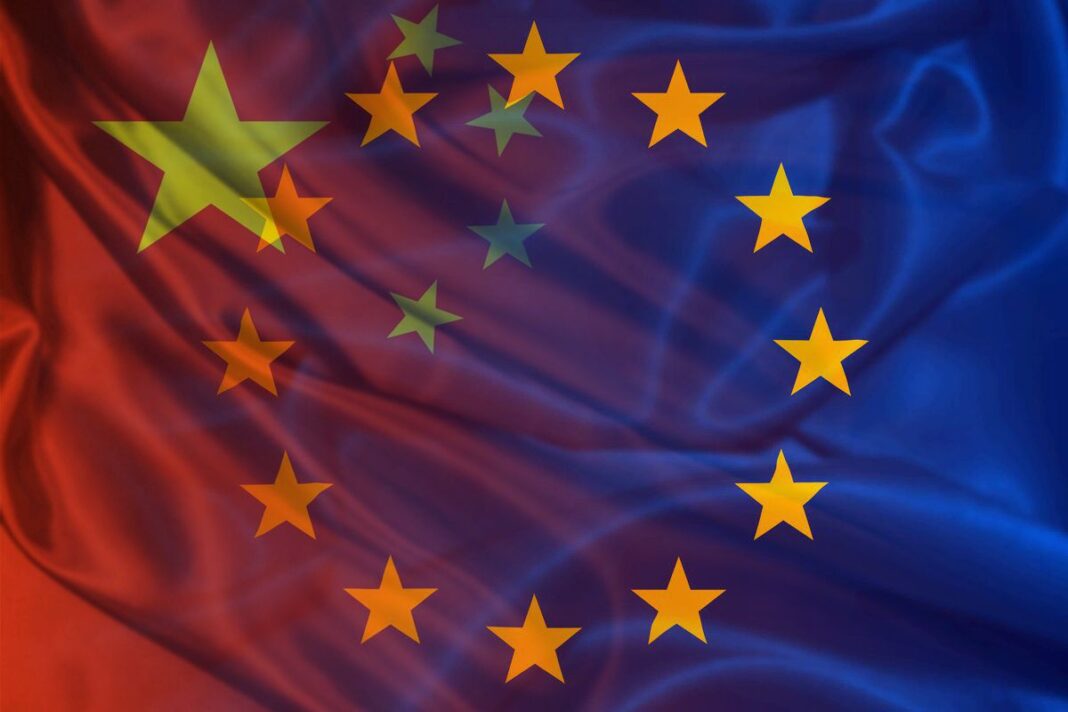


The 27-member bloc imposed its latest sanctions against Moscow, designating dozens of Chinese entities for their support.
The European Union’s latest punitive measures against Russia over its war in Ukraine show Chinese entities played a key role in fueling Moscow’s military campaign, with an expert warning the bloc could grow increasingly hostile toward Beijing.
The European Commission unveiled its 20th package of sanctions against Russia on April 23, designating 58 companies and associated individuals involved in the development and manufacture of military goods.
The package targeted 16 entities, based in China and other countries, for providing “dual-use goods or weapons systems to the Russian military-industrial complex.”
Dual-use goods are materials, software, or technologies that have both civilian and military applications.
The European Commission also barred exports of dual-use goods and technologies to 28 third-country entities—including those from mainland China and Hong Kong—citing their roles as military end-users or close ties to Russia’s defense industry.
The new listings chiefly aim to “disrupt Russian energy revenues and military capacity,” it said.
The move represents the EU’s largest expansion of sanctions against Russia in two years.
China’s Ministry of Commerce said on April 24 that it added seven EU entities—primarily defense and aerospace firms—to its export control list, following the latest restrictions imposed by Brussels.
Export operators are prohibited from exporting dual-use items to these seven entities, the ministry said.
Any related activities currently underway “must be halted immediately,” it said.
Kyiv and its allies have repeatedly accused the Chinese Communist Party (CCP) of supplying lethal aid to Russian forces, and the regime has consistently denied the allegations.
As the Russia-Ukraine war has entered its fifth year, casualties on both sides may have already reached 2 million, according to a January report from the Washington-based think tank Center for Strategic and International Studies (CSIS).
Fueling the Invasion
Lin Tzuli, director of the Center for China and Regional Development at Taiwan’s Tunghai University, said the EU’s latest sanctions suggest that Chinese firms systematically aided Russia’s war effort.
“The evidence is strong enough to warrant punitive measures despite Beijing’s denials, “ Lin told The Epoch Times.
“The sanctions show the bloc no longer views China as a neutral bystander but as an enabler of Russia’s war effort.”
Lin said that while the CCP is not a direct combatant, its economic and technical support is a key factor in Russia’s ability to sustain the war.
By Jarvis Lim