

It comes after a summit between U.S. President Donald Trump and Chinese leader Xi Jinping in Beijing last week.
China has agreed to address concerns over shortages of rare earths and other critical minerals that stemmed from export controls imposed in retaliation to U.S. tariffs, the White House said on May 17.
In a fact sheet, the White House said China would address supply shortages of yttrium, scandium, neodymium, and indium, which are commonly used in smartphones and military technologies.
The Chinese regime also agreed “to address U.S. concerns regarding prohibitions or restrictions on the sale of rare earth production and processing equipment and technologies.”
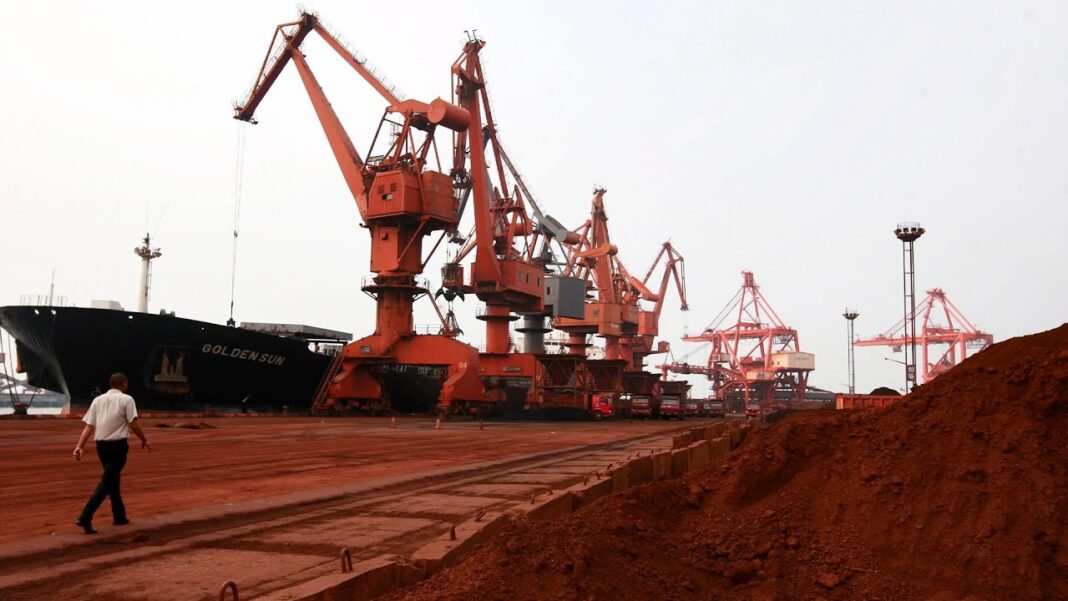
Rare earths, a group of 17 elements used in electric vehicle motors, electronics, fighter jets, and submarines, have become a major point of contention in the U.S.–China trade wars.
China expanded restrictions on rare earth exports last year amid a trade dispute with the United States. In May 2025, the two nations agreed to a 90-day tariff pause, which was later extended to allow time for negotiations. In November 2025, Beijing agreed to suspend the global implementation of its rare earth export controls, according to the White House.
U.S. Trade Representative Jamieson Greer told Bloomberg Television on May 15 that even though China had eased restrictions on rare-earth exports, export approvals remained slow.
“We’ve certainly seen the rare earths come back up to better levels,“ he told the news outlet. “Sometimes it’s slow. There are times when we have to go and make our point.”
Greer gave China a “passing grade” on rare earth exports and said U.S. officials would intervene when companies report problems. Chinese counterparts have been constructive in resolving specific cases, he said.
The latest development followed a summit between U.S. President Donald Trump and Chinese leader Xi Jinping in Beijing last week, during which they agreed that their two countries should build a “constructive relationship of strategic stability on the basis of fairness and reciprocity.”