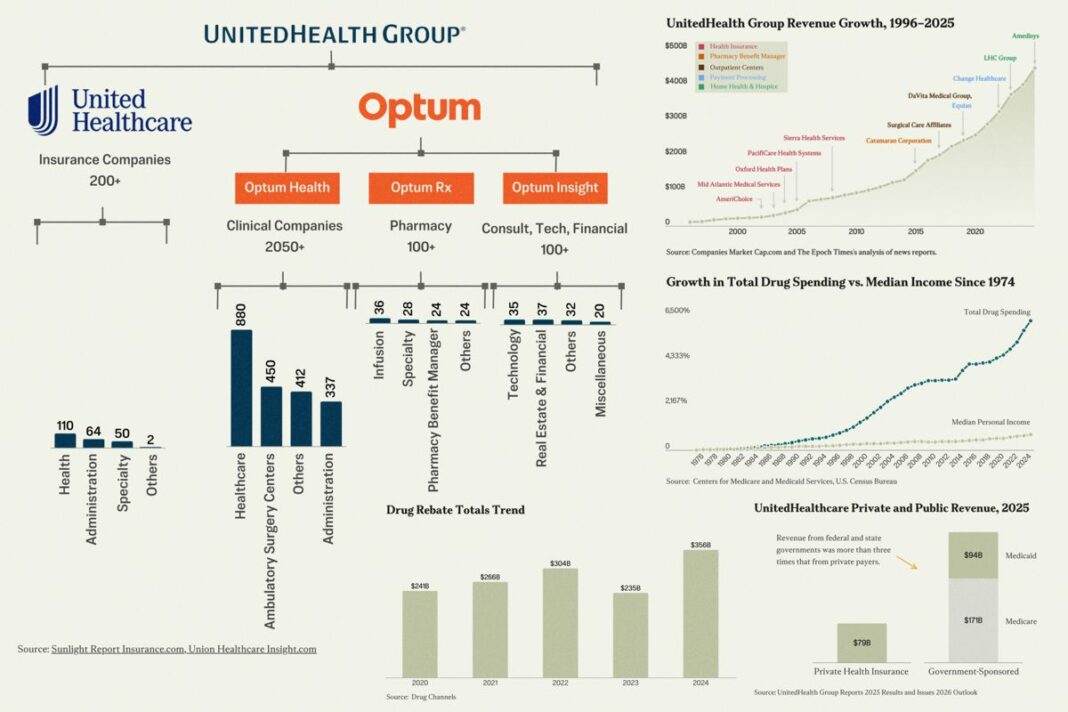


A handful of large corporations now control medication availability, pricing, and payment for the vast majority of Americans.
The avocado you picked up at the grocery store almost certainly started its journey at a family farm in Mexico.
From there, a packing company bought, sorted, and shipped it to the United States.
Stateside, a distributor bought it and shipped it to the grocery store in your town.
By the time you paid a dollar for that avocado, it had passed through the hands of perhaps four companies, each competing with several others for a slice of the fruit trade. That single dollar covered all the costs: growing, packing, shipping, displaying, and ringing it up at the checkout stand.
Competition like that is the heartbeat of a sound economic system, according to noted economist Friedrich Hayek. He called it the most efficient way to deliver goods to consumers.
Now think of something more personal, like the life-sustaining pill your mother takes to manage her chronic illness.
But there’s a crucial difference. In this case, every hand it passes through—from factory to pharmacy counter—probably belongs to the same sprawling healthcare corporation. Even the doctor writing the prescription might be on that company’s payroll.
Your $15 co-payment is just a small part of the cost that you can see. The rest is paid by a massive corporation—largely to itself—with money that ultimately comes from employers or taxpayers.
This is vertical integration: one entity controlling nearly the entire supply chain.
Nearly all Americans now get their medications—and often much more of their healthcare—through a handful of companies that dominate almost every link from manufacturing to consumption, including the payment itself.
Some experts argue that this model is a net win. By streamlining their supply chain, these giant corporations cut waste, improve convenience, and lower prices for patients, even as they earn a healthy profit.
Others see it differently. They argue that vertical integration smothers competition, letting a handful of companies set prices for manufacturers and consumers alike. This reduces patient choice, some say, as these companies steer patients to their own services and drive up the cost of the medicines people need to stay alive.
Which is it?
Here’s a closer look at how giant corporations shape the medical marketplace and affect taxpayers, seen through the story of the world’s largest healthcare company.