

The U.S. energy secretary said nearly 9 million barrels per day are exiting the strait and that private maritime trackers are missing vessels moving covertly.
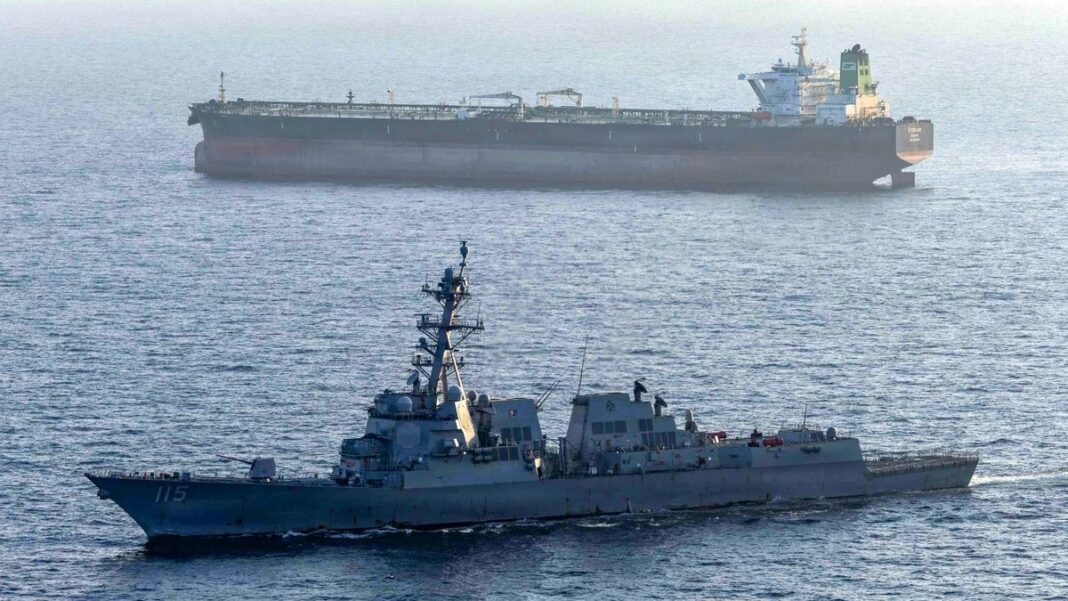
President Donald Trump said the United States has “total control” over the Strait of Hormuz, while Energy Secretary Chris Wright said U.S. military efforts have helped push oil flows through the critical waterway to nearly 9 million barrels per day—far above levels indicated by publicly available shipping data.
Speaking to reporters on Aug. 11, Trump rejected Iran’s claim that Tehran continues to control access to the strait, a chokepoint that handled roughly one-fifth of global oil and liquefied natural gas flows before the Iran war began in February.
“We have total control over the Hormuz Strait right now. They don’t have control. We have total control. We own it,” Trump said.
“And at some point, maybe they’ll do something and then they get blown away. Right now, we’re in a very good position.”
Trump has previously said the strait is open and that U.S. naval forces control the waterway, although commercial ship-tracking data continues to show traffic running at a fraction of prewar levels.
Wright, however, said late Tuesday that publicly available maritime data significantly understates the amount of oil moving through the Strait of Hormuz.
“Thanks to the coordinated efforts of the U.S. military and our Gulf allies, the seven-day average for oil leaving the Strait of Hormuz is currently up to almost 9 million barrels per day,” Wright said in an Aug. 11 post on X.
When flows through newly upgraded pipelines and other export facilities are included, Wright said roughly 15 million barrels per day are currently leaving the Gulf region. He said more than 20 million barrels moved out of the region on Sunday alone, exceeding the pre-conflict daily average.
Trackers Miss Covert Transits: Wright
In a follow-up statement early Wednesday, Wright addressed the apparent discrepancy between the administration’s estimates and commercial ship-tracking services.
“In coordination with the U.S. military, the U.S. Department of Energy maintains the best available data related to oil and oil products leaving the Arabian Gulf,” Wright said.
“Many private businesses undercount the number of ships leaving the Strait of Hormuz due to ships moving covertly through the waterway.”
Richard Goldberg, a senior adviser at the Foundation for Defense of Democracies who previously served in national security roles in the federal government, backed Wright’s figures, arguing that the U.S. government has access to military intelligence unavailable to commercial tracking firms.
“When Secretary Wright tells us how many barrels are coming out of the Strait of Hormuz, he is speaking authoritatively with higher accuracy than any analyst, pundit or open source tracking service,” Goldberg said in an Aug. 12 statement.
“The USG knows exactly what ship is moving, when and where, and with what cargo.”
Goldberg added that he had “very high confidence” in Wright’s numbers, describing the movement of oil through the strait as a military mission.
By Tom Ozimek