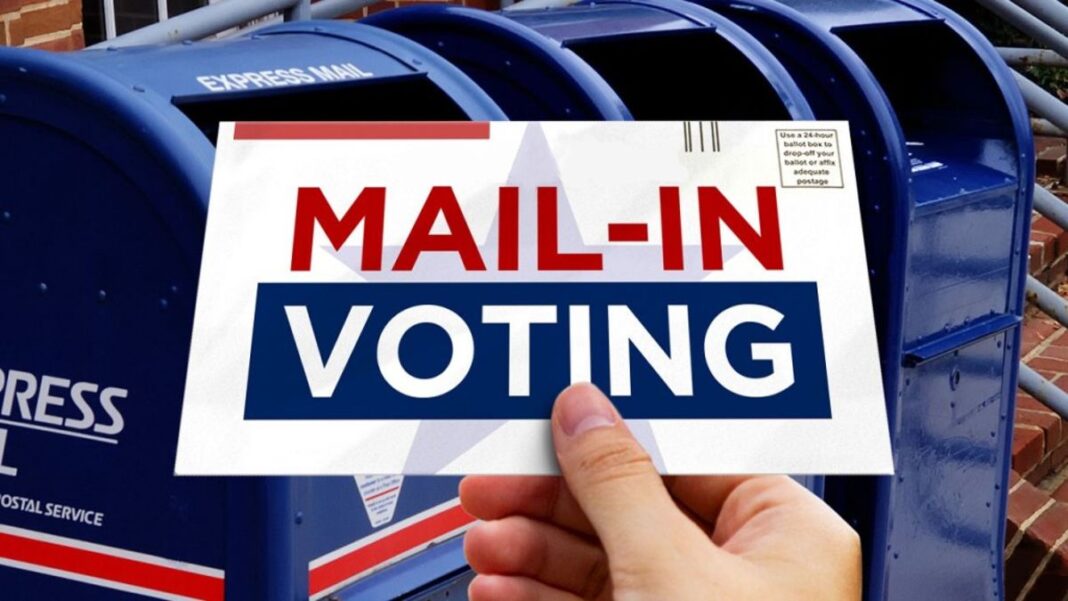


A Fifth Circuit panel reversed an injunction, saying challengers had not shown real harm.
A federal appeals court on Aug. 12 overturned a lower court ruling and restored nine provisions of Texas’s 2021 election law, largely because the challengers lacked standing under two federal laws.
Standing means a party has to have a real stake in the case. A party has to show that a law actually harms it or is likely to harm it in a specific way, that the harm comes from the law itself, and that a victory in court would fix it.
The Texas law, known as S.B. 1 or the Election Protection and Integrity Act, was passed after the 2020 elections with the aim of enhancing election security, especially for mail-in voting and ballot harvesting. Ballot harvesting is the practice of gathering completed absentee ballots from voters and delivering them to election offices or polling places.
Some Texas lawmakers and the appeals court say that both mail-in balloting and ballot harvesting open the door to fraud, though some states and research suggest widespread fraud is rare.
Several groups challenged the state law’s compensation and ballot-harvesting restrictions, voter assistance rules, and mail-ballot ID and number-matching rules. The law required voters to provide a driver’s license ID number or the final four digits of a Social Security number that matches state records on applications and ballots.
The law also mandated that people rendering aid to voters must take an oath affirming that there was no coercion or intimidation involved, divulging their relationship to the voter, and reporting any compensation received from a candidate, campaign, or political action committee.
The groups argued that these rules discriminated against voters with disabilities and created barriers to voting, running afoul of Title II of the federal Americans with Disabilities Act and Section 504 of the federal Rehabilitation Act.
They also argued that the rules erected barriers that fell more heavily on people with disabilities and that the state failed to make reasonable accommodations so disabled voters could still participate equally.
A federal district court then issued a permanent injunction blocking the nine provisions.
In the case, known as La Union del Pueblo Entero v. Abbott, a three-judge panel of the U.S. Court of Appeals for the Fifth Circuit, unanimously reversed and vacated the injunction on Aug. 12.
U.S. Circuit Judge Andrew Oldham wrote in the panel’s opinion that “it has long been established that mail-in ballots are prone to fraud.”
“That is why voting by mail jeopardizes election integrity and democracy itself,” he said.