

If the President and the Republican Congress are serious about abolishing the Department of Education and increasing test scores by returning education to the states, they need to put education and the federal dollars spent on it directly in the hands of parents. The Department of Education, as it currently stands, is a bureaucratic entity that often hinders innovation and local control. The amounts presently spent on K-12 education by federal, state, and local governments are sufficient to give every student in the U.S. a scholarship to attend the school a parent believes is best for the student.
Unfortunately, most of our taxpayer dollars go to public schools, which are, on average, more expensive than private schools. If public schools want to stay in business, their motto should be “Let Them Compete for Students.” The competition will foster much-needed creativity in the fossilized Teachers’ Union-run schools.
The Number of Students: The Census estimates 53,591,620 K-12 students in the United States. The National Center for Education Statistics and the Council for American Private Education estimate that approximately 48.6 million students are in public schools. 4.7 million are in private schools, which are comprised of Catholic (53%), nonsectarian (14.8%), conservative Christian (12%), and other religious (19.3). Since all the numbers are estimates and school populations change yearly, the number of students does not add up as neatly as numbers on a corporate balance sheet. There is a slight discrepancy in the different estimates, so for ease of calculating, let’s round off the number of U.S. students in K-12 education to 54 million nationwide.
Cost per student: The National Center for Education Statistics finds the average price per student in 2021-2022 in public education is $18,614, which includes teachers, capital expenditures, and interest payments. The total cost of public education in the U.S. is $927 billion. “The federal government provides 7.7% of funding, state governments provide 46.7%, and local governments provide 45.6%.”The average cost per student across all of private education for its 4.7 million students is $13,232.00. The average for Catholic schools is $6,890; for other religious schools, $8,690; and nonsectarian private schools, $21,510. Using the averages, the total annual cost of private school education is a little over $62 billion.
Total Cost of K-12 Education: The total public cost of educating all publicly schooled K-12 students in the United States is $927 billion. The total cost of private K-12 education is $62 billion. The total cost to fund all K-12 education in the U.S. is $989 billion or $18,500 per student.
Total Taxpayer Funding for Education in the U.S. that Can Be Distributed as Scholarships to Students: Taxpayers currently provide $927 billion to public schools, which is 93% of the $989 billion spent on all public and private K-12 education in the U.S.
The U.S. spends more on education per student than 32 of the 36 OECD countries. Only Luxenberg, Austria, Norway, and the Republic of Korea spend more. Yet the U.S. ranks 38th in math worldwide, 24th in reading, and 24th in science. The American taxpayer is not getting value for the money spent on its public school system.
Students Will Use Taxpayer Scholarships More Wisely than Government Directives: Almost every indicator of educational satisfaction finds that private schools provide better-educated students, more satisfaction with teachers, happier parents, higher test scores, more advanced courses of study, and better and more manageable class sizes.
A Gallup poll found that “71 % of Americans say children educated in private schools receive an excellent or good education.” Gallup also found that 69% believed that parochial or religious schools provided an excellent or good quality education. Only 41% believed public schools provided an excellent or good education.
Parents of private school students were substantially happier with the private school’s performance than parents of public schools by significant margins. Private school parents had a substantially higher favorability rating for all aspects of school life than parents of public school students. Specifically, there is a 78% to 57% public vs private favorability for teachers, 78% to 55% for academic standards, 83% to 56% for school discipline, and 81% to 56% for overall school satisfaction.
Another benefit of private school education is that students are likelier to have higher SAT scores and attain college degrees. The national average SAT score for private schools is 1230; for public schools, it is 1020.
The United States is spending more than enough on education; it is not getting value from the public educational system. Addressing this issue is simple: Let the students and parents select the best school for the student, whether private, public, or trade. Students will determine their educational path by allowing students to control their futures rather than an authoritarian teacher’s union, out-of-touch school boards, or federal regulation writer.
The statistics are clear: students can receive a better education at a private school than at a public school, which would be less costly to the American taxpayer. All that is needed is for the federal, state, and local government to bundle their school funding into a scholarship for each student to select the school of their choice. This action would allow the Trump administration to abolish the Department of Education and send the money it wastes to the states. Moreover, since schools would have to compete for students, every school must demonstrate value to attract students. Otherwise, it will be out of business. This could lead to significant cost savings for the American taxpayer, reassuring them of the value of educating every student.
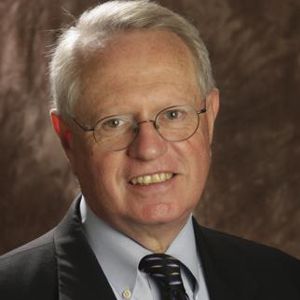
William L. Kovacs, author of Devolution of Power: Rolling Back the Federal State to Preserve the Republic. It received five stars from Readers’ Favorite. His previous book, Reform the Kakistocracy, received the 2021 Independent Press Award for Political/Social Change. He served as senior vice president for the U.S. Chamber of Commerce and chief counsel to a congressional committee. He can be contacted at wlk@ReformTheKakistocracy.com