

‘Tis the season, and the faithful of Christianity have already lit the first of their symbolic Advent candles. Today, even churches averse to liturgical practices find a way to mark the Advent season – if only by recognizing the days remaining until Christmas.
A Brief History
The origins of Advent are difficult to determine. Biblical scholarship says Christmas came to be associated with the birth of Christ as a result of it falling during the Winter Solstice, the darkest day of the year in the northern hemisphere. Perhaps, the coming of the ‘Light of the World’ made sense in so much darkness.
Within a few centuries of church history, Christmas took on a special meaning as it commemorated the birth of Jesus Christ. As such, Advent developed as a time of spiritual reflection, fasting, and repentance.
The first written evidence of Advent is found in modern Spain and ancient Gaul (present day France). Probably the earliest official mention of Advent practices comes as the Council of Saragossa (AD 380) met to answer a gnostic-inspired heretical movement called Priscillianism.
The heresy essentially held to a harsh form of dualism – light vs. dark, body vs. soul. Perhaps, the celebration of the Incarnation might have made theological sense as a counterbalance to this heresy. The council, however, did not commit to any specific date for Advent; rather, it merely suggested people attend church daily from December 17-29.
By the 6th century, the structure of Advent began to take on a more formal shape in the Western church. The Council of Tours in 567 established Advent as a season of four to six weeks, emphasizing the themes of preparation and penance. During this period, Advent embraced a mix of fasting, prayer, and scriptural readings.
Double Meaning
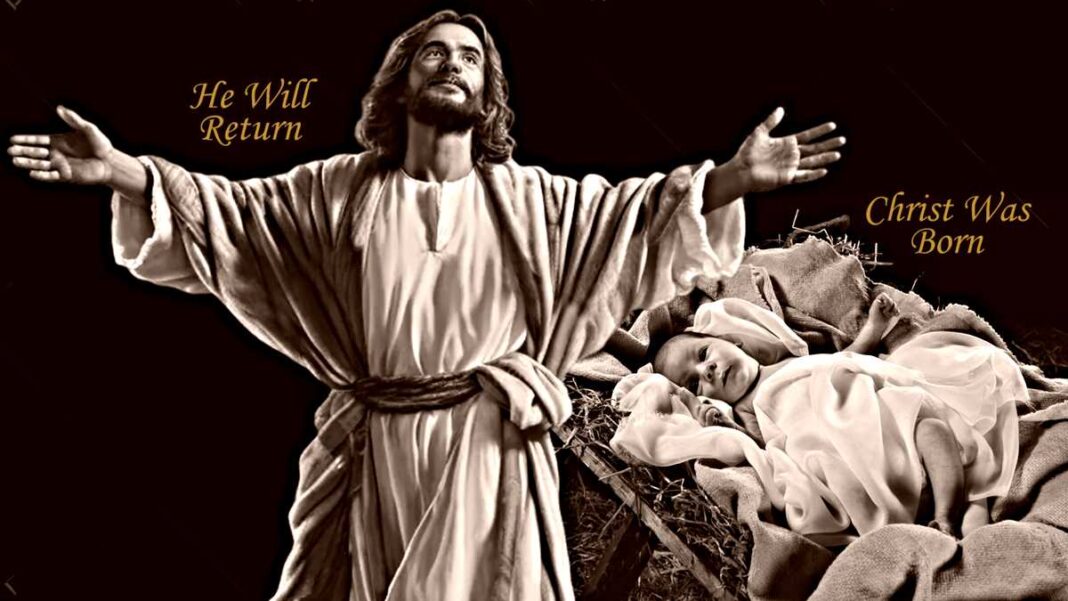
What is not well known about the Advent season is its dual nature. Unlike modern Advent ceremonies, most celebrations of Advent in history were actually twin celebrations. The Latin word adventus was the translation of the Greek parousia – meaning both the coming of Christ in human flesh and his Second Coming at the end times. Advent, it should be remembered, was always intended to focus on both.
The initial two weeks of Advent, the church would reflect on the Second Coming. Disciples would chasten their spirit, confess their sins, and pray for the quick return of the Lord. The last two weeks would transition to focus on the first Parousia, Christ’s birth in Bethlehem.
This writer believes this double meaning in Advent history signals an important reality in the liturgical calendar: Advent and Christmas are never held as a full re-enactment of the life of Christ but point, instead, to our place between the Resurrection and Second Coming. Advent and Christmas are not only about the coming of Jesus, but also about the time between the birth of Jesus and his return.
Four Weeks of Advent
Advent marks the beginning of the liturgical year, leading up to the celebration of the birth of Jesus Christ on Christmas Day.
Beyond the festive decorations and the anticipation of gifts, the biblical and spiritual significance of Advent is a profound journey – one of hope, preparation, joy, and love – symbolized by candles added each week.
Week 1: Hope – The Candle of Expectation
“But as for me, I watch in hope for the Lord, I wait for God my Savior;
My God will hear me” (New International Version, Micah 7:7).
Advent begins with hope and anticipation. In the midst of darkness, both literal and metaphorical, the Advent candles remind us that a brilliant radiance of truth came into the world and is coming again. The season prompts us to reflect on the hope found in the prophecies of old, assuring us that God’s promises endure, and His plan for redemption will be fulfilled.
Week 2: Preparation – The Candle of Readiness
“Prepare the way for the Lord, make straight paths for Him” (New International Version, Matthew 3:3).
Just as the prophets prepared the way for the Messiah, Advent calls us to prepare our hearts for He who came to forgive and shall come again. It’s a time of self-reflection, repentance, and readiness to receive Christ anew. The call to prepare echoes the words of John the Baptist, urging us to make straight the paths for the Lord in our lives – clearing the paths of our hearts to welcome the Prince of Peace.
Week 3: Joy – The Candle of Rejoicing or Peace
“But the angel said to them, “Do not be afraid. I bring you good news that will cause great joy for all the people” (New International Version, Luke 2:10).
The third Sunday of Advent is marked by the theme of joy. The preparation for the Savior’s birth is transformed into a celebration of His imminent arrival. The true joy of Advent goes beyond seasonal festivities; it is first and always found in a profound sense of rejoicing in the Savior who brings everlasting joy. It reflects the angelic proclamation of “good news of great joy” which heralded the birth of Christ.
Week 4: Love – The Candle of God’s Love
“For God so loved the world that he gave his one and only Son, that whoever believes in him shall not perish but have eternal life” (New International Version, John 3:16).
The culmination of the Advent season centers around love. God’s ultimate expression of love is revealed through the gift of His Son. The nativity story extolls the divine love that bridges the gap between Creator and creation. Christ’s birth in Bethlehem demonstrates God’s unconditional love, inviting us to love Him and one another, sacrificially – embodying the message of Christ and the true meaning of Christmas.
Advent Today
As we celebrate these few weeks of Advent, let us remember the twin focus of both the Incarnation and the Second Coming. Both of these themes make Advent instructive not just historically, but also in terms of biblical theology. We are not a people who merely look to the one moment when God broke into history.
We await Christ’s coming again in glory, when His reign shall be on earth as it is in heaven.