Speaking in Davos, Prime Minister Mark Carney backed Greenland and Denmark in their dispute with the United States and called for countries not to comply with major world powers, as the rules-based international order undergoes what he described as a “rupture.”
Carney delivered a foreign policy speech while attending the annual meeting of the World Economic Forum (WEF) on Jan. 20.
“Canada strongly opposes tariffs over Greenland and calls for focused talks to achieve our shared objectives of security and prosperity in the Arctic,” Carney told the audience of government and business leaders congregating in the Swiss resort town.
U.S. President Donald Trump announced in recent days he would slap tariffs on eight European countries over their opposition to Washington acquiring Greenland, a Danish territory near Canada’s North.
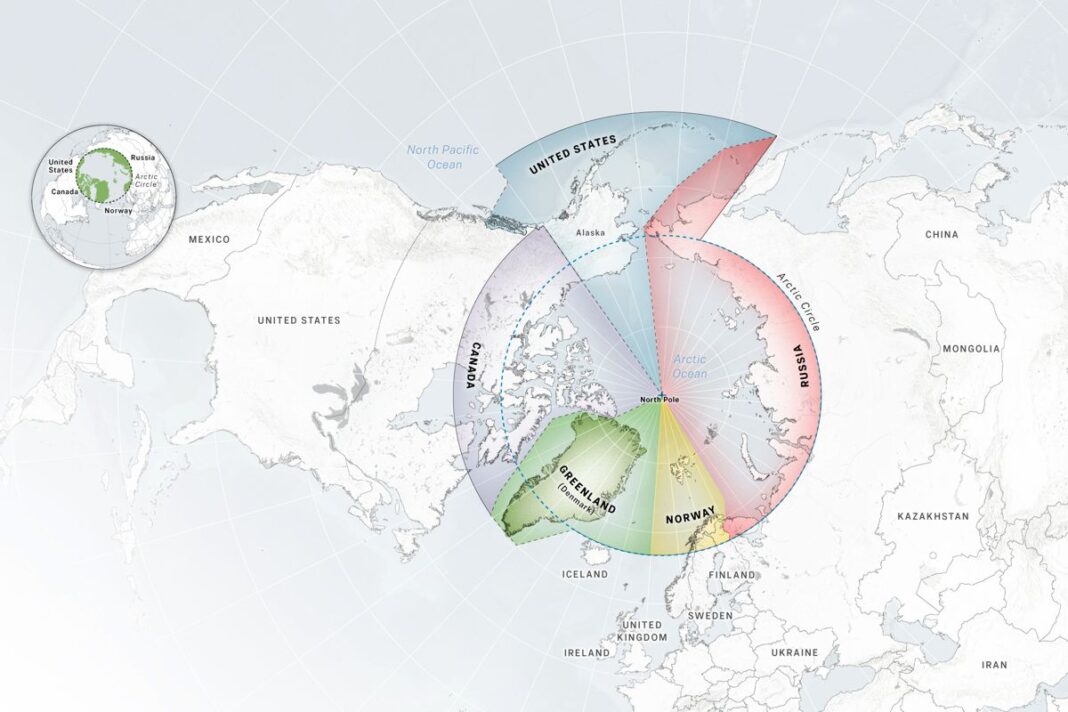
Trump says the territory is vital for U.S. national security to defend against Chinese and Russian threats in the Arctic. Greenland is located between key Russian military assets and North America.
The White House’s pursuit of Greenland has roiled the NATO military alliance, with some of its members like Canada promoting instead a collective approach to strengthening security in the North.
While Carney spoke on Greenland, the focus of his speech was more of an analysis on what he calls a “system of intensifying great power rivalry,” which he said is replacing the international rules-based order.
“We are in the midst of a rupture, not a transition,” Carney told the WEF audience. He said Canada had benefited over recent decades from the international rules-based order, while noting it was a “useful” “fiction” in which the most powerful countries “exempt themselves when convenient.”
“We participated in the rituals, and we largely avoided calling out the gaps between rhetoric and reality,” said Carney. “This bargain no longer works.”
In an apparent direct reference to the United States, Carney criticized the use of tariffs and economic integration to gain an advantage.
“Great powers have begun using economic integration as weapons, tariffs as leverage, financial infrastructure as coercion, supply chains as vulnerabilities to be exploited,” he said. “You cannot live within the lie of mutual benefit through integration, when integration becomes the source of your subordination.”
Carney added in his speech that countries and companies should stop complying with the new system. He said middle power countries should forge alliances and build resiliency.
Carney highlighted initiatives made by his government to boost the domestic economy and diversify trade away from the United States, noting new “strategic partnerships” made with China and Qatar in recent days.
Before arriving in Davos, Carney made a stop in Doha, Qatar, the first official visit by a Canadian prime minister.
This was preceded by a four-day visit in China last week, which concluded by Carney meeting with Chinese leader Xi Jinping. Following the meeting, the prime minister said Canada would slash its 100 percent tariff on 49,000 Chinese electric vehicles (EV). In exchange, Ottawa said China would reduce or remove some tariffs on Canadian agricultural and seafood products.
By Noé Chartier