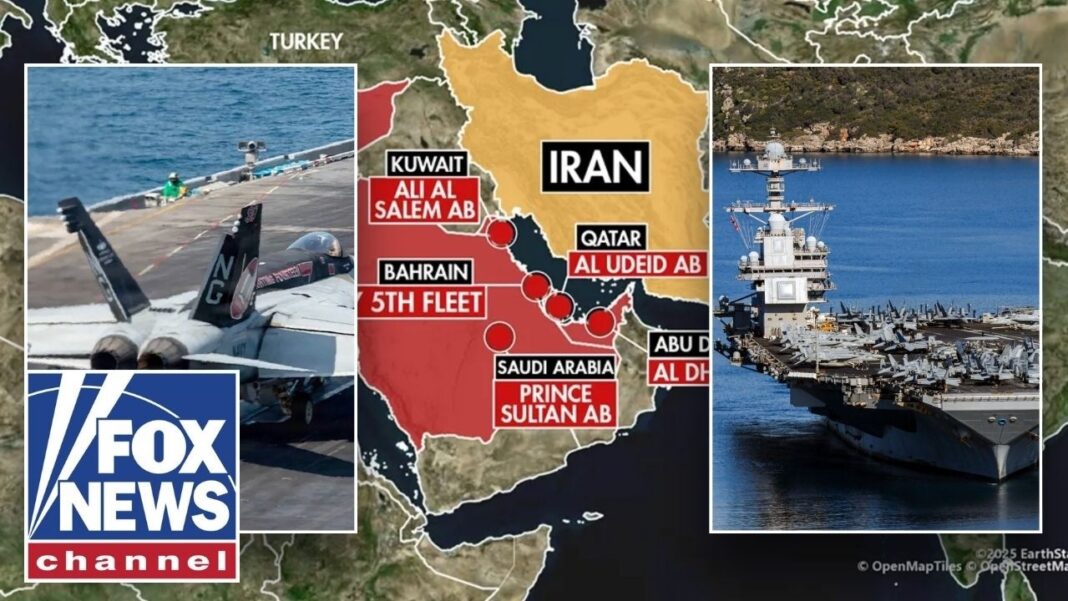


Congress works hard to make itself irrelevant. It has achieved irrelevance by failing to use its power to control spending, accepting Executive Orders and Emergency Declarations as the law, and, most recently, by refusing to assert its authority over the president’s imposition of worldwide tariffs. Now, with the undeclared Iran war, Congress has an opportunity to exercise its constitutional duty.
To be relevant, every member of Congress must give all their loyalty to the institution of Congress, not a president’s priorities. Since the beginning of the Republic, presidents have sought to strip Congress of its lawmaking and spending powers, as well as its power to declare war. Under our Constitution, Congress makes the laws; the president executes them. In a constitutionally functioning Congress, a president needs Congress to establish lasting policies. Without Congress, whatever a president does ends with his term in office.
While Congress will soon vote on a War Powers Resolution concerning Iran, the process is muddled. A president should not declare war without a congressional declaration of war. Unfortunately, under the present circumstances, even if Congress passes a resolution of disapproval, it will not be enacted into law, since the President will veto it and Congress will be unable to secure the two-thirds vote to override a veto. This process is contrary to Article I, Section 8 of the Constitution.
How did this ass-backward situation start?
For decades, presidents have used the military to initiate undeclared wars. The political party out of power calls the actions unconstitutional and introduces a never-to-pass resolution expressing “disapproval,” so its members have media talking points. The President usually claims there is an imminent risk to the U.S. but rarely provides evidence of it. While the president is the commander-in-chief of the armies, only Congress has the power… “To declare War.” Since the United States fights many undeclared wars, a discussion of how Congress abdicates its constitutional duty is necessary to appreciate how irrelevant Congress has become.
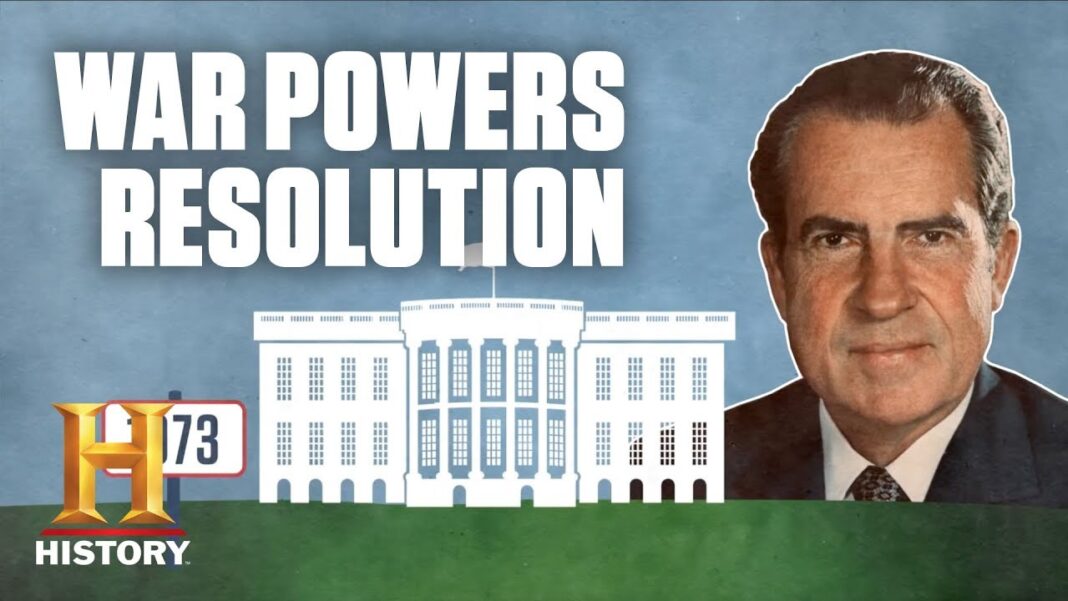
The War Powers Act of 1973 was enacted to prevent another long but undeclared Vietnam War situation. Under the Act, Congress grants the President, in the absence of a Declaration of War, limited powers to use force where imminent involvement in hostilities is clearly indicated by the circumstances. When the President relies on this law, he must submit to Congress a report setting forth the circumstances requiring the use of armed forces, a statement of legal authority, and the scope and duration of the conflict. The submission of the report to Congress triggers a 60-day limit on the use of force, unless Congress extends it. President Trump has not complied with any of these statutory requirements.
Additionally, in 2001, Congress enacted the Authorization for Use of Military Force Against Terrorists (“AUMF”), which allows the president to use all necessary and appropriate force against nations, persons, or organizations that carried out the 2001 terrorist attacks against the U.S.
The dilemma for Congress is that the President, as commander-in-chief, acts as if these powers are so broad that they authorize almost any hostile action against another country. Congress has little ability to pass a Resolution of Disapproval and, if passed, almost no ability to override a presidential veto. As a result of delegated authority under the War Powers Act, the president determines the war and Congress just salutes.
As a nation, we are 234 years from the ratification of the Constitution. During this time, the U.S. had been at war for 138 years. Only five wars, totaling 32 years of war, were fought under a congressional declaration of war – the War of 1812, the Mexican War, the Spanish-American War, and World Wars I and II.
Examples of abuse of the War Powers Act
President Reagan deployed troops to El Salvador but did not submit a report to Congress or comply with a withdrawal requirement. President George H.W. Bush sent troops to the Middle East, and President Clinton sent troops to the former Yugoslavia. Both asserted they were acting under UN authority and not subject to congressional time limits.
Presidents George W. Bush, Obama, and Trump relied on the AUMF at least 39 times for actions in 19 countries. Lawsuits were filed to enforce the War Powers Act’s notification provisions. The courts dismissed the lawsuits as political questions to be determined by the respective branches of government.
Afghanistan, our longest undeclared war, cost the nation $2.313 trillion, approximately $300 million a day for 20 years. The death toll was significant: 2,500 U.S. military, 4,000 civilians, and 69,000 Afghan military police.
In less than a year, President Trump has attacked Venezuela and Iran. Moreover, the president has Cuba, Colombia, and Greenland on his target list.
Congress has backed itself against a wall, but it can still say “NO” to funding the war.
Congress has one power that no other branch of government can interfere with: the power to spend or not spend money. The Constitution is clear: “No money shall be drawn from the Treasury, but in Consequence of Appropriations made by Law.”
The common view of congressional spending powers is that Congress legislates and spends money by passing a bill in the House and Senate and sending it to the president for signature or veto. If the president vetoes it, Congress needs a two-thirds majority to override it. An intentionally difficult process.
There is, however, a simple mechanism for Congress to control the Executive. Both Houses of Congress have one very real, but rarely used, power that permits one House to control federal spending and the Executive’s actions without passing a law. That power is to refuse to spend money. Without an appropriation to fund wars, the president cannot spend any money. The use of this power allows a majority of one House of Congress to stop a war without the difficulty of passing a new law. Using such power is as easy as “Just saying no!”
Congress used its spending power to stop the Vietnam War in 1973. After 53 years of inaction, it’s time Congress finds the courage to reclaim its War Powers. Congress has the opportunity to make itself relevant by refusing to fund the war or by affirmatively declaring war. At least the American people will know where every member stands before November’s election.