

Analysts warn that Beijing could leverage state media AI to turn foreign firms into tools of CCP repression.
China’s new state-backed artificial intelligence (AI) platform threatens to stifle domestic tech innovation through forced ideological compliance, and in the West, it could also be used to cover up the regime’s human rights abuses, analysts warn.
Xinhua, the official mouthpiece of the Chinese Communist Party (CCP), will spend more than 1.1 billion yuan ($162.38 million) to launch an AI agent to propagate Chinese leader Xi Jinping’s thinking, according to a feasibility study published on its website on June 5.
Dubbed “Xinhua Yudian,” the platform positions itself as an indispensable tool for journalists, a practical asset for party cadres, and a trusted information source for the general public, the study showed.
“Through ‘Q&A on Xi’s Words’ and ‘Xi Study Guide,’ it presents the core essence and practical requirements of the general secretary’s important discourses,” the report said.
In 2023, China passed the “Interim Measures for the Management of Generative Artificial Intelligence Services,” prohibiting content that could incite subversion, threaten national security, or damage the country’s image.
The measures require market participants to “uphold the core socialist values,” according to a translation.
Cementing Control
Feng Chongyi, an associate professor in China studies at the University of Technology Sydney, said Xinhua’s latest move signals that Beijing views every new AI technology developed domestically as a tool to consolidate its grip on power.
“This shows the CCP is attempting to reinforce the personality cult around Xi Jinping,” Feng told The Epoch Times.
“Xi has already rolled out similar initiatives, requiring middle schoolers and party cadres to study and even take exams on his political ideology.”
Charles Cheng-chung Lo, a professor with the Graduate Institute of Science and Technology Law at the National Kaohsiung University of Science and Technology in Taiwan, said the regime aims to aggressively marshal national resources in AI and technology to protect its “political security.”
“Political security means safeguarding the CCP’s leadership and ruling status, as well as its socialist system with Chinese characteristics,” Lo told The Epoch Times.
“Under such a system, all technological development naturally faces strict state regulation based on this political premise.”
‘Extreme Self-Censorship’
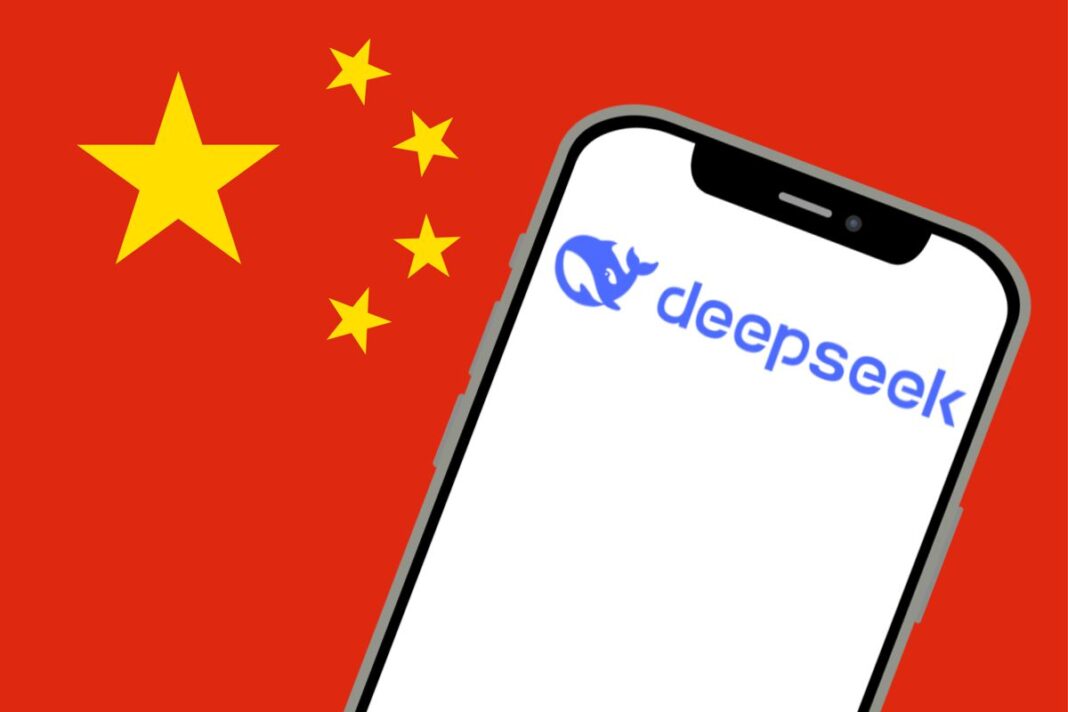
Lee Chung-chih, deputy convenor of the Strategic Industries Program at Taiwanese think tank the DIMEs Center, said China’s generative AI models, such as DeepSeek, are engineered to strictly conform to Party dogma, leaving them unable to provide objective answers on political, historical, and social issues.
The rise of agentic AI—autonomous software systems capable of taking action and performing complex tasks on behalf of users—is set to entrench that dynamic further, he said, pointing to Xinhua Yudian as the latest example.
“This is completely detrimental to the verification and creation of knowledge,” Lee told The Epoch Times.
“China is currently locking its society into an ‘isolated universe.’”
Lee said the platform’s proposed functions, such as content inspection, traceability, correction, and guided documentation, could prompt Beijing to demand that private AI firms align with Xinhua’s standards.
“If private AI developers refuse to comply, the sector could wither and talent may flee,” he said.
Lee warned that pushing these rigid censorship standards to the extreme would lock China’s entire information ecosystem into a cycle of ideological compliance, stifling genuine innovation.
“Chinese journalists and scholars will start using AI to engage in hyper-conformity, aiming to outdo the state’s own narratives and push even further left,” Lee said.
“This extreme self-censorship just to please the authorities will leave them completely blind to genuine technological breakthroughs or geopolitical crises from the outside world.”
By Jarvis Lim