It’s common to hear the man on the street say, “My vote doesn’t matter,” or “Government doesn’t care about me,” or “The wealthy get whatever they want,” or “Congress doesn’t represent me.” These voices from the street may be right. In researching voting rights issues, I came across a study by Professors Martin Gilens (UCLA) and Benjamin I. Page (Northwestern University), published by Cambridge University, that provides a statistical foundation for the statement “government officials don’t care what people like them [average citizens] think.”
In “Testing Theories of American Politics: Elites, Interest Groups, and Average Citizens,” the two authors reviewed 1,779 unique data sets to determine who influences policy in the U.S. Their key finding is that the economic elites and organized groups representing business interests have substantially more impact on U.S. policy compared to average citizens that the study finds have near-zero influence. “Moreover, because of the strong status quo built into the U.S. Political system, even when fairly large majorities of Americans favor policy change, they generally do not get it,” unless the elites also seek the same changes.
The term “data set” is the author’s empirical effort to compile data generated over many years (1981–2002) to estimate the influence upon public policy of “affluent citizens, poor citizens, and those in the middle of the income distribution.” The surveys asked participants whether they favored or opposed specific policy options based on the specificity of the policy, its relevance to the federal government, and the income levels of the participants. It also included research from other colleagues on interest groups active in those issues and the magnitude of the resources deployed to influence the problem.
With findings summarized above, it is not surprising that Gallup polls have shown that between 1975 and 2025, the approval rating for Congress has declined from 30% in 1975% to 23% today. More troubling, however, is that the politics of today are more polarized than during the study period, with 80% of the public expressing negative thoughts on government.
Today, there is only one voice in the federal government – Donald Trump. He speaks on everything from his Big, Beautiful Bill to tariffs to Epstein to changing the names of football clubs if they want federal assistance.
As to Congress, it is the proverbial lost cause. Other than Congressman Massie, R-Ky, Congress has lost its voice. Even the House and Senate leadership that swing the big gavels function as valets to the president, not an independent branch of government. Since they obey Trump’s every command, they are deaf to the concerns of the man on the street. Occasionally, roars will be heard from the cave where the Freedom Caucus hibernates. But after the occasional roar about the national debt, they go back to sleep. It will be very difficult for Congress to persuade the man of the street that he has a voice in the system until Congress has a voice in the system.
The difference between the success of the elites and the average citizen’s lack of influence lies in the fact that the elites have substantially more impact on U.S. policy because, as the study finds, they are organized and, as a group, have almost unlimited resources to pursue their goals. The elites focus on self-interest and winning. The average citizen focuses on survival.
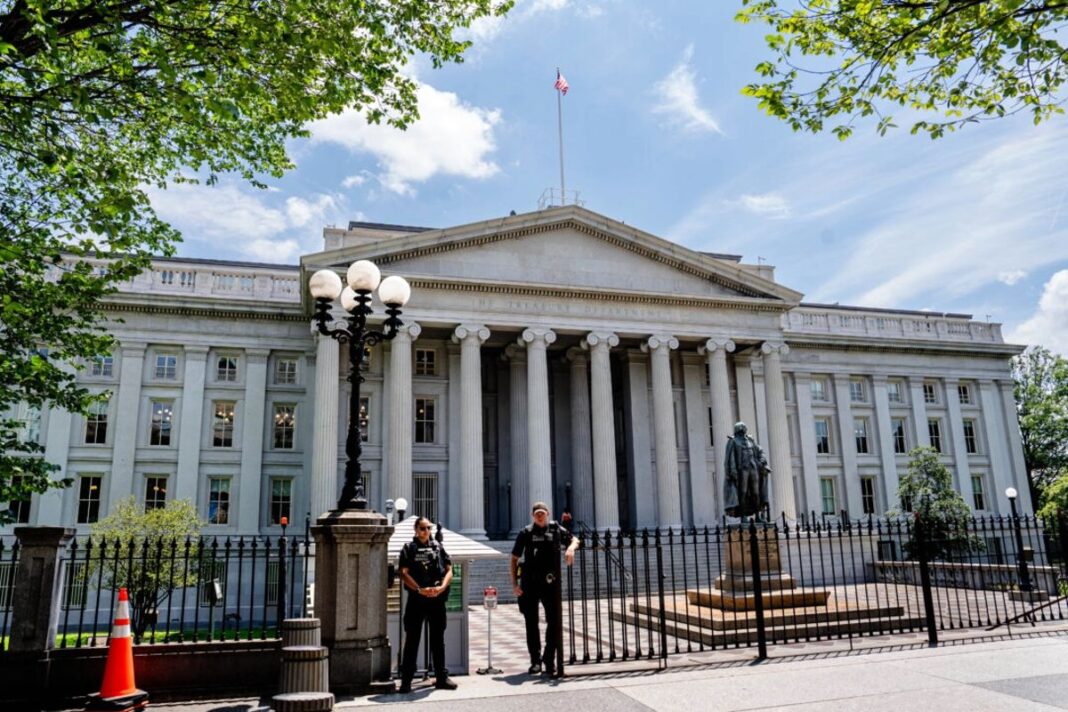
The elites can meet with the president and make a multi-million-dollar contribution to his library. A few days after the transaction, lo and behold, that industry is no longer regulated, or the lawsuit brought by the Biden administration is suddenly dropped, or cryptocurrencies are becoming part of the U.S. Treasury Department’s holdings.
Since the man on the street cannot make these contributions, he cannot influence the government. Yes, the man on the street can vote for Congress, but if Congress is deaf, his voice is irrelevant.
These findings translate into real-world class separation not only by status and income but also by the benefits received from the lawmaking process. The tax code is the foundation of the U.S. subsidy society. It subsidizes the rich far more than the poor. For example, the home mortgage deduction, carried interest, lower corporate tax rates compared to individual tax rates, the tax-free transfer of massive wealth through the stepped-up basis of federal estate law, and regressive payroll, sales, and fuel taxes all contribute to this disparity. The top 1% of U.S. households hold 31% of the country’s wealth, and the bottom 50% hold 2.6%. Moreover, the top 10% of the wealthiest control 60% of the nation’s wealth, while the bottom 50% control 6%. Politicians justify this wealth inequality by telling citizens that giving benefits to the wealthiest incentivizes them to create jobs for the average citizen and the poor. Without recognizing the massive wealth inequality in the U.S., the elites regularly work with the government to reduce benefits for the man on the street so Congress can reduce taxes on billionaires and businesses.
More than a few times, I have suggested that fundamental tax reform would be a return to the 1913 Form 1040. The Form and instructions were four pages. It contained few deductions; everyone in a tax bracket paid the same tax rate on the same income. Studies show it would raise more money than the current eight-million-word tax code and regulations. For some reason, the wealthy do not support tax simplicity.
Congress cannot persuade the man of the street that he has a voice in the system until Congress reclaims its voice in the system. For Congress to have a voice in the Republic, it must function as an independent branch of government that regularly checks the power of the Executive branch and the Judiciary. Until then, the man on the street will believe government officials don’t care about them.