

Canadian Prime Minister Mark Carney’s new partnership with Beijing betrays his calls to preserve the “international order” and could backfire economically by angering Canada’s biggest trading partner, the United States.
Canadian Prime Minister Mark Carney’s new plan to cozy up to Beijing betrays his calls to preserve the “international order” he says is under threat from Donald Trump, and Canada’s economic dependence on the United States may cause his plan to backfire.
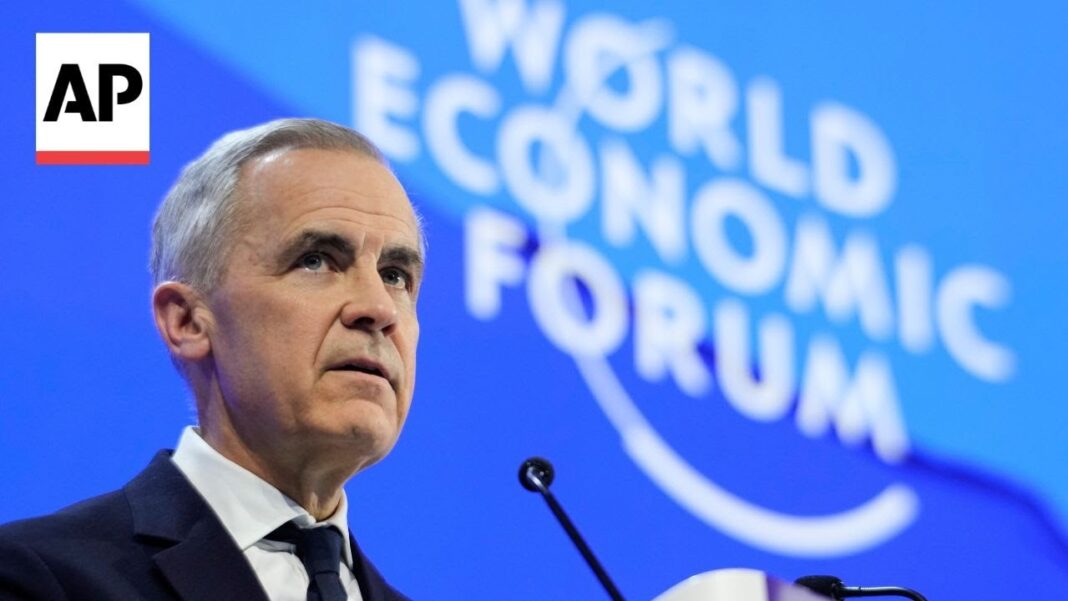
In a speech to the global elite at Switzerland’s Davos resort town this week, Carney warned attendees that the “rules-based order” established by the United States and its allies in the wake of the Second World War is fraying amid the reemergence of great power conflict–principally the rivalry between China and America.
“Every day we’re reminded that we live in an era of great-power rivalry,” Carney said. “That the rules-based order is fading. That the strong can do what they can, and the weak must suffer what they must.”
Canada’s “new strategic partnership”
But, he called on Canada and its European allies to band together to preserve that order, in the face of challenges from the U.S. He warned, “The middle powers must act together because if we’re not at the table, we’re on the menu.”
Carney’s remarks came on the heels of his trip to China last week when the prime minister negotiated a new “strategic partnership” with the Communist regime in Beijing, promising to expand trade and mutual investment.
The Liberal Canadian politician made no secret of his purpose. The new deal, which represented Canada “recalibrating” its relationship with China, would set up the country for the “new world order,” one in which the United States’ ally would try to distance itself from its southern neighbor.
When Carney left Beijing, the new “strategic partnership” committed China and Canada to increase trade and investments as well as closer collaboration on the very “global governance” that Carney says President Trump has abandoned. The two countries also promised close cooperation on law enforcement — focusing on drug trafficking and cybercrime — and to increase cultural exchanges.