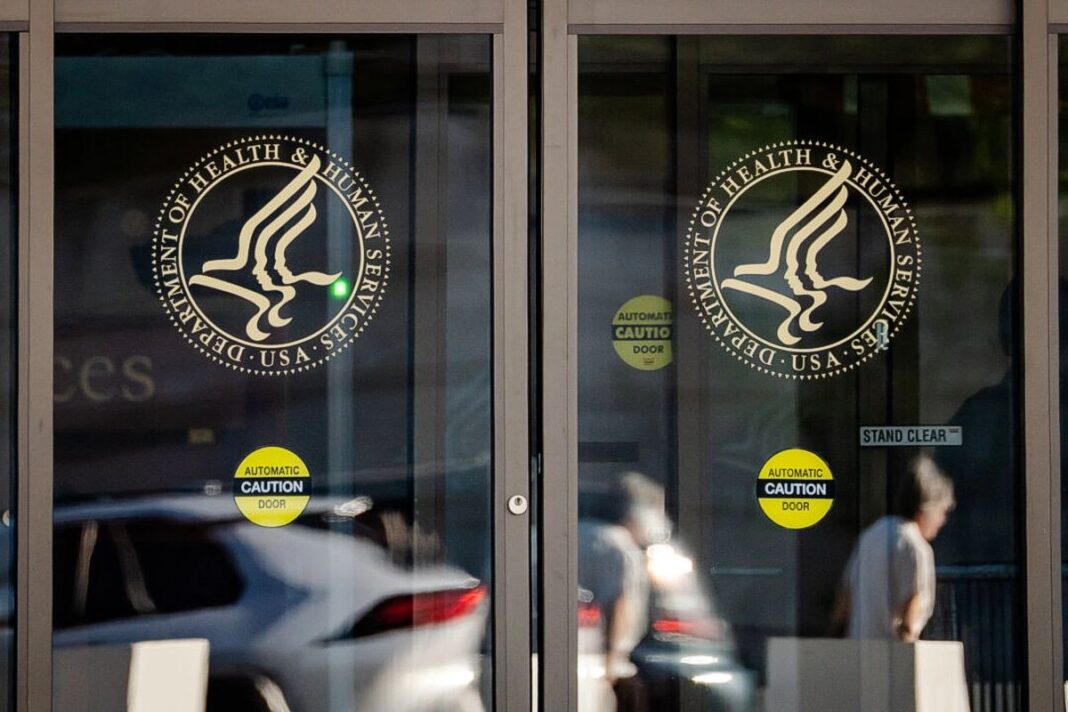


A judge had blocked the Department of Health and Human Services from freezing the money as litigation proceeds.
The Department of Health and Human Services (HHS) is letting five blue states access $10 billion in funds for child care and other services, according to new court filings.
HHS officials said in letters to the states—California, Colorado, Illinois, Minnesota, and New York—that they are rescinding January freezes on the funds that attempted to compel the states to provide data proving that the funds would be used for American families, rather than illegal immigrants, according to documents filed with a federal court in New York on July 13.
Each state “is no longer subject to the temporary restricted drawdown requirements communicated in” January, HHS officials said in the July 8 letters. The states are thus free to access the $10 billion tranche for funds for three programs, including Temporary Assistance for Needy Families and the Child Care and Development Fund.
The Trump administration froze the funds on Jan. 6, citing concerns about fraudulent spending.
“We will ensure that these states are following the law and protecting hard-earned taxpayer money,” an HHS spokesman told The Epoch Times at the time.
The states sued, and a federal judge quickly entered a temporary restraining order that prohibited the freeze. That order was later replaced by a preliminary injunction, or a longer-term prohibition.
In the new filings, government lawyers said that the July 8 letters mean that the case is now moot.
They asked the judge overseeing the case to enter a permanent injunction, which would enjoin them from restricting or cutting off federal funding for the three programs. That would “resolve this lawsuit in its entirety,” the lawyers said, and be more efficient than continuing discovery and other aspects of the litigation.
The states do not agree with that proposed path. State officials are considering adding the Office of Management and Budget (OMB) as a defendant and filing an amendment complaint.
“Experience has shown Plaintiffs that OMB may engage in funding disruption without going through agency decision making,” Rabia Muqaddam, a lawyer for New York who is representing the states, told the court. “Thus, in order to meaningfully resolve Plaintiffs’ claims, Plaintiffs require an injunction that at minimum provides protection against future actions by OMB with respect to the … Funds, which may not flow via HHS.”
Muqaddam also accused the government of moving for a permanent injunction as a way “to avoid judicial review and the discovery to which they consented.”