

Renewed U.S. strikes and Iranian attacks on shipping have reversed the Strait of Hormuz’s fragile recovery and heightened regional security risks.
Vessel traffic through the Strait of Hormuz appears to have ground to a near-halt after the latest escalation of hostilities between the United States and Iran, after Tehran attacked ships trying to pass the strait using the non-Iran-controlled southern Oman route, triggering a fresh cycle of escalation as Washington responded with a flurry of strikes.
Maritime traffic analysts—including at Lloyd’s List, LVision, and Windward—reported a sharp slowdown in vessel movements through the Strait of Hormuz on July 8, reversing an earlier uptick in traffic through the maritime chokepoint that had heightened market confidence and helped push down crude prices to pre-war levels.
“Hormuz transits stall as U.S.-Iran ceasefire collapses, prompting owners and charterers to pause MEG voyages amid renewed military escalation,” Lloyd’s List editor-in-chief wrote in a July 9 note, adding that U.S. threats of fresh strikes and Iran’s renewed blockade of Hormuz have prompted “another shipping pause.”
Windward said late Wednesday that the “sharp overnight escalation” in hostilities led five vessels seeking transit through the Strait of Hormuz to change course, while LVision Trading reported on Thursday that Hormuz traffic was back down to levels seen before the U.S.–Iran memorandum of understanding was signed that extended the ceasefire and reopened the strait to commercial shipping.
Prior to the latest escalation, shipping traffic through Hormuz had “strengthened,” according to maritime intelligence company Kpler, which noted on July 8 that the recovery “faces fresh pressure” after an Iranian attack on a Qatari ship transporting liquefied natural gas.
Abrupt Halt in Shipping Recovery
The stall in Hormuz shipping flows came after the latest cycle of escalation in the Gulf, after three tankers were attacked in the strait earlier this week, including one that Iranian state television said had been struck after ignoring warnings from Iranian authorities.
Iranian officials have repeatedly said that only the Iran-controlled route through the Strait of Hormuz is safe for shipping, and while Iran has not formally claimed responsibility, it is suspected of having attacked ships that have tried to pass through the strait along the southern route close to the shore of Oman.
The U.S. military responded to the three tanker attacks by launching a series of precision strikes against Iranian targets, revoking authorization for Iran to sell oil in global markets, and prompting President Donald Trump to declare that he views the U.S.–Iran memorandum of understanding as basically defunct and the ceasefire over.
After saying that U.S. forces hit Iran hard on July 7, he said the following day that he would likely order more strikes, accusing Tehran of “behaving very badly” and reneging on the commitments it made in the memorandum of understanding, including keeping the Strait of Hormuz open to shipping.
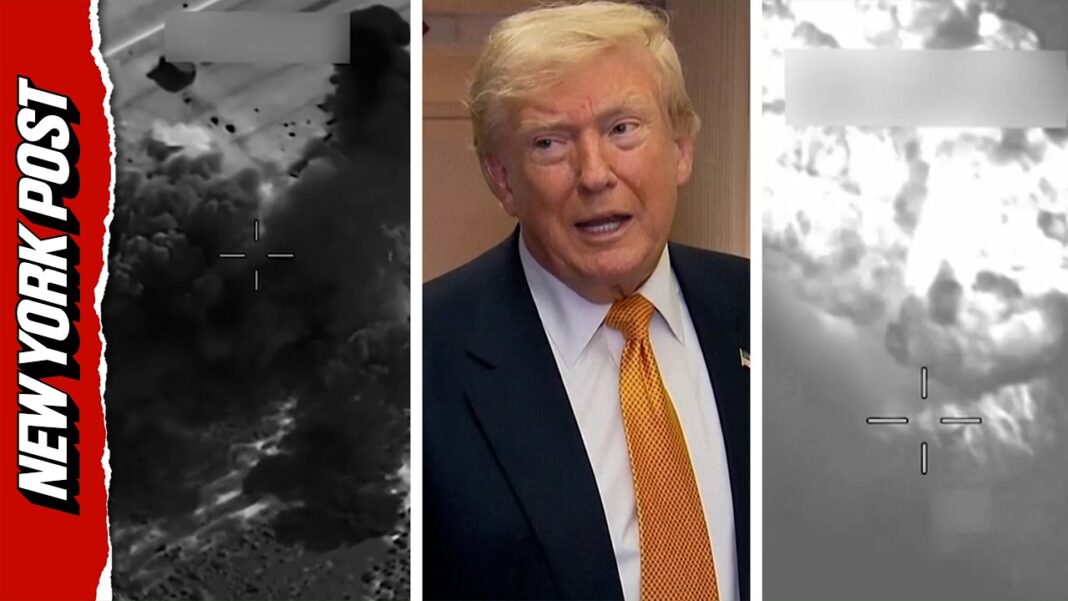
The United States launched the second round of strikes Trump had hinted at later on July 8, with U.S. Central Command announcing on Thursday that it had completed the additional series of attacks against Iranian targets “to further degrade Iran’s ability to attack commercial shipping and innocent civilian mariners in the Strait of Hormuz.”
Iran, meanwhile, threatened to close off shipping traffic in the Strait of Hormuz and escalate attacks. The country’s foreign ministry issued a statement on Thursday condemning the U.S. strikes against targets along Iran’s southern coastal areas, describing them as “grave war crimes” and claiming that the American attacks were made under the “false pretext of responding to alleged incidents involving several ships” transiting Hormuz.
By Tom Ozimek