

As those who read my posts in various publications know, I keep an archive of all my articles at www.ReformTheKakistocracy.com for the sole purpose of allowing anyone to review my work as a whole and to ensure I stay honest in my critique of government reform. With this disclosure, let me list my five favorite articles for 2025.
- Political Future Shock 2029 is my favorite. Published June 16, 2025, at https://www.reformthekakistocracy.com/political-future-shock-2029/
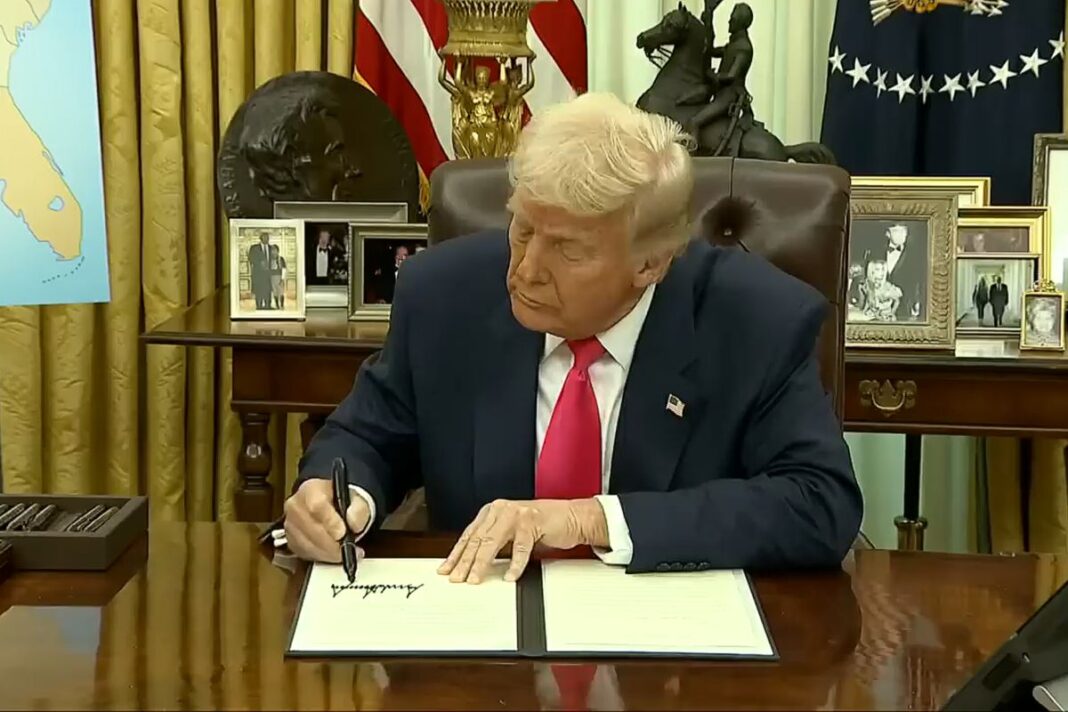
President Trump has introduced extraordinarily novel tactics of political warfare. The excessive use of Executive Orders in lieu of legislation, the permanent use of Emergency Declarations for routine activities of the state, the mass firings of civil servants without cause, shuttering statutory agencies without congressional authorization, suing himself to collect $264 million in personal damages for defending against federal indictments, and on and on.
While Trump has completely captured the political playing field, there will be a great political future shock the next time the Democrats win the presidency. “The Left will copy Trump’s aggressive governing style. The more success Trump achieves with his bold policy moves, the more confidence the Left will gain that they can successfully impose an expansive Leftist agenda on the nation.”
- Executive Orders Shift the Power to “Legislate.” Published August 18, 2025, at https://www.reformthekakistocracy.com/executive-orders-shift-the-power-to-legislate/
Presidents issue Executive Orders to assert their power to make law. While the Constitution gives Congress lawmaking power, Congress passes many ambiguous laws that require interpretation. This ambiguity created by Congress allows presidents to aggressively occupy the void created by Congress. The result is that Presidents exercise as much legislative power as Congress can tolerate, and in any area of law that holds a president’s interest for a few seconds.
“While the Supreme Court has established clear standards for analyzing Executive power, its standards are meaningless when implementation is based on who has the power. Each step of restricting presidential power requires a powerful response by Congress or the courts. Even when statutes are not ambiguous, the President informs Congress of his different interpretation and forces Congress to fight with him. Such Presidential overreach is usually successful since members of Congress from the same party as the President will do all they can to block any opposition to the President’s Executive Order, notwithstanding that their duty of loyalty must be to the Constitution and the institution of Congress.”
- Congress doesn’t Care What the Average Person Thinks, published August 4, 2025, at https://www.reformthekakistocracy.com/congress-doesnt-care-what-the-average-person-thinks/
This article could have easily been my number 1 choice, but it is not since 99% of the United States knows that Congress does not care about what the average person thinks. So why tell readers what they already know? Well, in this instance, a comprehensive academic study confirms this finding.
In “Testing Theories of American Politics: Elites, Interest Groups, and Average Citizens,” the two authors reviewed 1,779 unique data sets to determine who influences policy in the U.S. Their key finding is that the economic elites and organized groups representing business interests have substantially more impact on U.S. policy compared to average citizens, who the study finds have near-zero influence. “Moreover, because of the strong status quo built into the U.S. Political system, even when fairly large majorities of Americans favor policy change, they generally do not get it,” unless the elites also seek the same changes.
- On Declaring War, Congress De Facto Amended the Constitution, published on June 30, 2025, at https://www.reformthekakistocracy.com/on-declaring-war-congress-de-facto-amended-the-constitution/
Anyone who reads my articles knows that I firmly believe “The most solemn decision any government official makes is sending our young citizens to war. Asking citizens to die for their country is the most anyone can ask of another human. Unfortunately, the cowardice of Congress, which remains silent on war-making decisions, violates its Constitutional duty. The United States fights more wars than any other nation on earth. Since the Korean War of 1950, it has been involved in 32 wars. The U.S. has been absent from war for only 14 of the past 73 years. More terrifying, however, is that Congress usually funds wars with little debate over the nation’s real security needs or financial considerations.”
Trump’s bombing of Iran sparked this article, but since then, our military has been deployed to our city streets, and one of the largest buildups of naval forces sits in the Caribbean, ready to attack Venezuela, Colombia, or just any boat in the water. While I fully support Trump defending the U.S., it is the job of Congress to declare war, not a President pissed off because some two-bit dictator doesn’t kiss his whatever or give him a peace prize or some other trophy.
- Beginning the Inevitable: Federal Devolution of Power, published May 19, 2025, at https://www.reformthekakistocracy.com/beginning-the-inevitable-federal-devolution-of-power/
On January 1, 2025, the U.S. national debt was $36.1 trillion. Today, December 22, 2025, it is $38.35 trillion. That is an increase of $2.25 trillion in one year. How does one characterize such spending – crazy, stupid, greedy, insane? It cannot be considered sane, thoughtful, or prudent by any measure of common sense or logic. Congress struggles with the debt and taxes, but there is a seemingly endless list of programs and tax benefits that are untouchable by Congress and the President.
At some point in the future, the bill will come due, and it will be a doozy; the nation may not survive. Before the inevitable will arrives, Congress and the President need to think in terms of “Devolution of Power” to the states. Today, the federal government grants $1.2 trillion annually to implement federal programs that it does not have constitutional authority to implement. To get this money, the federal government taxes the states and then gives them a percentage of their money back if they do what the federal government wants. Solution: don’t collect money from the states. Let the states keep their money and enact programs their citizens want. That is an immediate $1.2 trillion reduction of federal spending.
The federal government cannot sustain its current path, and it could have a partner in the states willing to assume more responsibility for running the government. For this to occur, the President and Congress need to put aside their obsession with expanding federal power and consider the nation’s long-term future.
Thanks to anyone who reads my articles. It is fun for me at the end of the year to review what I have written and let readers evaluate it.