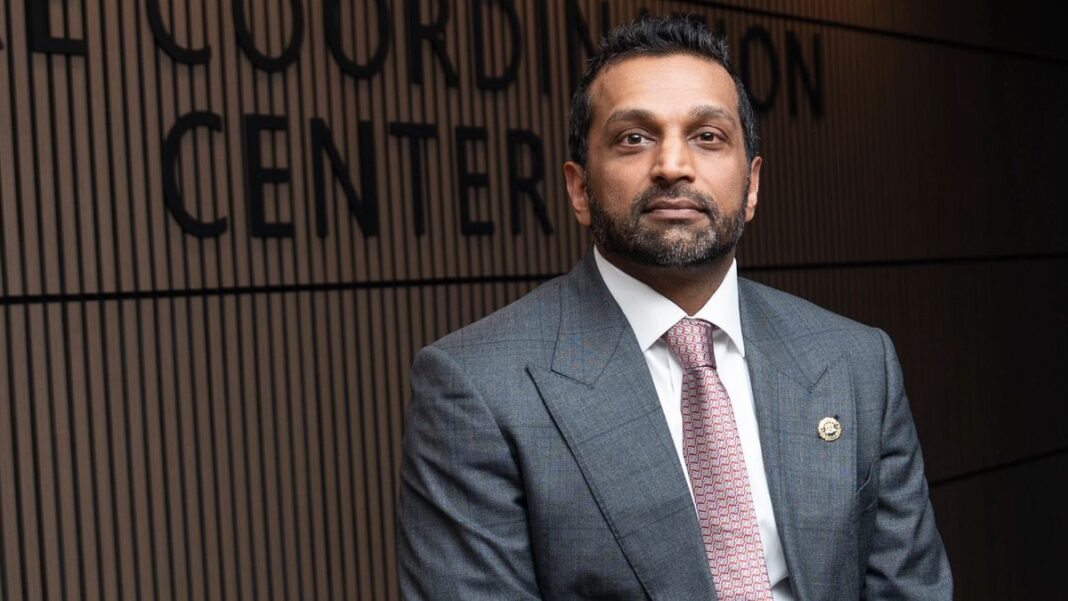
The late-night vote caps weeks of uncertainty over President Donald Trump’s nominee to serve as the nation’s 88th attorney general.
President Donald Trump’s nominee for attorney general, Todd Blanche, has been confirmed in a late-night vote in the Senate after a handful of fellow Republicans reconsidered their opposition.
Blanche was confirmed in a 50–49 vote in the early hours of Aug. 8, with Sens. Susan Collins (R-Maine) and Lisa Murkowski (R-Alaska) voting in opposition. The deciding vote was cast by Sen. Bill Cassidy (R-La.), who announced on Friday that he believed Blanche was the best option that Trump would put forward.
“I am deeply honored by the trust and confidence President Trump has placed in me to lead the Department of Justice as our great nation’s 88th Attorney General,” Blanche said in a statement on social media, adding that he’s grateful to the Senate “for staying late to complete this process.”
The vote brought to a close weeks of tension and uncertainty over the nomination of Blanche, who has served as acting attorney general since April after previously serving as the Justice Department’s second-ranking official.
In his statement, Blanche thanked the staff at the Department of Justice, praising them for their “work each day to uphold the law and keep our country safe.”
“God bless America,” he said.
Before the deciding late-night vote was cast, the Senate worked throughout the evening on Aug. 7, with several short recesses, but procedural steps were still needed before the nomination could reach the final stage.
Earlier in the day, Sen. Chuck Grassley (R-Iowa), who chairs the Senate Judiciary Committee, said he expected a confirmation vote quickly.
Grassley’s remarks came shortly after Cassidy finally got on board with Blanche despite prior misgivings. Without Cassidy’s support, Blanche’s nomination would have likely sunk because Murkowski and Collins refused to budge in their opposition.
Blanche, who has served as acting attorney general since Trump dismissed Pam Bondi from the post in April, faced a delay in his confirmation because of intraparty resistance.
He previously took several steps to address concerns raised by GOP holdouts.
By Janice Hisle