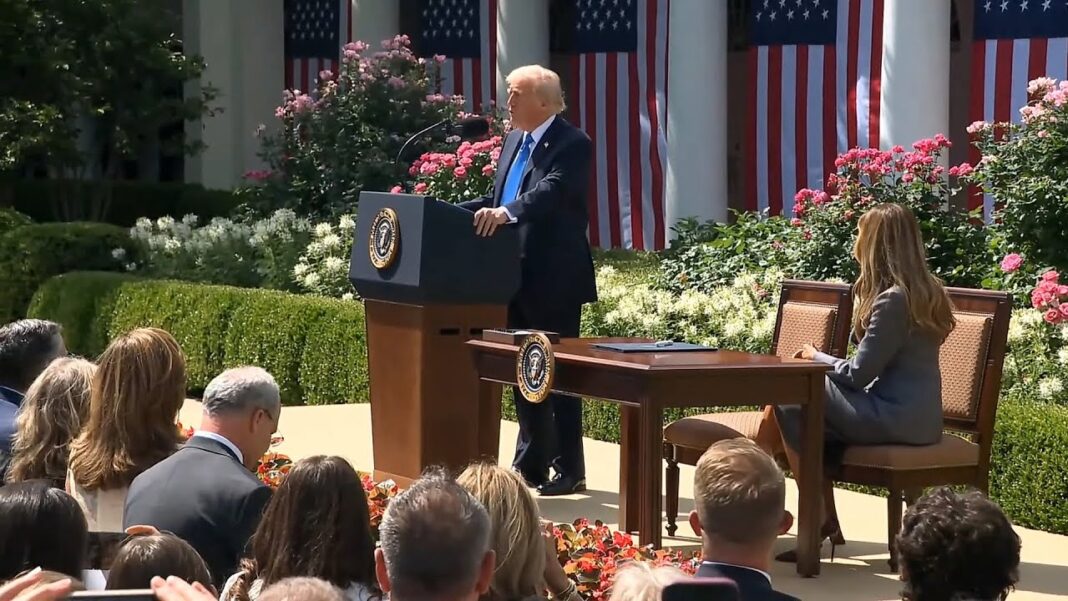


Trump appeared to have recognized the limits of third-party mediation between Russia and Ukraine in the post that he made after his latest call with Putin on Monday. He announced the “immediate” start of ceasefire negotiations between them but specified that “The conditions for that will be negotiated between the two parties, as it can only be, because they know details of a negotiation that nobody else would be aware of.” Here are ten background briefings that place his latest position into context:
— Donald J. Trump (@realDonaldTrump) May 19, 2025
* 12 March: “Will Putin Agree To A Ceasefire?”
* 1 April: “Trump’s Latest Sanctions Threat Against Russia Suggests That He’s Getting Impatient For A Deal”
* 4 April: “Putin’s Economic Envoy Helped Break The Russian-US Impasse On Ukraine”
* 10 April: “How Might The US’ Relations With Ukraine & Russia Change If It Abandons Its Peace Efforts?”
* 28 April: “Five Significant Disagreements Account For Trump’s Newfound Anger With Putin”
* 2 May: “The Amended Minerals Deal Will Likely Lead To More American Weapons Packages For Ukraine”
* 3 May: “Five Benefits That The US Would Reap From Coercing Ukraine Into More Concessions To Russia”
* 10 May: “The US Is Toughening Its Negotiating Stance Towards Russia”
* 13 May: “Third-Party Mediation Between Russia & Ukraine Is Approaching Its Limits”
* 17 May: “The Ball’s In Trump’s Court After The Latest Istanbul Talks”
To review, the US has hitherto wanted Russia to accept freezing the Line of Contact (LOC) in exchange for a series of profitable (likely resource-centric) deals, absent which another round of American sanctions could be implemented and perhaps even the large-scale resumption of military aid to Ukraine. Sanctions are still on the table, but Trump’s latest post was much more politely written than some previous ones that expressed increasing impatience with Putin, thus suggesting that some progress has been made.
It can only be speculated what they achieved during their two-hour-long discussion, but Trump implied that creative economic/energy diplomacy on the US’ part could raise the chances of Russia compromising with Ukraine. He wrote that “Russia wants to do largescale TRADE with the United States when this catastrophic ‘bloodbath’ is over, and I agree. This is a tremendous opportunity for Russia to create massive amounts of jobs and wealth. Its potential is UNLIMITED.”
Putin remains loath to an unconditional ceasefire since he declared last June that Russia would only agree to it if Ukraine withdraws from the entirety of the disputed regions, abandons its plans to join NATO, and is cut off from all foreign arms. Zelensky just said after their talks on Monday that Ukraine won’t withdraw though, while it still remains committed to joining NATO and it’ll also be a struggle for the US to get the Europeans to stop arming Ukraine, so it’s unclear how their ceasefire talks will proceed.
Nevertheless, Putin also said after his call with Trump that “The key issue, of course, is now for the Russian side and the Ukrainian side to show their firm commitment to peace and to forge a compromise that would be acceptable to all parties. Notably, Russia’s position is clear. Eliminating the root causes of this crisis is what matters most to us.” His desire to reach a mutually acceptable compromise suggests that he might display more flexibility than before, perhaps enticed by the US’ economic offers.
While he certainly wants the nascent Russian–US “New Détente” to evolve into a full-fledged strategic partnership after the conflict ends, his reaffirmation that the root causes of the crisis must be eliminated should dispel speculation that he’ll “sell out” by abandoning the special operation’s goals in exchange. To remind the reader, these are restoring Ukraine’s constitutional neutrality, demilitarizing it, denazifying it, and now also obtaining recognition of the new ground realities after September 2022’s referenda.
The first and last are clear-cut while the other two leave lots of room for interpretation. This means that Russia is unlikely to compromise on restoring Ukraine’s constitutional neutrality or withdrawing from any of the land that it claims as its own. It could hypothetically freeze the territorial dimension of the conflict by no longer militarily trying to obtain control over the entirety of the disputed regions, however, if the Ukrainian-controlled remainder receives the autonomy that Donbass was promised under Minsk.
To be clear, there’s no indication that this is being considered and it’s just educated conjecture, as is the proposal for a demilitarized “Trans-Dnieper” region controlled by non-Western peacekeepers that would encompass everything north of the LOC and east of the river. The last-mentioned could represent a mutually acceptable compromise on demilitarization and denazification, the goals of which leave lots of room for interpretation as was written above, but it doesn’t appear to be part of their talks right now.
In any case, the point is that demilitarization and denazification might be the two goals that Putin could most realistically compromise on, but only in order to ensure the tangible improvement of Russia’s long-term national security interests. Generally speaking, this means that Ukraine must either no longer function as a NATO proxy by the time the conflict ends or the threats that it still poses as such must be pushed further away from the border, which could be achieved through the “Trans-Dnieper” proposal.
More broadly, it would be most ideal if there was also a game-changing rapprochement between Russia and the US, thus greatly decreasing the likelihood that NATO’s most powerful member could be manipulated into going to war against Russia by any provocations carried out by its “rogue” allies. This outcome would be the most meaningful by far due to its grand strategic significance so it’s possible that Putin might compromise more than expected if he truly thought that this would then be within reach.
At the same time, he’s only interested in compromising, not in unilateral concessions of the sort that Zelensky is demanding and the US strongly suggested that it wants. This means that whatever compromises he proposes, especially if they’re unexpected ones, must be reciprocated by Ukraine and/or the US. If Zelensky refuses, then it would be incumbent on Trump to coerce him into compliance so as to not lose the opportunity for peace that any unexpected compromises from Putin would present.
Any insubordination from Zelensky would have to be strictly dealt with otherwise Trump’s envisaged “largescale TRADE” with Russia, which he believes has “UNLIMITED” potential, would be lost as would the credible chance of him winning the Nobel Peace Prize afterwards like he wants for his legacy. This could take the form of cutting off all military-intelligence aid and maybe even going as far as to threaten sanctions against any European countries that continue to furnish such during that time.
Trump alluded to the possibility of once again freezing military aid to Ukraine by mentioning after his call with Putin that “This is not our war. This is not my war… I mean, we got ourselves entangled in something that we shouldn’t have been involved in.” He also confirmed that Zelensky is “not the easiest person to deal with. But I think that he wants to stop… I hope the answer is that he wants to get it solved.” If he comes to see Zelensky as the obstacle to peace, not Putin, then he might cut him off again.
Ultimately, the devil’s in the details of the upcoming Russian-Ukrainian ceasefire talks, which will in turn largely determine whether the US goes through with sanctioning Russia or cutting off Ukraine. The public isn’t privy to each team’s negotiating strategy, nor to the flexibility that their leaders have given them, so there’ll be a lot of fake news, speculation, and educated conjecture from here on out. Everyone should therefore brace themselves for this and brush up on their media literacy in order to not be misled.