There is a persistent illusion in Western policy circles that regimes fall when they lose legitimacy. History suggests otherwise. Regimes fall when they lose the ability to enforce power and, just as critically, the means to finance that power. Nowhere is this more evident than in the Islamic Republic of Iran.
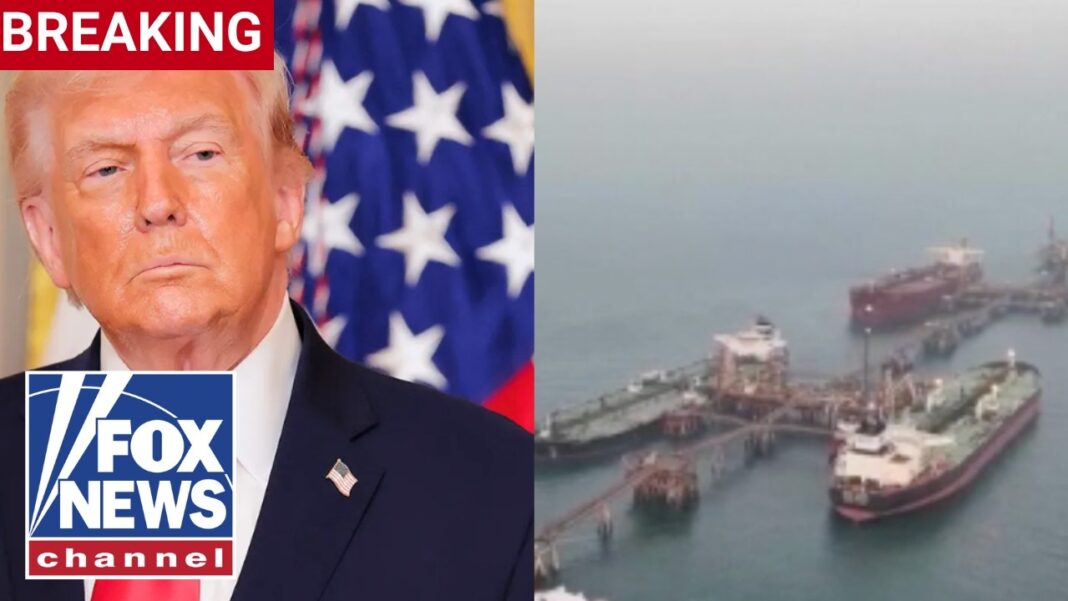
For decades, Iran has demonstrated that its authority is not rooted in consent, but in control—control maintained through a sophisticated combination of ideology, force, and financial infrastructure. It is a regime that has survived not because it is beloved, but because it is underwritten by a constant stream of oil and gas revenues.
That record is not abstract. In 1994, the bombing of the AMIA Jewish community center in Buenos Aires—an attack that killed 85 civilians—was attributed by Argentine prosecutors to Iranian officials working through the proxy network of Hezbollah. Interpol issued notices for several individuals tied to the case. Iran has denied responsibility, but the allegations remain part of a long and troubling pattern.
In Iraq, during the years following the U.S. invasion, American military officials repeatedly identified the role of Iran’s Islamic Revolutionary Guard Corps (IRGC), particularly its Quds Force, in supplying and training militia groups responsible for attacks on American personnel. These were not isolated incidents, but part of a broader strategy of asymmetric warfare and regional influence. This is not a regime that merely governs within its borders—it projects power beyond them.
And yet, despite this record, a curious belief persists: that the Iranian regime can be weakened—or even toppled—through rhetoric, diplomacy alone, or spontaneous internal uprising. That belief is not just naïve. It misunderstands how power actually works.
As Israeli analyst Eliyahu Yossarian has argued, the true strength of the Iranian regime lies not simply in its military capabilities, but in its ability to sustain itself financially. It pays its security forces. It funds its proxy networks. It maintains loyalty through a system of compensation, patronage, and control. Take away that financial foundation, and the structure begins to weaken. This is not a controversial observation; it is a structural reality.
Every regime, regardless of ideology, depends on resources. Soldiers must be paid. Bureaucracies must be maintained. Loyalty, in many cases, is not ideological—it is transactional. This is why the focus on legitimacy alone misses the point.
The Iranian people have demonstrated, time and again, that they are willing to protest. From the Green Movement to more recent nationwide demonstrations, the desire for change is evident. Protest is not power. Power requires capacity. Capacity—organization, resources, coordination, and endurance—is what transforms dissent into force.
And here lies the uncomfortable truth: a population facing a deeply entrenched security apparatus cannot simply will itself to victory. The IRGC and associated forces are not symbolic. They are organized, armed, and integrated into the state’s core. History offers numerous parallels.
During World War II, the French Resistance did not succeed through moral clarity alone. It operated in coordination with external support, including assistance from Britain’s Special Operations Executive. Supplies, intelligence, and organization were essential.
Similarly, during the Cold War, the United States engaged with anti-communist resistance movements such as the Contras. These efforts were controversial and remain debated, but they reflect a consistent strategic recognition: resistance without capacity is limited. This is not an argument for any specific policy; it is an argument for clarity.
If the goal is to weaken a regime like Iran’s, then the question is not whether its people desire change. It is whether the structures that sustain the regime can be meaningfully constrained. Which brings us back to the central point.
The regime’s financial infrastructure is not incidental—it is foundational. As long as it can:
- generate revenue
- access financial systems
- fund its security apparatus
- it retains the ability to suppress dissent and project power. Conversely, when those structures are disrupted, the calculus changes.
This is not speculation; it is observable across multiple contexts. States under severe financial strain face internal fractures. Loyalty becomes uncertain. The cost of maintaining control rises. None of this guarantees collapse, but it alters the balance.
The challenge for policymakers is that such strategies are neither simple nor without consequence. Economic pressure can have unintended effects. Systems adapt. Costs are often borne, at least initially, by the population. Avoiding the question does not resolve it.
The current approach—oscillating between pressure and restraint, without a clear focus on the regime’s structural foundations—has produced a kind of strategic drift. It acknowledges the problem without fully engaging with its underlying mechanics. What is required is not rhetorical escalation, but strategic clarity.
The Iranian regime is not sustained by narrative; it is sustained by systems. Understanding that distinction is the first step toward any serious policy. The second is recognizing that change—if it comes—will not be the product of a single factor. It will emerge from a convergence of pressures: economic, political, and internal. Among those, however, the financial dimension is central.
Remove the ability to pay, and the ability to command begins to erode. That is not ideology; that is structure. And structure, in the end, determines survival. Remove the financial pillar that sustains the regime, and the entire structure—no matter how entrenched—begins to collapse. Cut off the power, and the lights go out. That’s not rhetoric—it’s structure.