Gluttonous, slothful, irresponsible and entitled: Today’s “poor” are the “rich” Jesus warned us about.
By Kathy Shaidle – PJ Media . . . the way many Westerners live keeps them “poor.”
Bill O’Reilly Interviews Adam Carolla (“Welfare Nation”)
As Thomas Sowell and many others like to point out, our “poor” enjoy luxuries the Sun King could only dream of: cell phones (or three), cars (or two), PlayStations, and big screen TVs. You might have noticed that today’s “poor” aren’t exactly the humble, wholesome, good-hearted types Charles Dickens championed, either. (Back when “living” conditions in Victorian London were unspeakably appalling, Jack the Ripper was practically doing those women a favor…) Instead, today’s poor are often petulant, entitled, irresponsible, and ungrateful, caught up in a culture of crime and cheap thrills. Jesus ordered us to love the poor because He understood how hard it was to do, even 2000 years ago. But in 2012, I’d take that further: our “poor” have become the “rich” Jesus warned us about. I know because that’s where I come from.
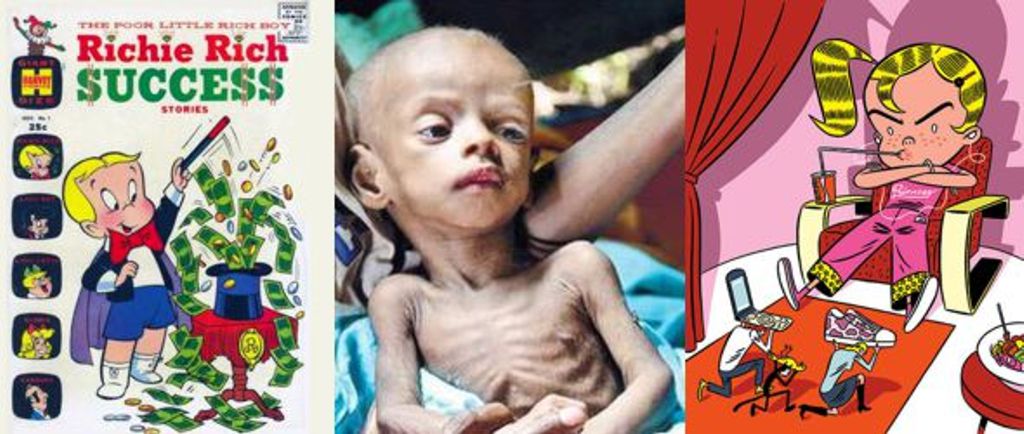
I grew up below the so-called “poverty line,” a fact which always amused my (single) mother and me- every year when the new “poverty line” stat was announced on the news. The figure was always about the same as her annual salary. Yet somehow we had nice clothes and furniture and enough to eat. Why? Well, my mother might have been a high school dropout, but she was a workhorse who went to a hotel job she hated every morning at 5 a.m. and wasn’t a boozer or a crackhead who spent her off hours in nightclubs picking up and bringing home strange dudes. In other words, my mother didn’t have a lot going for her but she made the very most of what she had, in a determined and almost ostentatious manner. I noticed. I had a few friends who were the “product of broken homes.” From what I can make out, I’m the only one who’s amounted to anything. Because, I believe, I was the only one whose mother worked (for a pittance admittedly) while the rest were on welfare. Which brings us to…
Sense of Entitlement
In today’s (North) America, there is little financial incentive to better oneself anyway, thanks to “entitlements” that are (involuntarily) paid for by harder-working, more responsible citizens. Behold: according to the graph above, a “a one-parent family of three making $14,500 a year (minimum wage) has more disposable income than a family making $60,000 a year.” Part of the reason America is so divided is that even when we use simple, commonplace words, those words have very different meanings, depending upon who is using them. When rich people talk about “taxes,” they’re adding up all the money they’ve honestly earned and are now forced to pay to the state. But when “poor” people talk about “taxes,” they’re making a list of all the new crap they’re going to buy when they get their refund check. According to one source, “30 percent of tax units” — that is, households and individuals — “actually made money off the income tax system for the 2009 tax year.”
Poor Impulse Control
Americans have been subject to floods, hurricane, and earthquakes since the pilgrims landed. Their ability to recover from natural disasters is the stuff of legend. Shortly before Katrina struck, I knew that situation would be different. I suspected, correctly, that the populace in one particular locale on Katrina’s path would be profoundly devastated and, worse, unable to rise to the occasion in the same fashion as their fellow Americans. Why? Because New Orleans is located below sea level — and its official motto is “Let the Good Times Roll.” Individuals who voluntary reside in a flood zone and whose only “industry” is partying are ill-prepared for disaster. And — humiliated when their ineptitude and learned helplessness is exposed to the world — they will lash out at both those who fail to help them, and those who try. Universally: a refusal to plan ahead makes people poor and keeps them that way. (Semi-universally: In metropolitan locales around the continent, the day the welfare checks come in is referred to by local recipients as “Mardi Gras”…) Poor people typically spend what money they have on lots of cheap, disposable junk on a whim, instead of saving up for one good thing. They’ll tell you they “have to” give their kids powdered milk, but that’s only because they’ve already spent all their (I mean, taxpayers’) money on booze, drugs, cigarettes, lottery tickets, manicures, hair weaves, bingo cards, and tacky club clothes. We hear that poor people are caught up in the trap of money-sucking “payday loans” and other dubious rackets because they don’t have bank accounts. But: why DON’T you have a bank account? Like I said: I grew up below the poverty line but have had the same account with the same bank since I was 8 years old, because my mother (who, once again, was NOT a genius) took me downtown and signed me up for one. Poor people need to plan their lives a little better.
The goal of THE THINKING CONSERVATIVE is to help us educate ourselves on conservative topics of importance to our freedom and our pursuit of happiness. We do this by sharing conservative opinions on all kinds of subjects, from all types of people, and all kinds of media, in a way that will challenge our perceptions and help us to make educated choices.
Before you, American reader, is the honor, blessing, and privilege of celebrating the 250th anniversary of our nation. A nation toward which God has been merciful, shining His great grace.
Wondering what to watch to celebrate America 250, your worries are over. I’ve put together a list of ten movies with patriotic, colonial America, and Revolutionary War themes.
NASA dispatched its latest addition to its fleet of space telescopes, beginning a multi-year mission of cosmic discovery that is promising to dwarf that of its predecessors.
The China factor looms over the collapse of US–Canada trade talks and Carney’s approach to Beijing may have added to the Trump administration’s concerns.
U.S. Trade Representative Jamieson Greer said that new tariffs on Canadian imports will take effect as the two nations have failed to reach a trade deal.









 mother and me.)