The notification comes after the two criticized each other’s comments on US–Canada and international relations in public speeches this week.
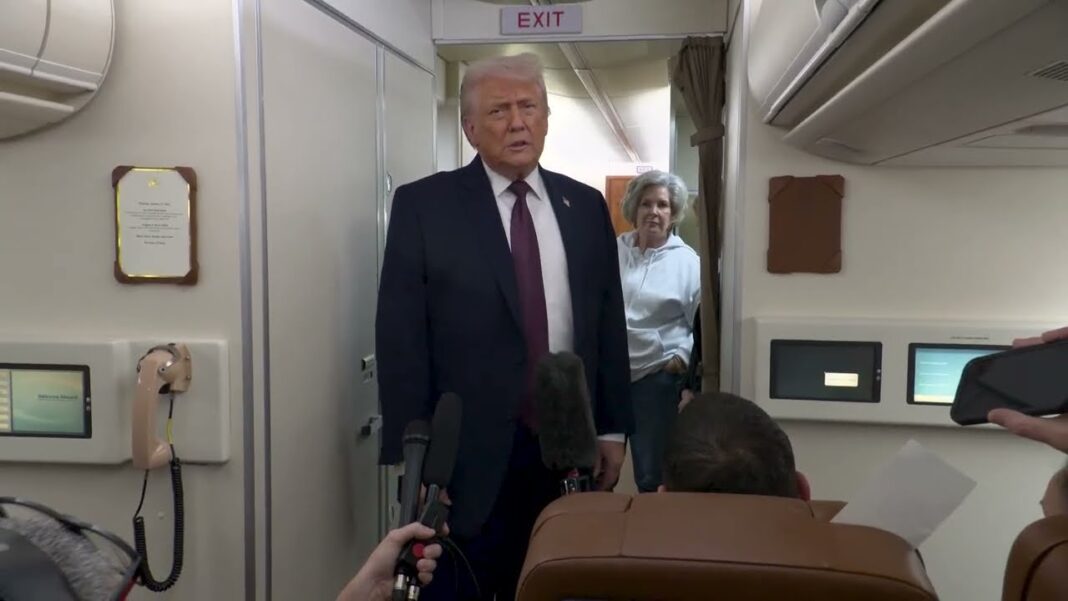
U.S. President Donald Trump has withdrawn his invitation for Canadian Prime Minister Mark Carney to join the U.S.-led Board of Peace that will initially focus on rebuilding Gaza.
“Please let this Letter serve to represent that the Board of Peace is withdrawing its invitation to you regarding Canada’s joining, what will be, the most prestigious Board of Leaders ever assembled, at any time,” Trump said in a post on Truth Social addressed to Carney late on Jan. 22. “Thank you for your attention to this matter!”
The notification comes after the two criticized each other’s comments on U.S.–Canada and international relations in public speeches this week.
Carney criticized U.S. pressure to take over Greenland in a speech at the World Economic Forum (WEF) in Davos, Switzerland, on Jan. 20, and called for countries to not comply with “great powers,” saying the rules-based international order has undergone a “rupture.” He urged middle powers to band together to resist pressure from major powers, without specifying who the major powers are or making any distinctions.
“Great powers have begun using economic integration as weapons, tariffs as leverage, financial infrastructure as coercion, supply chains as vulnerabilities to be exploited,” he said. “You cannot live within the lie of mutual benefit through integration, when integration becomes the source of your subordination.”
His comments came amid increasing U.S. protectionist measures and days after his visit to China, where he said a new strategic partnership with Beijing sets “us up well for the new world order.”
In his own speech at the WEF on Jan. 21, Trump said that he listened to Carney’s speech and that the Canadian prime minister “wasn’t so grateful,” adding that Canada “lives because of the United States.”
“Canada gets a lot of freebies from us, by the way, they should be grateful also, but they’re not,” Trump said. “Canada lives because of the United States. Remember that, Mark, the next time you make your statements.”
A day later in a speech addressed to Canadians on Jan. 22, Carney rebuked Trump’s remarks, saying Canada “does not live because of the United States. Canada thrives because we are Canadian.”
Also on the same day, U.S. Commerce Secretary Howard Lutnick said Ottawa could risk jeopardizing the upcoming renegotiations of the United States-Mexico-Canada Agreement (USMCA) by seeking closer relations with China.
Lutnick suggested that Carney’s recent comments may be related to an upcoming election. He added that Ottawa’s decision to open Canada’s market to Chinese electric vehicles (EVs) may have an adverse impact on Canada’s free-trade relations with the United States, which he said is the “second-best deal” with the United States in the world after Mexico’s.
During his trip to China last week, Carney agreed to cut tariffs on Chinese EVs from 100 percent to 6.1 percent for the first 49,000 imported units, in exchange for Beijing cutting tariffs on Canadian agricultural products from 85 percent to 15 percent until at least the end of 2026. Ottawa first imposed 100 percent tariffs on Chinese EVs, along with levies on steel and aluminum, in 2024, in lockstep with the United States, which has raised concerns about China’s product dumping.