

In a 2–1 ruling, the court said that Congress is responsible for appropriating funds for construction at the White House.
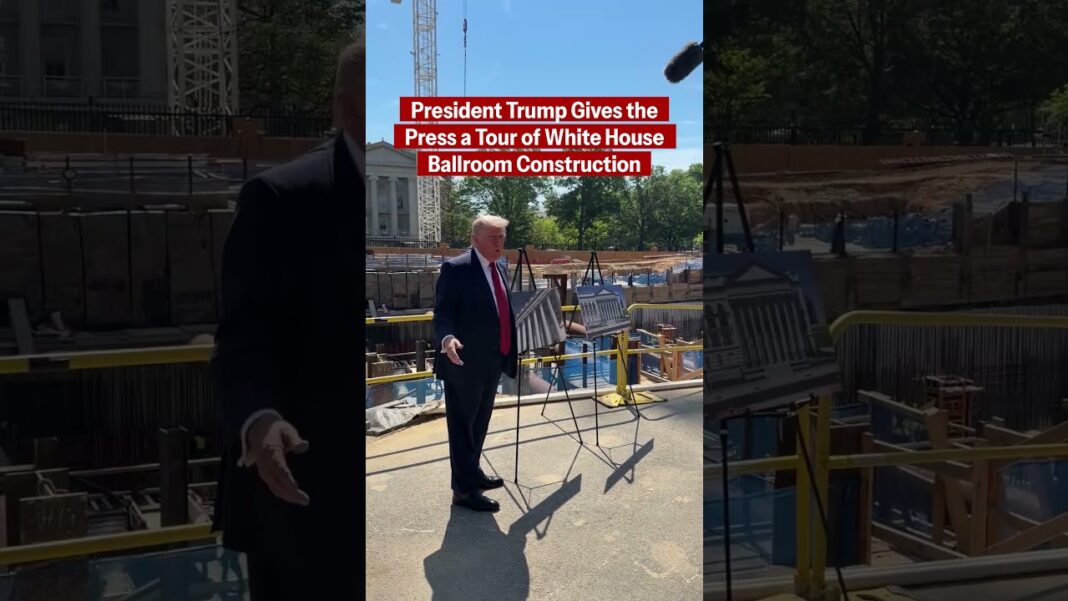
A U.S. appeals court panel on Aug. 7 blocked President Donald Trump’s construction of the White House ballroom on the site of the White House’s demolished East Wing.
A panel with the U.S. Court of Appeals for the District of Columbia Circuit wrote that Congress is the entity that appropriates funds for the maintenance of the White House or its improvements. In an example, the panel noted that Congress “authorized the repair and reconstruction of the White House after the British attempted to burn it down during the War of 1812.”
“We are aware of no instance in American history in which a President unilaterally and using privately collected funds demolished substantial portions of the White House that Congress authorized to be built and American taxpayers paid for. Until now,” the majority wrote.
The panel also said that “whether or not a massive ballroom should be constructed is for Congress to decide and is not a matter for Executive self-help,“ adding that Congress also hasn’t “ceded unfettered authority to the Executive Branch to dramatically redesign, reshape, and reconstruct the White House—the People’s House—to fit a particular President’s desires.”
The National Trust for Historic Preservation, a nonprofit that works in the historic preservation of the United States, filed a lawsuit against the Trump administration’s planned construction.
Previously, a U.S. district court blocked the above-ground construction of the White House ballroom, while those courts exempted below-ground construction and allowed bomb shelters, bunkers, and military infrastructure.
U.S. Circuit Judge Neomi Rao was the lone judge who dissented in the decision, writing that the preservation group had no right to sue the administration and said that construction of the ballroom likely falls within President Donald Trump’s authority.
“The district court seized supervision of construction at the White House, and my colleagues affirm this judicial overreach,” Rao wrote in dissent. “Because the injunction is beyond the proper province of the federal courts, construction should be allowed to continue.”
Trump has often defended his ballroom and its cost, saying in a post on social media in March that the “ballroom that is under budget, ahead of schedule, being built at no cost to the Taxpayer … will be the finest Building of its kind anywhere in the World.”
In May, the president defended a cost increase for the White House ballroom construction project, saying “the only reason the cost has changed is because, after deep rooted studies, it is approximately twice the size, and a far higher quality, than the original proposal, which would not have been adequate to handle the necessary events, meetings, and even future Inaugurations.”
“The original price was 200 Million Dollars, the double sized, highest quality completed project will be something less than 400 Million Dollars. It will be magnificent, safe, and secure!” the president added.
When it filed its lawsuit against the ballroom construction, the National Trust for Historic Preservation said in a December statement that construction was started despite no plans being filed with the National Capital Planning Commission, no environmental impact assessment performed, and that Congress hasn’t authorized its construction.