The strikes were designed ‘to protect our troops from threats posed by Iranian forces,’ CENTCOM said in a statement.
The U.S. military carried out “self-defense strikes” on Monday in southern Iran, the U.S. Central Command (CENTCOM) said.
CENTCOM spokesman Navy Capt. Tim Hawkins said the strikes targeted Iranian missile launch sites and boats “attempting to emplace mines” in southern Iran.
“U.S. forces conducted self-defense strikes in southern Iran today to protect our troops from threats posed by Iranian forces,” Hawkins said in a statement to The Epoch Times. “U.S. Central Command continues to defend our forces while using restraint during the ongoing ceasefire.”
Iranian news outlets reported that explosions were heard late Monday in the southern city of Bandar Abbas and near Sirik and Jask. It is unclear what caused the blasts or whether they stemmed from the U.S. strikes.
Iran has yet to comment on the strikes, and it remains unclear how they may affect a potential peace agreement between the United States and Iran.
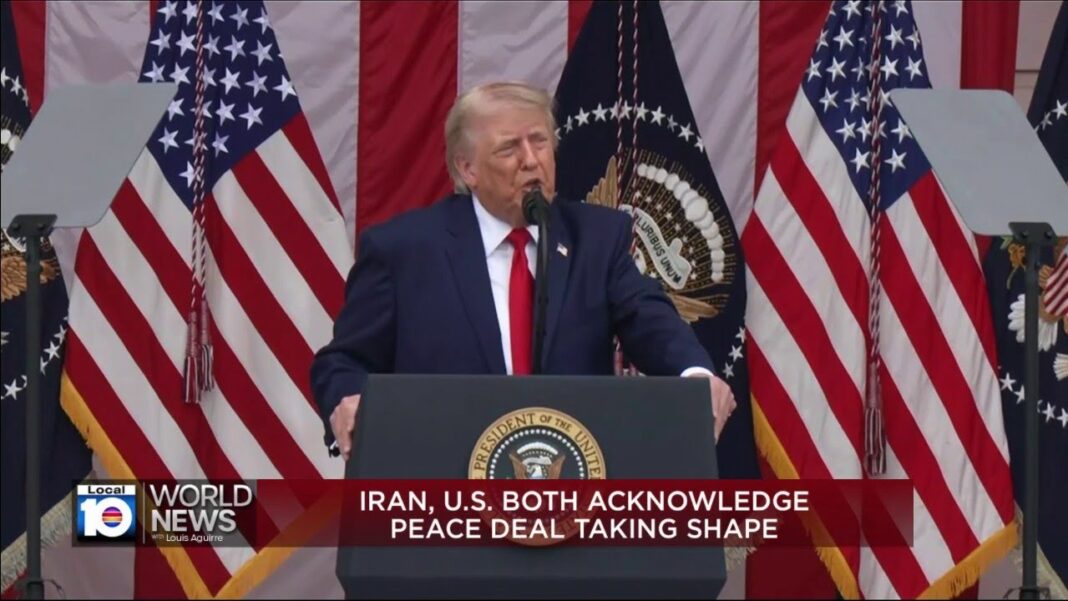
President Donald Trump said in a Truth Social post on May 25 that negotiations with Tehran were “proceeding nicely” but warned that failure to reach an agreement could lead to renewed military action.
“It will only be a Great Deal for all or, no Deal at all — Back to the Battlefront and shooting, but bigger and stronger than ever before — And nobody wants that,” the president wrote.
Trump also said that countries including Saudi Arabia, Qatar, Pakistan, Turkey, Egypt, and Jordan should join the Abraham Accords simultaneously as part of a broader regional settlement involving Iran.
Speaking to reporters on May 25, U.S. Secretary of State Marco Rubio said the Strait of Hormuz must be opened “one way or the other” following the latest U.S. strikes on Iran.
“The straits have to be open. They’re going to be open one way or the other, so they need to be open,” Rubio said aboard a plane in India’s Jaipur.
Rubio added that it could take “a few days” to finalize the language of the potential deal with Iran.
Iranian Foreign Ministry spokesperson Esmaeil Baghaei said on May 25 that both nations have “reached understandings on many issues,” but that an agreement to end the war is not imminent at this stage.