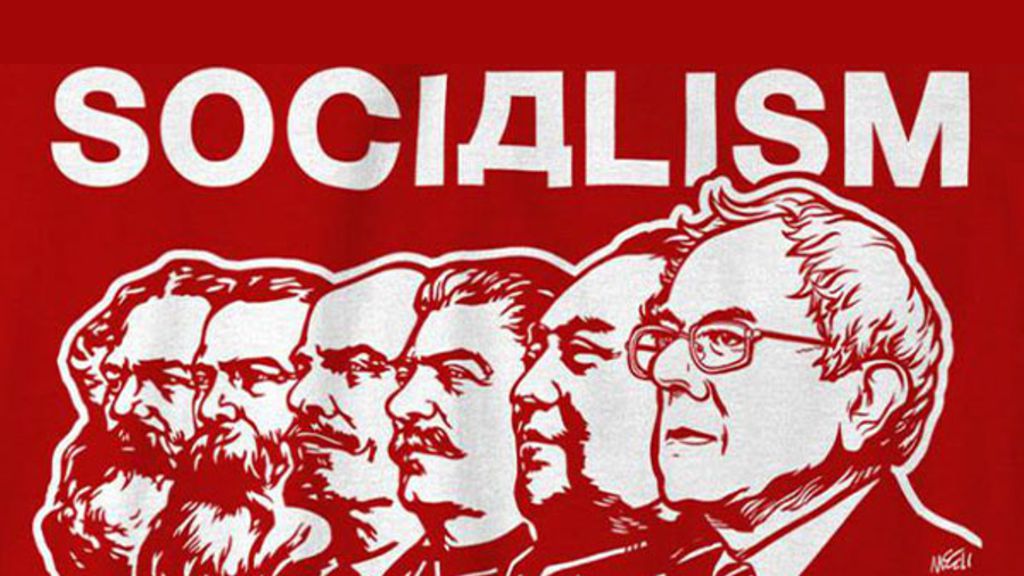


Polls show a growing acceptance of Socialism in the United States, reflected in the election of openly Socialist mayors in major cities. Critics often say Socialism has never succeeded, but rarely explain why. The core reason is simple: Socialism focuses on distributing wealth rather than producing it. As Margaret Thatcher famously said, “The problem with Socialism is that you eventually run out of other people’s money.”
Outside the mythical Garden of Eden, wealth does not simply exist to be handed out. Throughout history, aside from natural resources, everything people use or consume had to be created by someone. No one has an inherent right to what others produce without mutual consent. A society cannot distribute what it does not first create, and creation requires individuals motivated by human nature and rewarded through free enterprise. Governments do not produce wealth; they only redistribute what others have created.
Consider Elon Musk. Starting from nothing, he built companies that employ tens of thousands, support families, and generate billions in tax revenue. Yet Socialists target him simply because he is wealthy. That is envy. They resent his success while still expecting him to continue contributing to society.
For nearly a century, many college professors have criticized capitalism and shamed the profit motive. They ignore that the essential drivers of a successful economy are the producers and innovators, not the would-be distributors. Students are taught that under Socialism, life’s necessities could simply be made available for distribution, as if goods were fruit on a tree waiting for a benevolent Socialist leader to hand them out.
To Socialists, the issue is how wealth is shared. But technological advances created by producers generate jobs and improve life for everyone. Still, Socialists demand more from the very people who make prosperity possible. Some professors even teach that innovators and managers should be compelled to work under a Socialist government as a duty to society.
But no system can force great minds to create. Musk is not going to build SpaceX or Tesla in exchange for a certificate of appreciation. Talent gravitates to where it is valued, compensated, and taxed reasonably. Investors will not build housing where rent controls and excessive taxation guarantee losses. If abused, innovators move to another state or country—or stop producing altogether. As the novel Atlas Shrugged illustrates, when producers withdraw, society collapses.
This is already happening. California loses thousands of productive residents each year and is considering taxing those who leave. The state is nearly $500 billion in debt and will likely seek a federal bailout funded by states that managed their finances responsibly. New York is heading down the same path.
Human Nature explains why capitalism prevails over Socialism. People naturally want to achieve, live well, and protect their families. While some may act out of greed, the deeper truth is that people will not produce for the state what they would produce for themselves. If creativity and effort are not rewarded, innovation dies. Under Socialism, workers do the minimum because compensation is equalized or centrally planned. Over time, the economy stagnates.
These failures are not theoretical. Latin America provides a century of real-world examples. I lived and worked there for thirty years and saw the cycle firsthand. Countries such as Argentina, Chile, Brazil, and Venezuela repeatedly followed the same pattern. Foreign investment builds infrastructure—petroleum, electricity, manufacturing—creating prosperity. After decades of growth, Socialists claim the nation would be better off if major industries were nationalized so profits could be “shared.”
Once in power, Socialist governments confiscate industries. Experienced professionals leave or are fired, replaced by political loyalists who lack expertise and often enrich themselves. Over time, industries become inefficient and insolvent. Wealth evaporates. Eventually, the military steps in to restore order, and the country returns to square one. Later, democracy is restored, foreign investors return, and the cycle begins again. Private enterprise builds; Socialism destroys.
Venezuela is a recent example. In 1998, it was a democracy with a functioning economy. But voters chose to experiment with Socialism and elected Hugo Chávez. The result mirrored earlier Latin American failures. Today, New York City is making similar choices by electing officials who embrace Socialist policies.
So what can we do? We must teach our children, friends, and neighbors that society needs more innovators like Elon Musk and Larry Ellison—and that their wealth is irrelevant compared to the jobs and opportunities they create. They choose to build in America because capitalism rewards their contributions.
Some may say this view lacks empathy for the less fortunate. But Socialism exploits the poor by offering promises without opportunity. It provides no incentive for individuals to improve their lives and ultimately benefits only those at the top. For example, according to FinancialExpress.com, Vladimir Putin is worth $1.4 billion and owns numerous homes, aircraft, and yachts. Leaders of Socialist states routinely accumulate enormous wealth even while their citizens suffer.
Capitalism, by contrast, gives people the chance to get ahead. The desire to improve one’s life is part of Human Nature. If someone believes it is unfair that some succeed more than others, that belief aligns with Socialist thinking.
In conclusion, Socialism is a flawed socio-economic model. Its failures are evident in the wealthy oligarchs of state-controlled economies like Russia and China, where millions dream of becoming capitalists.