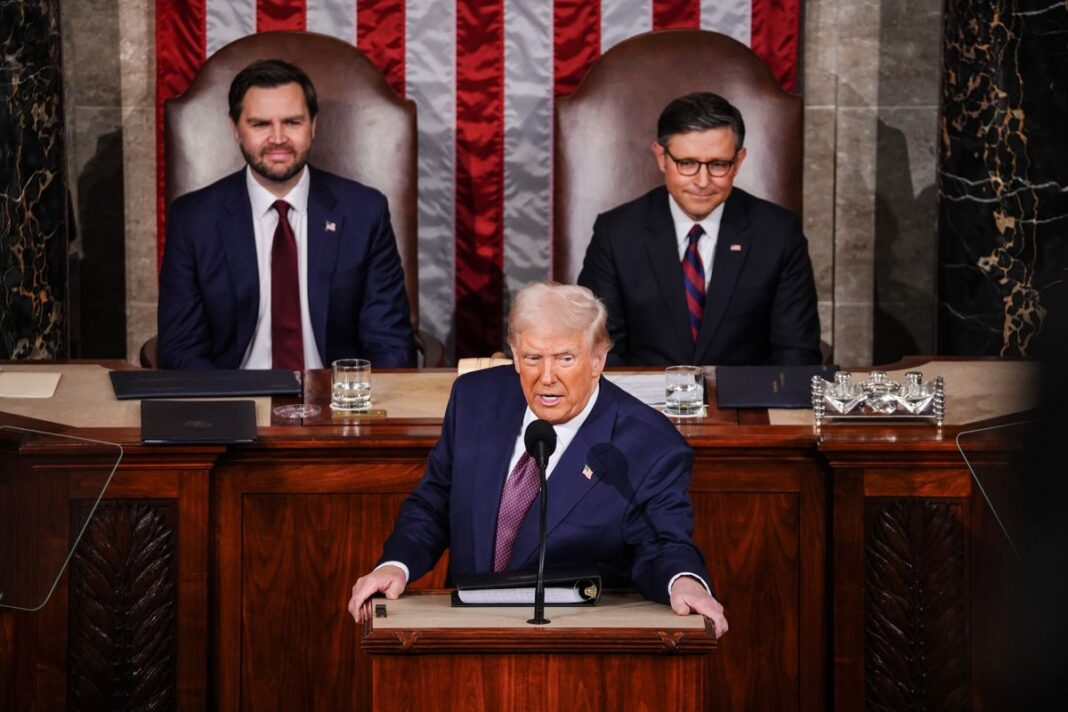
U.S. President Donald Trump’s decision to pause military aid to Ukraine, following a tense Oval Office meeting with Ukrainian President Volodymyr Zelenskyy last Friday, is a bold step toward putting American interests first. The meeting ended without a deal, with Trump reportedly frustrated by Zelenskyy’s refusal to consider negotiations with Russia and his insistence on more U.S. handouts.
Far from a retreat, this shift reflects a hard-nosed reassessment of America’s priorities, a push for European accountability, and a realistic approach to ending a costly proxy war with Russia.
This pause—halting billions in military assistance—is not a betrayal of allies but a long-overdue correction to an open-ended commitment that has drained U.S. resources without a clear endgame.
Conservatives have long argued that America’s foreign policy should prioritize national security and economic strength over endless overseas entanglements. Since Russia’s invasion of Ukraine in 2022, the U.S. has poured over $100 billion into Kyiv’s war effort, with little accountability for how funds are spent and no measurable progress toward victory. Trump’s move signals a rejection of the liberal obsession with “defending democracy” at any cost, instead favoring a pragmatic approach: pressuring Ukraine to negotiate with Russia, potentially trading territory for peace, and freeing up U.S. resources for domestic needs like border security and infrastructure.
Europe’s Overdue Wake-Up Call
Enter Ursula von der Leyen, President of the European Commission, who on Tuesday, March 4, unveiled her $840 billion “ReArm Europe” proposal. This plan, which she’ll pitch to EU leaders on Thursday, aims to boost defense budgets across the bloc’s 27 nations and step up aid to Ukraine. From a conservative lens, this is exactly what Trump intended—a kick in the pants for Europe to stop freeloading on American taxpayers and take responsibility for its own backyard. For too long, NATO allies have leaned on the U.S. to foot the bill for their defense, with many failing to meet the alliance’s 2% GDP spending target. Trump’s pause on Ukraine aid has forced Europe to confront the reality that Uncle Sam won’t bankroll their security forever.
Von der Leyen’s plan—€650 billion in national defense hikes plus a €150 billion EU fund—shows Europe finally waking up to the threat posed by Russia. Conservatives applaud this shift, not out of love for EU bureaucracy, but because it aligns with Trump’s “America First” doctrine: allies must pull their weight. If Europe wants to arm Ukraine and deter Putin, let them pay for it. The U.S. has no obligation to be the world’s policeman, especially when our own military stockpiles are strained and China looms as a far greater strategic rival.
Ukraine and Russia: Time for Realism
For Ukraine, Trump’s aid pause is a tough-love message: the gravy train is over. Zelenskyy’s refusal to negotiate with Russia—demanding full territorial restoration and billions more in aid—ignores the battlefield stalemate and the limits of Western patience. Conservatives see this as a chance to push for a deal that ends the war, even if it means Ukraine cedes Crimea and parts of the Donbas. Such an outcome would stabilize the region, reduce the risk of escalation with a nuclear-armed Russia, and let the U.S. refocus on more pressing threats. Trump’s team has reportedly suggested leveraging Ukraine’s mineral wealth to offset past aid, a business-minded approach that conservatives admire—why should American taxpayers foot the bill when Kyiv has assets to bargain with?
Russia, meanwhile, benefits from a U.S. pivot away from blank-check support for Ukraine. Putin’s war machine has taken a beating, but he’s not going anywhere soon. A negotiated settlement, brokered under Trump’s deal-making prowess, could lock in a ceasefire that keeps NATO out of direct conflict while preserving American credibility as a tough negotiator—not a pushover.
The U.S.-Europe Divide: A Healthy Rebalancing
Trump’s skepticism of NATO and his pause on Ukraine aid have sparked predictable hand-wringing from European leaders and the liberal foreign policy blob. Von der Leyen’s talk of “strategic autonomy” and Germany’s push for “independence from the USA” are music to conservative ears. For years, Trump has called out Europe’s reliance on American protection, demanding they “pay up” or step up. This week, they’re finally doing it. The EU summit on March 6 will test whether von der Leyen can rally the bloc—Hungary’s Viktor Orban, a Trump ally, may throw a wrench in the works—but the broader trend is clear: Europe is being forced to grow up, and that’s a win for U.S. interests.
Trump’s decision is a masterstroke. It rejects the neoconservative fantasy of endless war and the liberal fetish for moral crusades, replacing them with a focus on what benefits America. Ukraine isn’t a U.S. state; it’s a corrupt, distant nation whose war with Russia doesn’t threaten our homeland. Pouring billions into a stalemate—or worse, risking escalation with Putin—diverts resources from critical priorities like countering China, securing our borders, and rebuilding our economy. Trump’s pause forces Ukraine to the table, Europe to the plate, and America back to its rightful place: a superpower that leads by strength, not charity.
Von der Leyen’s $840 billion plan, while bloated with EU red tape, proves Trump’s point—Europe can and should handle its own defense. Conservatives aren’t isolationists; we believe in alliances, but only when they’re fair. NATO’s value lies in mutual burden-sharing, not America playing sugar daddy. If Europe steps up for Ukraine, great—let them bleed their treasuries for once. Meanwhile, Trump’s reset frees the U.S. to tackle bigger fish, like Beijing’s aggression in the Indo-Pacific.
This week, Trump’s pause on Ukraine aid is shaking up the transatlantic order—and that’s a good thing. It’s a wake-up call for Europe, a reality check for Ukraine, and a chance for America to stop being the world’s ATM.
Conservatives see this as Trump delivering on his promise: putting America First, cutting wasteful spending, and forcing allies to stand on their own two feet. The liberal hand-wringing about “abandoning democracy” misses the point—peace through strength, not perpetual war, is the conservative way.
As Europe scrambles and Ukraine recalibrates, Trump’s gamble could pave the way for a smarter, leaner U.S. foreign policy. That’s a win worth celebrating.