

Beijing has increased restrictions on drones, rare earths, and fuel exports in steps that could indirectly benefit Iran, experts say.
The Chinese Communist Party is slashing exports of oil products and other materials in what insiders describe as akin to “wartime measures” and potentially providing indirect support to Iran.
A source in China’s foreign trade sector familiar with import-export policy told the Chinese edition of The Epoch Times on March 6, using the pseudonym Huang Juguang out of fear of reprisal, that amid rising tensions in the Middle East, Beijing has ordered relevant domestic enterprises to tighten export controls on strategic materials, including tactical drones, rare-earth minerals, and refined petroleum products.
According to Huang, some technology companies and trading firms have already received verbal notices requiring additional reviews of export contracts and stricter approval procedures for the ones involving “sensitive regions.”
The directives come as joint U.S. and Israeli strikes on Iran have severely degraded the country’s military infrastructure and killed many senior leaders of the Islamic republic.
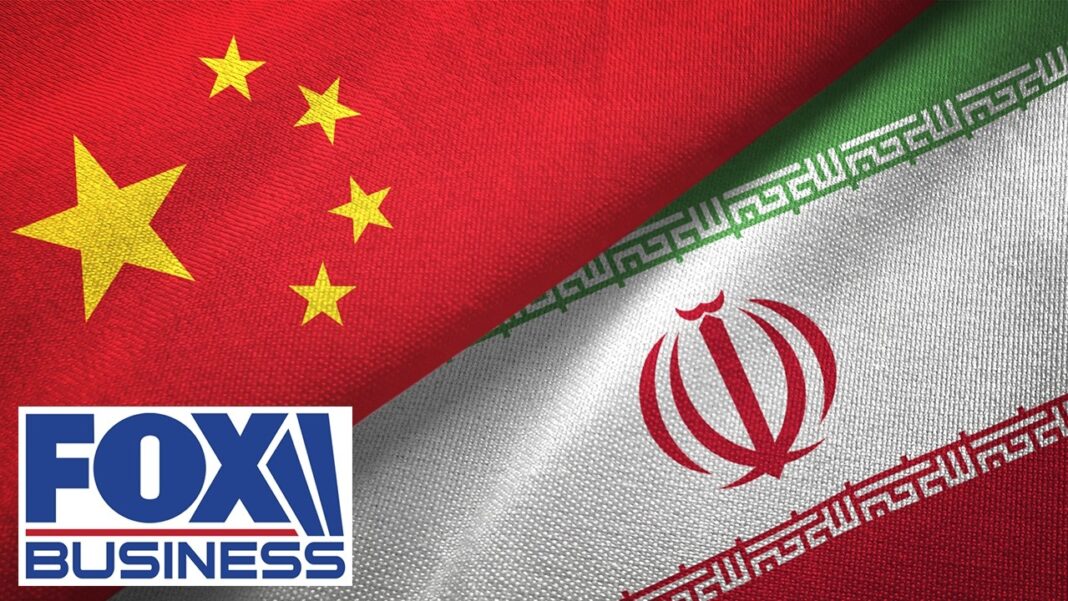
Beijing and Tehran have maintained friendly relations for years. Under a 25-year “comprehensive strategic partnership” agreement that Beijing and Tehran signed in 2021, China committed to invest $400 billion in telecom, banking, ports, and other infrastructure in Iran. In return, Iran agreed to keep the oil flowing.
China imported an average of 1.5 million barrels of Iranian crude per day in 2025, according to commodity analytics firm Kpler, which tracks global shipments. That accounted for about 12 percent of China’s total crude imports and about 90 percent of Iran’s oil exports. Much of that heavily sanctioned crude is believed to have been falsely relabeled to obscure its origin.
Beijing has so far neither confirmed nor denied reports that it has halted or restricted exports of refined petroleum products. At a press briefing on March 5, a spokesperson for China’s Foreign Ministry said it was “not aware” of such measures.
Measures of this kind will typically not be made public, Huang said, but are instead conveyed through industry regulators or state-owned enterprise channels.
“Companies are being required to reclassify and recount the export countries and destinations for drone equipment, rare-earth materials, and some energy products,” Huang said. “But in the end, customs will be the final gatekeeper.”
Tactical drones and their core components have grown increasingly sought-after amid their expanding use in conflicts from Ukraine to Iran and Yemen, and rare earths and rare minerals are critical inputs for missiles, radar systems, electronic equipment, and precision-guided weapons.
“Once these resources are brought under export controls, it could affect the military equipment supply chain in the relevant regions,” Huang said.
Another insider in China’s foreign trade industry, using only the surname Mou out of fear of reprisal, said the directive reflects Beijing’s inclination to favor Tehran in its ongoing conflict with the United States and Israel.
China’s reduction in refined petroleum exports could make it easier for Iran to sell its crude oil, Mou said. That, in turn, might complicate U.S. and Israeli efforts to enforce energy sanctions on Iran.
By Bill Pan