

Health advocates allege it causes cancer in humans. President Donald Trump calls it critical to America’s national defense.
Glyphosate, one of the world’s most widely used ingredients in herbicides, is being debated at the highest levels in the United States as concerns grow over its impact on Americans’ health.
President Donald Trump issued an executive order in February to ensure an adequate supply of the chemical, while members of Congress have proposed legislation to regulate its use. Soon, the Supreme Court will hear a lawsuit addressing the widespread allegation that the chemical increases the risk of cancer.
Below is a breakdown of what you need to know about glyphosate, what politicians are saying, and why critics are opposed to its use.
What is Glyphosate?
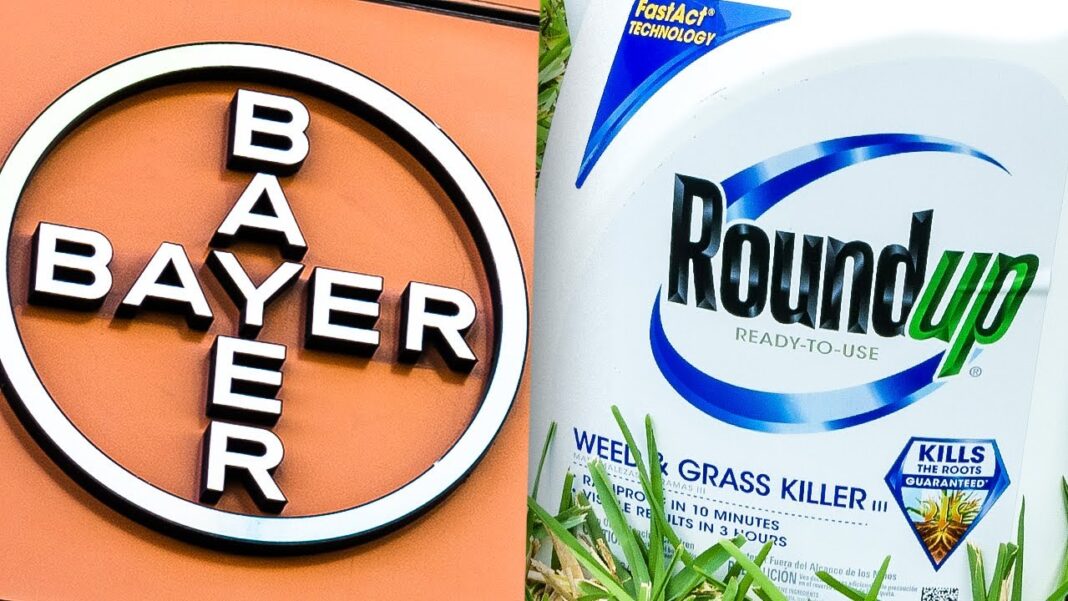
Glyphosate is a key ingredient in Monsanto’s popular herbicide Roundup, used by farmers to inhibit the growth of weeds in their crops.
The Environmental Protection Agency (EPA) registered glyphosate as a pesticide in 1974.
Glyphosate has since become among the most widely used chemicals in agricultural production, with its use skyrocketing in the mid-1990s. That’s when Monsanto introduced “Roundup Ready” crops, which are genetically modified, allowing farmers to begin spraying their fields to kill weeds without killing the crop itself.
A 2016 study published in Environmental Sciences Europe found that no chemical comes close to such intensive and widespread use as glyphosate, which will likely remain the most widely used pesticide in the world for years.
Claims that exposure to the chemical increases the risk of cancer, coinciding with its increasing use over time, have skyrocketed.
Currently, there are more than 100,000 plaintiffs across the country seeking to hold Monsanto liable, claiming the use of Roundup caused them to develop cancer.
In a March 2015 review, the World Health Organization’s International Agency for Research on Cancer classified glyphosate as “probably carcinogenic to humans,” based on “limited” evidence of cancer in humans and “sufficient” evidence of cancer in experiments with animals.
MAHA Criticism
There is a divide among Republicans, as supporters of the Make America Healthy Again, or MAHA, movement grow increasingly frustrated with political leaders supporting glyphosate’s use.
In a Feb. 18 executive order, Trump described the chemical as vital to national defense and directed his administration to ensure there was an adequate supply.
“Lack of access to glyphosate-based herbicides would critically jeopardize agricultural productivity, adding pressure to the domestic food system, and may result in a transition of cropland to other uses due to low productivity,” his order read.
It would also provide immunity to pesticide manufacturers if Congress passed it into law.
By contrast, Health and Human Services Secretary Robert F. Kennedy Jr. previously helped secure a $289 million award from Monsanto in 2018. He represented a client who alleged Roundup caused him to develop non-Hodgkin’s lymphoma.
Years later, RFK, who has become an icon of the MAHA movement, posted a statement on X offering his support for Trump’s executive order.
Pesticides and herbicides used in farming are toxic by design, RFK’s post on X read. But the system heavily depends on these chemicals, and if farmers stop using them, the impact on the U.S. food supply would be devastating, he said.
He added that there are ongoing efforts to transition away from harmful production methods.
Despite Kennedy’s comments, MAHA supporters pushed back, and lawmakers have taken steps to try to block Trump’s executive order.
Kelly Ryerson, known online as “Glyphosate Girl,” said on X that “just as the large MAHA base begins to consider what to do at midterms, the President issues an [executive order] to expand domestic glyphosate production. The very same carcinogenic pesticide that MAHA cares about most.”
By Troy Myers