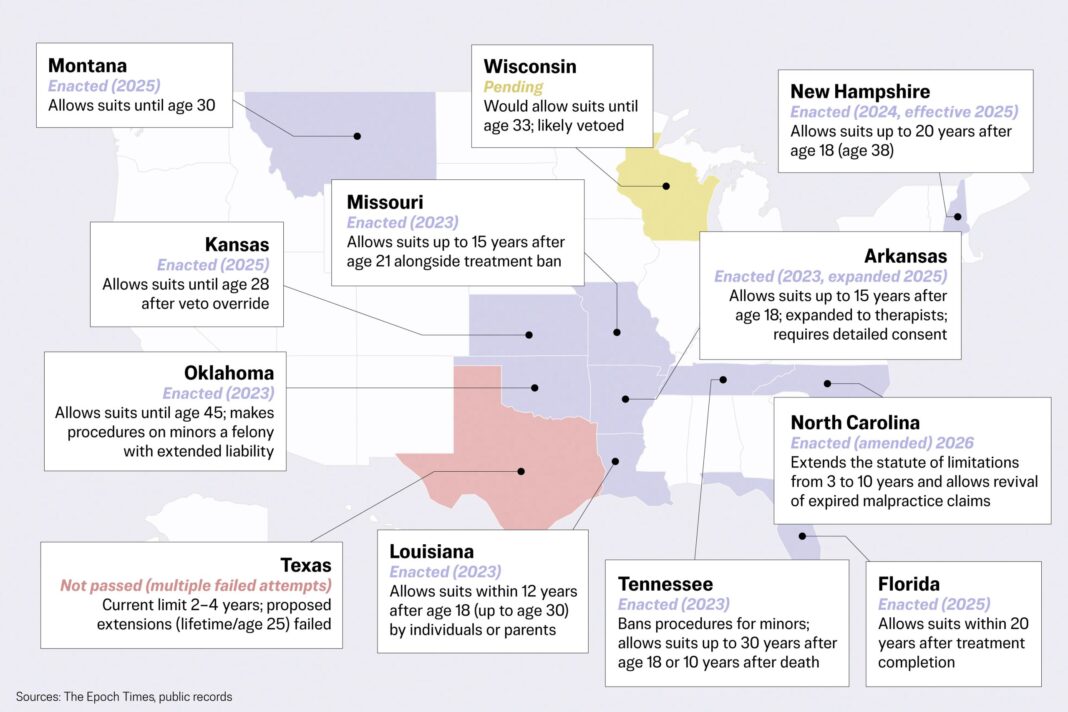


Some states are taking the next step beyond banning medical procedures for pediatric gender dysphoria, by making it easier for detransitioners to sue.
Prisha Mosley thought that she would get her day in court when the North Carolina Legislature extended the state’s statute of limitations surrounding medical malpractice lawsuits filed by “detransitioners.”
But even with a change in the law, she is struggling to get her case before a jury.
As a teen, Mosley’s doctors prescribed testosterone and recommended a double mastectomy to change her body to match her gender identity at the time. But as she matured, she came to realize that these medical procedures destroyed her body and left lasting physical and emotional damage.
Mosley is just one of many “detransitioners” who have sued after life-altering medical procedures. Their plight has prompted debate about how long states such as North Carolina should allow medical lawsuits to be filed for those harmed by “gender-affirming” procedures. States including Tennessee and Arkansas have passed these laws, while others such as Texas, which is considering a lawsuit over the issue, have failed.
Mosley told The Epoch Times that she had painful pregnancy complications that stemmed from her surgery a decade earlier.
“I also think that speaks to the statute of limitations issue, because, despite the fact that I had this surgery like 10 years ago … I had this complication less than two years ago when I gave birth to my son, and it was, it’s by far the worst thing that’s ever happened to me in my life,” Mosely said.
She recounted how her body was able to produce some milk despite a double mastectomy, but she still couldn’t breastfeed because of the nature of the surgery. She developed swollen lymph nodes and was at risk for mastitis, or breast inflammation.
Mosley sued her doctors for fraud and medical malpractice in 2023. A judge ruled in 2024 that the statute of limitations barred the malpractice claim but that the fraud claim could proceed.
As the fraud question was being litigated, North Carolina extended the statute of limitations from three to 10 years, and included a provision reviving claims that had previously timed out.
So Mosley was shocked in August 2025 when Superior Judge Robert Ervin, of North Carolina’s District 25A Superior Court, dismissed the fraud claim with prejudice—overturning his own previous ruling—and also refused to allow the malpractice claim to be revived.
Ervin did not give a specific reason for his ruling; he wrote that previous court decisions allowed trial judges “discretion” to amend their previous decisions, or apply new laws in cases that were already underway. Mosely is appealing her case in state court.
Like Mosely, Soren Aldaco sued after receiving hormones and a surgery.
Aldaco told The Epoch Times that medical malpractice laws in Texas and beyond don’t take into account the psychological and social development of adolescents and young adults.
“It’s very frustrating,” she said. “If you’re a 13-year-old on puberty blockers, you might not realize you’re infertile until you’re 26 and just got married and you’re trying to have kids.”
Her case is pending before the Texas Supreme Court.