

The blockade is aimed at putting economic pressure on Iran as the country loses out on export revenues and importing essentials such as food gets harder.
The U.S. military has redirected 65 commercial vessels and disabled four ships while enforcing the naval blockade on the Iranian regime, according to U.S. Central Command (CENTCOM).
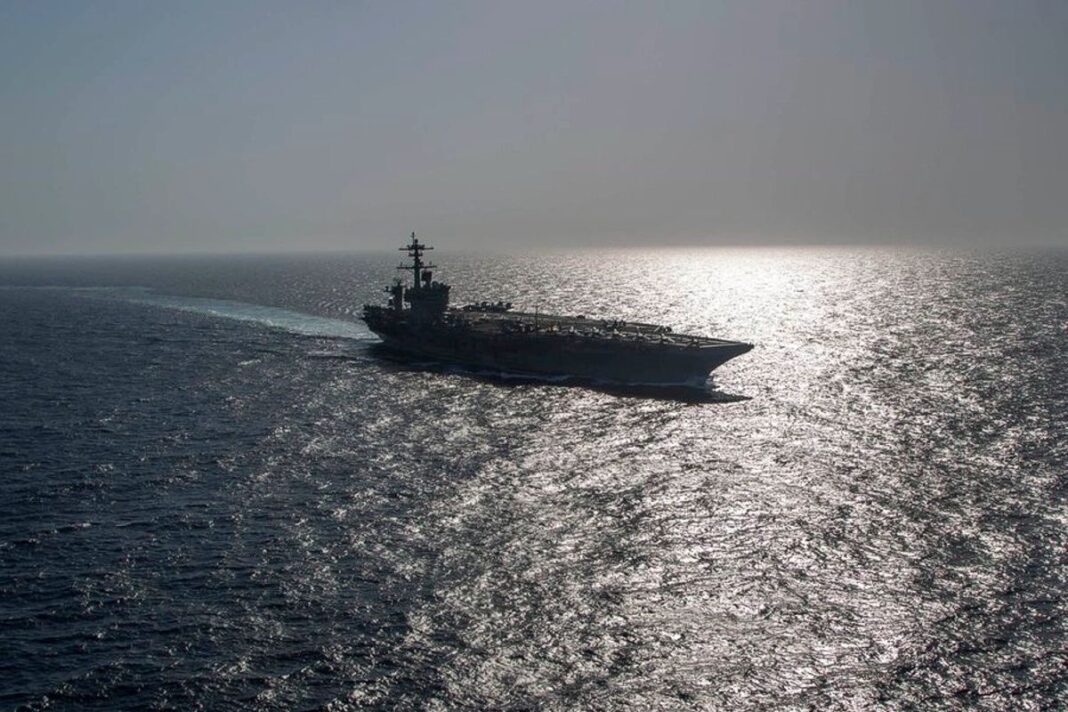
“USS Abraham Lincoln (CVN 72) continues operations in the Arabian Sea, including enforcement of the U.S. blockade against Iran,” CENTCOM said in a May 12 post on X.
On April 13, the United States imposed a blockade on vessels entering or exiting Iranian ports after the first round of peace talks between the two nations ended in failure. In a May 8 post on X, CENTCOM said that the blockade, which remains “fully in effect,” has seen enforcement actions across the Middle East and beyond. The United States has deployed more than 15,000 troops, more than 200 aircraft, and 20-plus warships to execute the mission.
CENTCOM said in a May 8 statement that USS George H.W. Bush disabled two Iranian tankers that were attempting to enter one of Iran’s ports located on the Gulf of Oman. The two vessels were disabled after U.S. forces fired munitions into the ships’ smokestacks.
Earlier, on May 6, USS Abraham Lincoln blockaded another Iranian vessel after firing multiple rounds from a 20 mm cannon gun that disabled the tanker’s rudder.
“U.S. forces in the Middle East remain committed to full enforcement of the blockade of vessels entering or leaving Iran,” said CENTCOM Commander Adm. Brad Cooper. “Our highly trained men and women in uniform are doing incredible work.”
The blockade is aimed at putting economic pressure on Iran.
The naval blockade cuts off the country’s ability to ship around $139 million in crude oil daily, depriving Tehran of critical oil revenues, according to an April 13 post by the Foundation for Defense of Democracies. The export of petrochemicals, minerals, and metals is also affected.
On the import side, the blockade cuts off Iran’s ability to import food, machinery, and other goods, putting inflationary pressure on the country’s economy.