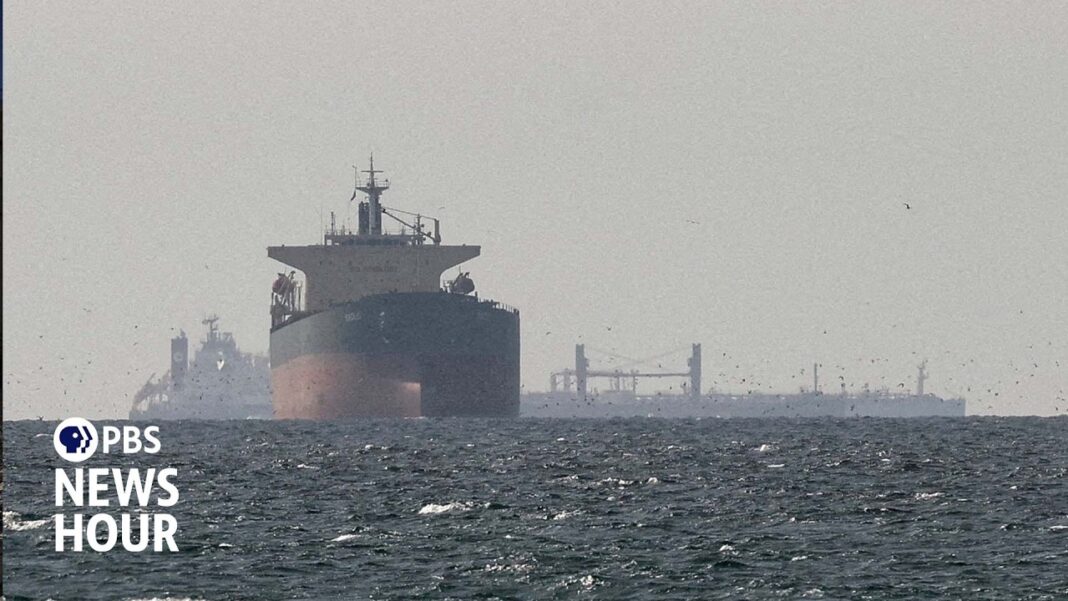


UKMTO said the threat level remains ’substantial’ despite the US–Iran truce, as a fleet of 10 Japan-linked ships exited the strait after a long delay.
British maritime authorities said on Monday that commercial traffic through the Strait of Hormuz has stabilized following last month’s U.S.–Iran memorandum of understanding (MOU), but shipping volumes remain well below pre-war levels, and the recovery is showing little sign of accelerating amid persistent security threats.
The assessment was made after a fleet of 10 Japan-linked commercial vessels, including six very large crude carriers loaded with some 12 million barrels of Middle Eastern crude, finally exited the strategic waterway after being stranded in the Persian Gulf for months during the Iran conflict.
The United Kingdom Maritime Trade Operations center said in a July 5 update that vessel movements through the strait remained “steady” over recent days, with commercial traffic continuing to use both the southern Omani shipping corridor and the northern Iran-controlled route.
The maritime authority added, however, that there was no evidence of a sustained increase in traffic along the U.S.-supported southern corridor, suggesting the shipping rebound remains gradual despite the MOU that formally reopened the Strait of Hormuz to commercial traffic.
“Risk remains lower than during the pre-MOU period,” UK Maritime Trade Operations said, adding that navigation interference “persists” and that the threat from naval mines laid by Iranian forces in the waterway remains “relevant.”
“Iranian intent and capability to conduct intentional hostile action remain, and the environment continues to warrant heightened vigilance despite the absence of recent escalation,” the British maritime authority said, while labeling the Hormuz threat level as “substantial.”
Meanwhile, the latest Joint Maritime Information Center advisory, published by UK Maritime Trade Operations on July 6, noted that the southern Omani route remains open and available to shipping vessels seeking passage in and out of the Gulf.
“Mariners are reminded that the southern route of the SoH has been expanded and remains available for all traffic,” the Joint Maritime Information Center said, adding that while ships are “strongly encouraged” to maintain engagement with U.S. Naval forces that are present in the region to assist with freedom of navigation, coordination with American forces to ensure safe passage is not mandatory.
U.S.-assisted commercial transits have continued without interruption, UK Maritime Trade Operations said in the July 5 update, noting smooth transit irrespective of ongoing mine-clearing operations and despite the fact that Iranian Islamic Revolutionary Guard Corps forces have maintained radio hailing and surveillance of merchant shipping and a “continued intent to assert presence in the area.”
Iran’s military command warned last week that any tankers passing through Hormuz must use Tehran’s approved routes or face the prospect of a “powerful response.”
However, the latest updates from UK Maritime Trade Operations—and other vessel-tracking data—suggest that shipping flows through the Strait of Hormuz continue unimpeded despite the uncertain security outlook.
By Tom Ozimek