
Climate Change-Related Disasters ‘Not Very’ Impactful on Bank Financial Stability: New York Fed

5Mind. The Meme Platform
The Epoch Times Header

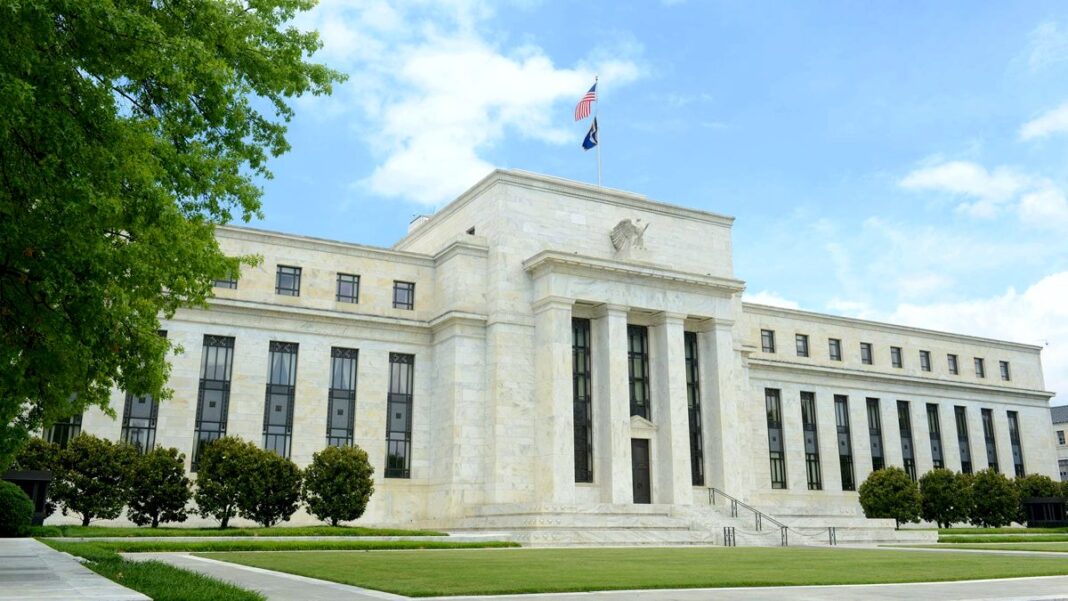
A new study from the New York Federal Reserve examining the impact of climate change via extreme weather events on bank financial stability throws cold water on the heated rhetoric around climate change, finding that the threat to banks from natural disasters is trivial while suggesting that a bigger danger to financial institutions comes from policies meant to shield them from such risks.

The Fed report sought to gauge how banks fared against past disasters by examining FEMA-level disasters between 1995 and 2018 and county-level property damage estimates from SHELDUS (Spatial Hazard Events and Losses Database for the United States). The authors concluded the impact was insignificant.

“Not very,” the three authors of the study wrote, positing an answer to the question posed in the title of the report: “How Bad Are Weather Disasters for Banks?”

“We find that weather disasters over the last quarter century had insignificant or small effects on U.S. banks’ performance,” the authors wrote, adding that the stability seems more to do with the intrinsic resilience of financial institutions than any federal aid they may have received in response to extreme weather events.

Profit-Boosting Impact of Disasters

For bigger banks, it turns out that disasters increased loan demand and actually boosted profits, the study says.

“Losses at larger (multi-county) banks are barely affected and their income increases significantly with exposure,” the authors wrote.

Local banks, too, demonstrated resilience to extreme weather events, although the study found they did experience more negative stability impacts from extreme disasters.

“Local banks tend to avoid mortgage lending where floods are more common than official flood maps would predict, suggesting that local knowledge may also mitigate disaster impacts,” the authors wrote.

But even though local banks are more prone to suffering instability impacts from disasters, these were not found to have been significant enough to threaten bank solvency.

“In particular, loan losses and default risk at local banks do not increase significantly,” the authors wrote. “Charge-offs at multi-county banks increase but the impact is very small. Moreover, not all effects are bad; income of multi-county banks increase significantly with disaster exposure.”

By Tom Ozimek

Read Full Article on TheEpochTimes.com

Contact Your Elected Officials
The Epoch Times
The Epoch Timeshttps://www.theepochtimes.com/
Tired of biased news? The Epoch Times is truthful, factual news that other media outlets don't report. No spin. No agenda. Just honest journalism like it used to be.

US Natural Gas Market Shielded From Global Price Shocks During Iran War

Analysts say East Asia could see hikes in energy costs after an Iranian strike wrecked Qatari LNG infrastructure that met 20 percent of the world’s demand.

Israel Targets Checkpoints That Hold Back Iranian Uprising

For decades, one of the most visible expressions of state power in Iran has not been found in govt. buildings or military bases, but in the streets.

The Limits of Power—and the Power Behind the Regime

Western policymakers assume regimes fall when they lose legitimacy. History shows they collapse when they lose the power—and money—to enforce control.

Momentum Builds for Regime Change in Cuba

Momentum builds for regime change in Cuba as Cuba’s leadership faces increased strain from U.S. policy and mounting protests on the island.
00:01:55

US Has a New Ally in Latin America—Here’s Why It Matters

“We are going to take back our country,” newly minted Chilean President José Antonio Kast told a crowd of thousands as he took office March 11.

FedEx Rolls Out Same-Day Delivery Service

FedEx launched a same-day delivery service as shipping and retail companies compete to meet growing customer expectations for near-instant order fulfillment.

Suspicious Drone Incursion Causes Alarm at US Bomber Base

Suspicious drone activity recently caused alarm at a U.S. military base in Louisiana that hosts long-range strategic bombers.

Stocks Slip, Oil Holds Above $100 as Iran Tensions Cloud Sentiment

U.S. stocks opened lower while oil prices held above $100 a barrel on March 24, as lingering doubts over easing Middle East tensions weighed on sentiment.

FCC Bans Foreign-Made Routers Citing National Security Risks

FCC banned all imports of foreign-made commercial routers March 23, a move that targets Chinese-linked brands found to pose national security risks.

Markwayne Mullin Sworn In as DHS Secretary

Former Oklahoma Senator Markwayne Mullin was sworn in at the White House as the new Secretary of the Department of Homeland Security (DHS).
00:27:39

US Looking to Seize Iranian Defectors’ Money: Bessent

Treasury Sec. Scott Bessent said that the US is moving to seize funds transferred abroad by Iranian defectors, so it can be to returned to the Iranian people.

Trump Says He’s ‘Not Putting Troops Anywhere’ Amid Iran War

President Donald Trump met with Japanese Prime Minister Sanae Takaichi to discuss the Iran war, saying he is not inclined to send U.S. ground troops.

US Agencies Terminated or Reduced 95 Wasteful Contracts Worth $2 Billion: DOGE

Federal agencies canceled or scaled back 95 wasteful contracts worth up to $2B in the last four weeks, saving taxpayers $757M.
spot_img

Related Articles

Popular Categories

MAGA Business Central