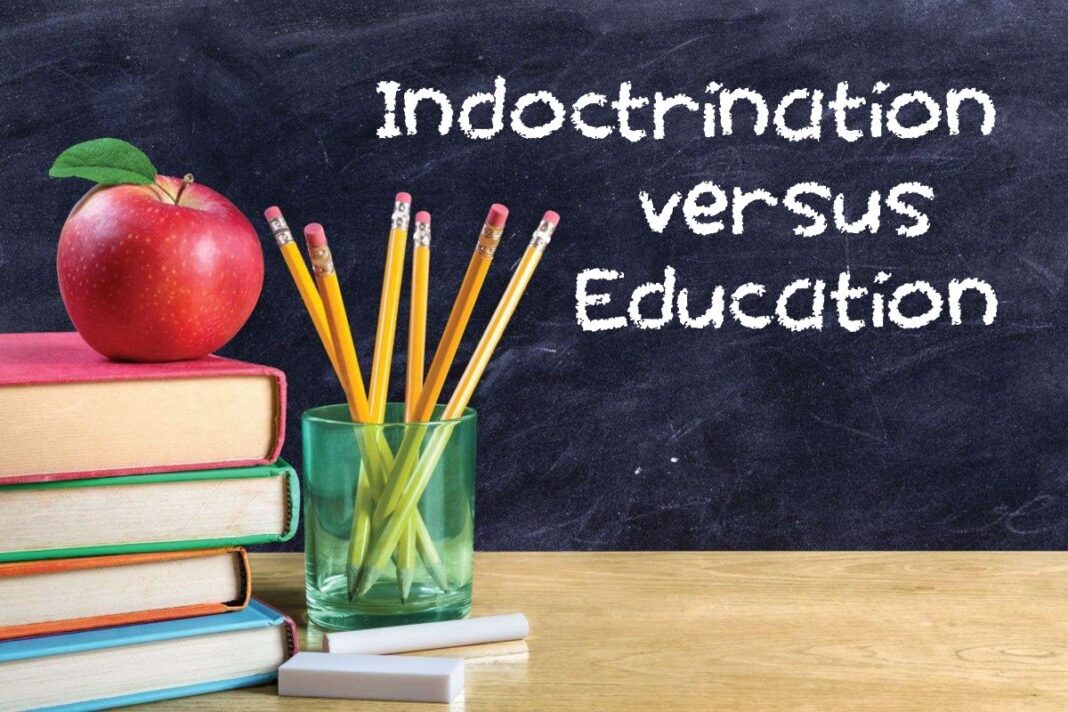


Across America, the divide in education has become more than a question of quality. It is now a question of ideology. What began as a shared mission to teach reading, writing, and arithmetic has become a battleground for competing worldviews. Many parents feel that public education has shifted from equipping children with skills to shaping how they think, feel, and identify. The question is no longer simply what are our children learning, but who decides what they learn.
For parents who can afford it, private education often provides an escape from this growing ideological tug-of-war. While public schools are accountable to state standards, school boards, and unions, private schools answer to the people who write the checks. In simple terms: when taxpayers fund the system, bureaucrats make the rules. When parents fund the system, parents have the power.
Who Controls the Classroom
In the public system, curriculum decisions flow downward. Local school boards adopt materials recommended by state departments of education, which are often influenced by federal funding priorities and university-driven standards. That means parents, teachers, and even principals often have limited say over what ends up in the classroom. In recent years, topics like “white privilege,” “gender identity,” and “systemic oppression” have quietly woven their way into lessons about history, literature, and even mathematics. Reading, writing, and arithmetic have been replaced with lessons in being offended, embracing gender fluidity, and perfecting public tantrums.
Whether one agrees or disagrees with these ideas is not the point. The issue is control. Public education operates under collective governance, and collective governance often dilutes individual choice. If you disagree with what your district teaches, your only options are to protest, run for the school board, or move.
When Parents Pay, Parents Choose
Private education flips that model entirely. Tuition gives parents leverage. Schools that rely on tuition income are far more responsive to family expectations because families are free to walk away. That is the silent power of the wallet.
Many private schools openly advertise a traditional curriculum grounded in core academics, character development, and moral values. Religious and classical academies in particular have seen growing enrollment from parents frustrated by public systems they believe have drifted into social engineering. At these schools, lessons focus on logic, virtue, and history without the ideological overlay. The parents who pay expect that focus, and the schools deliver it because survival depends on satisfaction.
On the other end of the spectrum, elite secular private schools have leaned heavily into the new orthodoxy of diversity, equity, and inclusion. They promote global citizenship, gender fluidity, and anti-colonial frameworks with the same vigor that classical schools apply to Latin and logic. Ironically, the most expensive schools in the nation are often the most politically progressive. The difference is that their clientele willingly pays for it. Even more ironic is the fact that the so-called “progressive” graduates of today will become the suppressive leaders of tomorrow, using status and position to ultimately dictate how others should live and act, just like their ancestors have done for generations.
The Hidden Price of “Free” Education
Public education is often described as “free,” but freedom is precisely what it can cost. When tax dollars fund the classroom, you are automatically enrolled in whatever the state or district deems appropriate. Parents who question the content are frequently dismissed as uninformed or intolerant. When ideology replaces instruction, the only “choice” left to parents is compliance.
That is why more families are opting to pay for private education despite the steep cost. They see it not as buying privilege, but as buying protection. They are choosing to invest in an environment where they can shape their child’s moral and intellectual foundation without interference from agendas they reject.
A Matter of Priorities
Critics argue that private education deepens inequality, and there is truth to that concern. Ironically, it is the very people who can afford to pay for a private education who reinforce the importance of ideology to be taught in public education settings. With an attitude of great for thee, but not for me. But the larger inequality may be the one between those who can control their child’s education and those who cannot. When a family pays directly for schooling, the transaction is clear: you pay for a product, and you can take your business elsewhere if it disappoints. In public education, the product is compulsory, the price is hidden in taxes, and the customer has no real power.
The question then becomes: what is freedom of education worth? For some, it is worth thousands of dollars a year. For others, it is a principle they would fight to restore within the public system. Either way, the answer reveals something about the nation’s priorities.
Education should unite rather than divide. Yet in today’s climate, the classroom has become a mirror of the cultural struggle beyond it. Public schools reflect the politics of their boards and unions. Private schools reflect the values of their paying parents. The line between the two is drawn not only in philosophy, but in purchasing power.
The cost of education, it seems, is not just financial. It is ideological. When you can pay, you can choose. And sometimes, when you can pay, you can also choose not to play.