Former Trump aide hopes to toss indictment for failing to appear before House Jan. 6 panel, citing DOJ policy on White House immunity.
A federal judge, after a Wednesday hearing in the case of Stephen K. Bannon, ordered the Justice Department to turn over to the former White House adviser any writings reflecting its official position on prosecuting current or former U.S. officials claiming immunity from congressional subpoena on grounds of executive privilege.The decision handed an initial victory to the onetime adviser to President Donald Trump. Bannon has suggested that he was relying on the Justice Department’s own past advice to White House aides as he fights criminal charges for failing to appear before the House committee investigating the Jan. 6, 2021, Capitol attack.
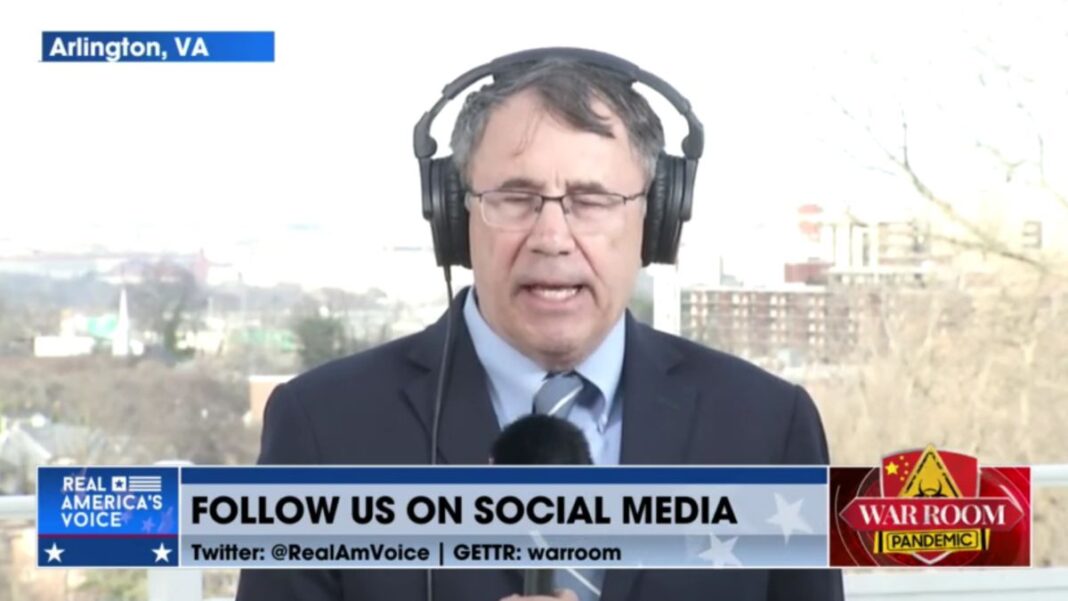
Bannon, who has pleaded not guilty to two counts of contempt of Congress, has argued that he refused to respond to a Sept. 23 subpoena by the committee for testimony and documents on the advice of his counsel, Robert J. Costello, who said that Trump asserted executive privilege over appearances by his former aides. U.S. District Judge Carl J. Nichols of Washington ordered both sides to brief him further in coming weeks on whether Bannon’s claims of immunity would sidestep binding federal appeals court precedent that says defendants cannot invoke their lawyer’s advice as a reason to ignore a lawful congressional subpoena.
“Isn’t there something anomalous, and I’m not sure what the legal hook for it is, for the Department of Justice to say someone has absolute immunity … and we will not prosecute them, and then to say those statements of [DOJ] official policy are irrelevant in such a prosecution?” Nichols asked.
U.S. prosecutors opposed requests by Bannon’s defense to “go rummaging around the government’s files” to probe its investigative and prosecutorial decision-making. They called it irrelevant to the elements of Bannon’s case: whether he knew he had been summoned and willfully failed to show up.
“The summoned witness doesn’t get to decide if Congress can make them show up,” Assistant U.S. Attorney Amanda R. Vaughn argued.
The Justice Department “is making decisions all the time about what it believes merits prosecution and what does not. … Facts could change, circumstances change, it’s just the department’s view on whether prosecution is appropriate,” Vaughn argued in court.
Bannon defense attorney David I. Schoen said that witnesses might have to appear before Congress to invoke claims such as the right against self-incrimination, but “executive privilege is different,” because the privilege is held not by a witness, but by the president.
Finding otherwise “would be giving Congress a veto over what executive privilege is,” shifting the balance of powers between a president and lawmakers, Schoen said.
Arguing in court, Costello called the actions an “outrageous” breach of attorney-client privilege, a bedrock principle of U.S. legal practice that says a lawyer must keep confidential what they are told by their clients.
Nichols noted the government has agreed to turn over an application to a federal judge stating its reasons for seeking records from a Google account in the case — albeit for the wrong Robert Costello. Nichols also ordered prosecutors to turn over for his private review the basis for their seeking subscriber information of Yahoo, Comcast, and Google accounts and data related to a Westchester County, N.Y., phone number.
But Nichols denied Bannon’s demands to see how prosecutors instructed a grand jury that obtained Costello’s records, citing grand jury secrecy and Bannon’s failure to posit any relevance to his defense. None of the government’s requests sought the content of communications, but rather metadata information such the sender, recipient, time and length of communication.
Prosecutors say that because they neither sought the contents of communications nor asked for records directly from Bannon’s attorney or law firm, they did not obtain any confidential communications or protected attorney work product. They said the government has turned over “all discoverable material” in its control related to Bannon’s attorneys in his case, and would continue to do so if it received more.
Bannon called the government’s explanations for investigating Costello — that he was a potential witness to his client’s actions and that they wanted to corroborate that he told his client of the House subpoena — disingenuous. Bannon’s attorneys urged the judge to reprimand prosecutors for attempting to “drive a wedge” between attorney and client.
“I think that message has to be sent,” Schoen said.
“If you allow this [U.S. attorney’s] office to do what it did to me to every lawyer in the system, no lawyer is ever going to accept service of process” of a subpoena, Costello added.
Costello noted that evidence it turned over to Bannon included a 14-page FBI summary of two interviews Costello gave prosecutors and FBI agents in his case on Nov. 3 and 8, days before Bannon was indicted. Costello said that in fact, he initiated those videoconference meetings with prosecutors to make the case why they should not charge Bannon.
“I certainly was not advised this was going to be an FBI interview. I would have been out of my mind to do that,” Costello told the court. He added that when his client saw the FBI report, “Mr. Bannon was irritated about that, because he thought I had given an interview to the FBI.”
By Spencer Hsu