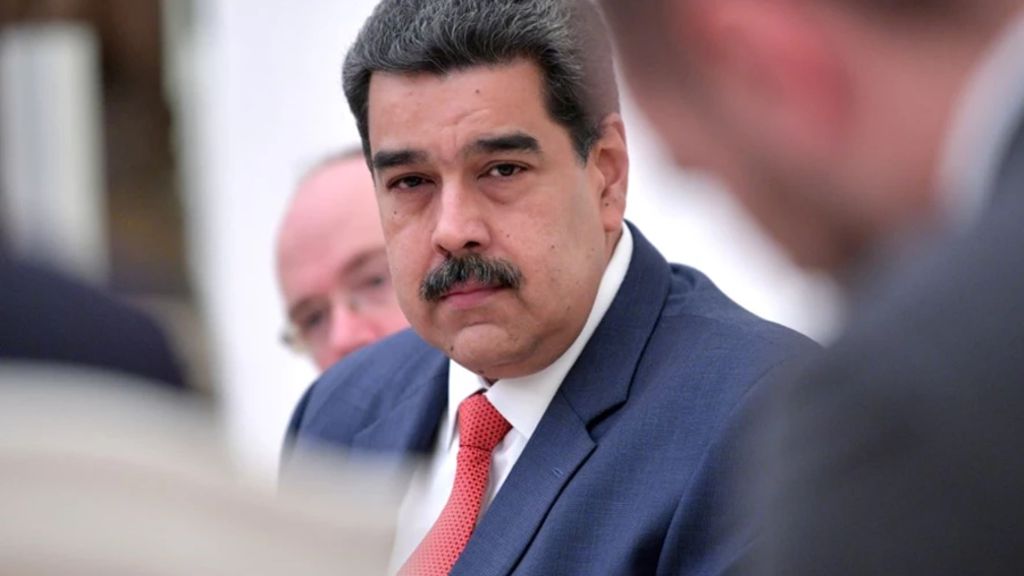


Early in 2007, after winning a second six-year term as president, Hugo Chávez announced his plan to nationalize Venezuela’s largest telecommunications company, CANTV, hinting at wider nationalization plans to come.
“All that was privatized, let it be nationalized,” announced Chávez, who had run under the banner of democratic socialism.
Nearly a decade and a half later, on the brink of mass famine and a growing energy crisis, Venezuela is now moving in the opposite direction.
According to Bloomberg News, Venezuelan president Nicolás Maduro has quietly begun transferring state assets back into the hands of private owners in an effort to reverse the country’s economic collapse.
“Saddled with hundreds of failed state companies in an economy barreling over a cliff, the Venezuelan government is abandoning socialist doctrine by offloading key enterprises to private investors, offering profit in exchange for a share of revenue or products,” write Caracas-based journalists Fabiola Zerpa and Nicolle Yapur.
The transfer, which was not announced publicly but was confirmed by “nine people with knowledge of the matter,” reportedly includes dozens of coffee processors, grain silos, and hotels that were confiscated as part of Venezuela’s widespread nationalization that began under Chavez.
Venezuela’s Collapse
In some ways, Venezuela’s plight is the most unlikely of stories.
In 1950, Venezuela was one of the most prosperous nations in the world. It ranked among the top 10 in GDP per capita and had a labor force with higher productivity than the United States.
Venezuela’s economic growth began to stall in the mid 1970s, however, after it nationalized the petroleum sector, which resulted in a surge of government revenue and public spending. It’s estimated that Venezuela brought in $7.6 billion in 1975 alone from nationalization ($37 billion in 2021 dollars). This led to an unprecedented surge of public spending. John Polga-Hecimovich, a professor of political science at the US Naval Academy, said the Venezuelan government spent more from 1974 to 1979 than in its entire previous history.
Despite the growth in government spending, the political situation remained relatively steady. In the late 70s, University of Michigan political science professor Daniel H. Levine asserted that “Venezuelans have achieved one of the few stable competitive political orders in Latin America.”
However, Venezuela’s flirtation with socialism would eventually turn into a love affair.
In 1998, Venezuelans voted in Chavez, a populist and self-described Marxist. He was re-elected in 2000 (59.8% of the vote) and in 2006 (62.8%), at which point he began to nationalize various sectors of the economy—including agriculture, the steel industry, transportation, and mining—and confiscating more than a thousand companies, farms, and properties.
At the time of Chavez’s death, his socialist policies were heralded by Salon as an “economic miracle”—but in reality the Venezuelan economy was already in a free fall.
This is what socialism does to a country.
— Jon Miltimore (@miltimore79) February 15, 2021
But remember: it started with “democratic” socialism. pic.twitter.com/jYhKHpYYpB